


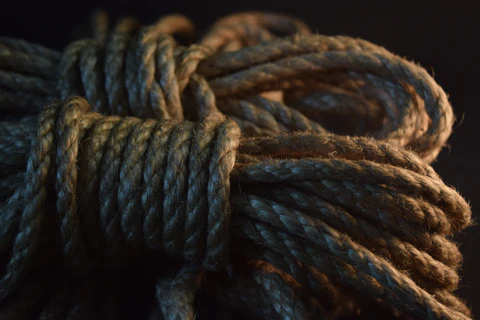
Shibari rope is the only piece of bondage equipment whose surface finish (the "tooth" that holds knots) is more important than its colour, brand, or visible condition; rope that has been washed in water has lost the tooth and is, despite looking fine, basically used up. This is the plain UK guide to shibari rope care: the four main fibres (jute, hemp, cotton, polyester), conditioning with camellia or jojoba oil, the no-water rule for natural fibres, storage that prevents brittleness, replacement signals, and a realistic 2 to 6 year lifespan. Pair with our shibari at home guide.
The four shibari rope fibres
| Fibre | Best for | Lifespan |
|---|---|---|
| Jute | Traditional shibari; the standard tooth and feel | 2 to 4 years |
| Hemp | Slightly softer than jute; popular alternative | 3 to 6 years |
| Cotton | Beginners; soft, machine-washable, low cost | 2 to 3 years |
| Polyester (MFP, hemp-look synthetic) | Easy care, vegan-friendly, weather-resistant | 5+ years |
The natural fibres (jute and hemp) are the traditional shibari materials. Each strand is twisted from many smaller fibres; the surface "tooth" comes from the slight roughness of the fibre arrangement. This tooth is what makes a knot stay locked under load. Polished rope (machine-washed, or rubbed too smooth) loses the tooth and knots slip.
Conditioning natural fibre rope
Jute and hemp need periodic re-conditioning with a thin film of oil to keep the fibres supple. The traditional choice is camellia oil, used in Japanese rope work for centuries; jojoba is a modern alternative with similar properties. Both are non-staining, non-sticky, and food-grade safe.
Apply: a few drops in the palm, run the rope through your hands; do not pour oil directly on the rope. The amount that feels "almost nothing" is right; over-oiling makes the rope sticky and harder to use. Once per quarter for regular-use rope; once per six months for occasional use.
Avoid: mineral oil (heavy, gummy build-up), olive oil (oxidises, eventually rancid), coconut oil (solidifies in cool conditions, then re-flakes off in cold use). Camellia or jojoba only.
The no-water rule for natural fibres
The single most-cited shibari-rope mistake. Jute and hemp swell when wet; dry stiff and crackly; lose the tooth permanently.
Do not machine wash jute or hemp rope. Do not soak. Do not even spot-clean with a wet cloth; use a soft dry brush instead. If body fluids contact the rope: do not use that rope for partner play again; mark it as personal-only or retire it. Natural-fibre rope is porous and cannot be reliably disinfected.
Cotton and polyester care
Cotton rope is machine-washable in a delicates bag on a cool wash. Air dry hanging in a loose coil; do not tumble dry (the heat weakens the cotton over time). Cotton holds less of the tooth than natural-fibre but has more give, making it forgiving for beginners.
Polyester (often sold as MFP or hemp-look synthetic) is the most forgiving: machine wash cool, can tumble dry on low, no conditioning needed. The trade-off is feel; synthetics lack the natural tooth that experienced shibari practitioners notice.
Storage
Coil the rope after each use using a "butterfly" or "lapel coil" technique, then hang in a dry, ventilated space. Never store rope in a sealed plastic bag (traps moisture, encourages mould); never under heavy items (deforms the lay).
Direct sunlight degrades natural-fibre rope over months; store in a closed cupboard or drawer. Room temperature is ideal; freezing or hot conditions both reduce lifespan.
When to retire rope
Signals that a piece of rope has reached end of life.
- Visible fibre fraying along the length, more than just a few stray hairs.
- A specific section that has gone notably softer or thinner from repeated load.
- The "tooth" feels smooth even immediately after conditioning.
- Brittle feel; the rope cracks rather than bends in tight curves.
- Stains or odour that have not cleared with brushing.
Retiring rope before failure is one of the few areas of bondage practice where erring conservative is the right call. A length of jute that fails mid-tie can drop a partner suddenly; the cost of replacement is small compared to the cost of an avoidable injury.
Replacing the ends
The ends of shibari rope wear faster than the rest of the length because they take all the pulling-through stress during ties. Whip-stitching the ends (or applying a small amount of heat-shrink tubing for polyester) extends rope life. Most quality UK shibari rope sellers (HempEx, Esinem, Anatomie Studio) ship rope pre-whipped; if not, learn to whip the ends within the first few uses.
FAQ
- Q: Can shibari rope be washed in water?
- Cotton and polyester rope: yes, in a delicates bag on a cool wash, air dry. Jute and hemp rope: no. Water swells the natural fibres, then dries stiff and the rope loses the surface tooth that makes knots hold. Clean natural-fibre rope by brushing only; condition every quarter with camellia or jojoba oil.
- Q: How do I condition jute rope?
- A few drops of camellia oil (the traditional Japanese choice) or jojoba oil in the palm; run the length of rope through your hands. The amount that feels "almost nothing" is right; over-oiling makes the rope sticky. Once per quarter for regular-use rope. Avoid mineral oil, olive oil, and coconut oil; all produce buildup or rancidity over time.
- Q: How long does shibari rope last?
- Jute: 2 to 4 years; hemp: 3 to 6 years; cotton: 2 to 3 years; polyester: 5+ years. Lifespan depends on how often it is used and how it is stored. Retire rope at the first signs of fibre fraying, brittleness, or loss of tooth; this is one area where erring conservative is the correct call.
- Q: What is the best shibari rope for a beginner?
- Cotton rope or polyester rope. Cotton is soft, forgiving, and machine-washable; the lower friction is easier to handle while learning knots. Polyester is even more forgiving (no conditioning needed). Move to jute or hemp once the foundational knots are reliable, typically after 10 to 20 hours of practice.
- Q: How do I store shibari rope?
- Coil after each use (butterfly or lapel coil are the common methods), hang in a dry ventilated space. Never sealed plastic bags (trap moisture, grow mould). Never direct sunlight (degrades natural fibres). Closed cupboard, drawer, or open peg storage in a cool room.
- Q: My jute rope feels stiff and crackly. Can I save it?
- If the rope is mildly stiff from age but otherwise intact: condition with camellia or jojoba oil; work it through your hands repeatedly over several days. Some recovery is possible. If the rope has been washed in water or feels brittle and cracks rather than bends: it cannot be saved and should be replaced. Brittleness in load-bearing rope is a real safety concern.
Sources & further reading
- Esinem (Bruce Esinem, UK shibari educator). Rope care and conditioning guidance.
- Anatomie Studio London. UK shibari rope sourcing and care standards.
- BondageBox in-house testing across UK-stocked shibari ropes (2024-2026); lifespan tracking by conditioning regimen.
Filed under Materials & Care
← Back to the Guides