



Not all "leather" is leather in the way that matters. For bondage gear, three terms come up and they describe very different things. Full-grain bridle leather is the best: the top layer of the hide, dense and strong, it softens with use and lasts decades. Suede is the soft, napped underside of a split hide, lovely against skin for floggers and light pieces but not for load-bearing restraint. Bonded leather is the one to avoid: shredded leather offcuts glued onto a backing, it looks like leather for a few months then cracks, peels and delaminates. The single most useful habit when buying leather bondage gear is to check the listing names a grade: full-grain or top-grain is good, "genuine leather" is ambiguous, "bonded leather" or unspecified "leather" is a warning. Good leather is a decades-long purchase; bonded leather is a few months. This guide explains the grades and how to care for the good stuff.
Leather bondage gear, leather restraints, leather grades
"Leather bondage gear", "leather restraints" and "leather goods" all describe cuffs, collars, harnesses, floggers and similar made from leather. The word that actually matters is the grade, because "leather" alone covers everything from a decades-lasting full-grain cuff to a bonded-leather piece that will not survive the year.
Full-grain and top-grain (bridle leather)
What it is: the top layer of the hide, the densest and strongest part, with the natural grain intact (full-grain) or lightly sanded (top-grain). "Bridle leather" is a traditional firm, full-grain leather originally made for horse tack, exactly the qualities you want in restraints.
How it wears: it softens with use rather than degrading, develops a patina, and lasts decades. It holds hardware securely and takes load without stretching out.
Best for: everything load-bearing, cuffs, collars, harnesses, anything that takes weight or tension. This is what restraint gear should be made of.
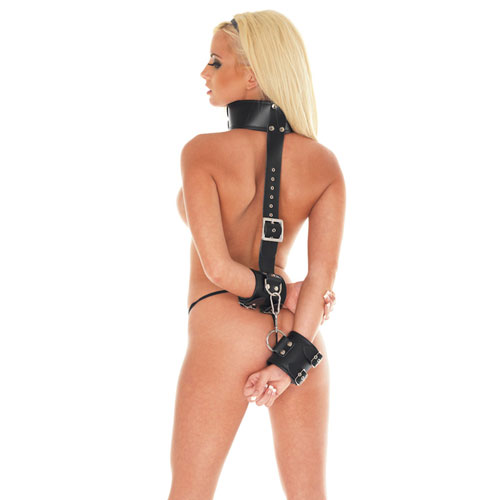
Leather Cuff & Neck Set
A coordinated leather restraint set, the decades-long kind of purchase. ~£183.
£182.99 →Suede
What it is: the soft, napped underside of a split hide. Plush and gentle to the touch.
How it wears: soft and tactile but weaker than full-grain, it stretches under sustained load and marks easily. It is a sensation material, not a structural one.
Best for: floggers (where the soft fall is the point), light decorative pieces, anything where feel matters more than load-bearing strength. Not for cuffs or collars that take tension.
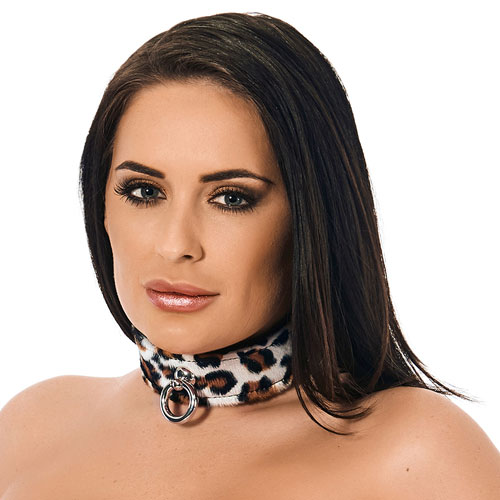
Animal Print Leather Collar
A leather collar, the decorative end of the leather range. ~£64.
£63.99 →Bonded leather (the one to avoid)
What it is: shredded leather offcuts and fibre, glued together and bonded onto a fabric or polyurethane backing, then surface-finished to look like solid leather. It is to leather what chipboard is to timber.
How it wears: badly, and fast. The glued composite has none of the tensile strength of real hide. Within months of regular use it cracks at flex points, the surface finish peels, and the layers delaminate. It cannot be conditioned back to life because there is no real grain to condition.
Best for: nothing, in bondage gear. If a listing says "bonded leather", or just "leather" with no grade and a suspiciously low price, treat it as a warning.
Leather grades at a glance
| Grade | What it is | Lifespan | Best for |
|---|---|---|---|
| Full-grain / bridle | Top layer of the hide, grain intact | Decades | Load-bearing: cuffs, collars, harnesses |
| Top-grain | Top layer, lightly sanded | Many years | Load-bearing, slightly more uniform finish |
| Suede | Soft napped underside of a split hide | Moderate | Floggers, decorative, sensation pieces |
| Bonded leather | Glued offcuts on a backing | Months | Avoid for bondage gear |
Caring for good leather
Full-grain and top-grain leather rewards a little care with decades of life:
- Wipe, do not soak. Clean with a barely-damp cloth. Leather and standing water do not mix; soaking warps and stiffens it.
- Air-dry away from heat. Never a radiator or hairdryer, direct heat cracks leather. Let it dry naturally.
- Condition occasionally. A leather conditioner every 6-12 months keeps the hide supple and prevents it drying out. Suede uses a suede brush and protector instead, not conditioner.
- Store flat or hung, cool and dark. Not crushed in a drawer, not in direct sunlight, not anywhere damp. Coiled or hung keeps the shape.
- Keep lube off it. Even water-based lube can stain leather. Apply lube to the body, not the gear.
Common mistakes
- Buying bonded leather by accident. The fix is the label: full-grain or top-grain is good, "bonded leather" or unspecified "leather" at a low price is the warning.
- Using suede for load-bearing restraint. Suede is a sensation material. Cuffs and collars need full-grain.
- Soaking leather to clean it. Wipe with a barely-damp cloth, never submerge.
- Drying leather with heat. Direct heat cracks it. Air-dry only.
- Never conditioning it. Unconditioned leather dries out and cracks over years. A twice-yearly condition is the whole maintenance commitment.
Related reading
- The wardrobe of a quiet kink
- Why metal hardware matters
- Bondage collars UK
- Best beginner BDSM kit UK
- Browse leather bondage gear
Frequently asked
- What leather is best for bondage gear?
- Full-grain or top-grain leather, traditionally "bridle leather", is best for anything load-bearing: cuffs, collars, harnesses. It is the top, densest layer of the hide, softens with use rather than degrading, holds hardware securely, and lasts decades. Suede is good for floggers and decorative pieces but not for restraint.
- What is bonded leather and why avoid it?
- Bonded leather is shredded leather offcuts glued onto a backing and surface-finished to look like solid leather. It has none of the tensile strength of real hide, so within months of regular use it cracks, peels and delaminates, and it cannot be conditioned back to life. Avoid it for bondage gear entirely.
- How do I tell good leather from bad on a product listing?
- Check whether the listing names a grade. "Full-grain" or "top-grain" is good. "Genuine leather" is ambiguous and worth questioning. "Bonded leather", or just "leather" with no grade and a suspiciously low price, is a warning. A retailer confident in its leather states the grade.
- Is suede good for bondage gear?
- For floggers, decorative pieces and anything where soft feel matters, yes, suede's plush napped texture is the point. For load-bearing restraint like cuffs and collars, no, suede is weaker than full-grain, stretches under sustained load and marks easily. It is a sensation material, not a structural one.
- How do I clean leather bondage gear?
- Wipe with a barely-damp cloth, never soak it, leather and standing water do not mix. Air-dry away from any direct heat source, which cracks leather. Condition full-grain and top-grain leather every 6-12 months to keep it supple. Suede uses a suede brush and protector instead of conditioner.
- How long does good leather bondage gear last?
- Full-grain and top-grain leather lasts decades with basic care, it softens and develops a patina rather than degrading. Bonded leather lasts months. The price gap between the two closes quickly once you factor in how often bonded leather needs replacing.
- Can I use lube near leather gear?
- Keep lube off leather where you can. Even water-based lube can stain it, and silicone-based lube absorbs into the grain. Apply lube to the body, not to the leather surface.
- Where can I buy quality leather bondage gear in the UK?
- BondageBox stocks full-grain leather restraints, collars and harnesses with the grade stated, with free discreet UK delivery over £30 and plain unmarked packaging. Browse the bondage range.
Sources & further reading
- BSI, UK product safety standards, British Standards Institute
- NCSF, Consensual kink safety standards, National Coalition for Sexual Freedom
- Brook, Sex and pleasure, Brook Advisory
Filed under Materials & Care
← Back to the Guides