


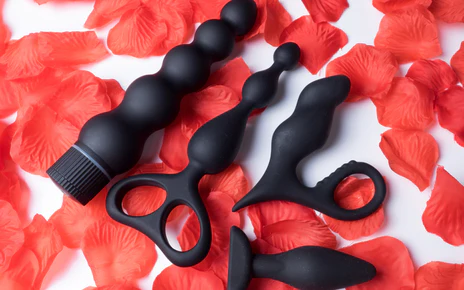

Most couples successfully introduce toys to partnered sex with one conversation and one specific toy. Complications come from over-buying, introducing toys without conversation, or treating the toy as a fix for something else.
The conversation
The opener that works:
"I've been thinking it might be fun to try a vibrator together sometime. What do you think?"
Or for specific intent:
"I read that lots of women only orgasm during sex with a vibrator, would you be open to trying that?"
The framing matters. Toy introduction sometimes lands as "you're not enough", and that's the version that fails. Better framing: "this is something we could try together; the toy is for both of us; it doesn't replace anything we do."
The right first toy
For partnered sex specifically:
External / clitoral options
- Bullet vibrator (£15-£35), small, single-purpose, usable during any position.
- Couples vibrator / cock ring with vibration (£60-£170), worn during penetration; vibrates against the clitoris. We-Vibe Pivot, We-Vibe Sync.
- Wand massager (£35-£140), broad, powerful; used during foreplay and during penetration with the right position. Doxy Bullet, Le Wand Petite.
- Suction toy (£60-£170), clitoral suction; works during foreplay; some hands-free models. Satisfyer Pro 2, Womanizer Premium 2.
Internal / G-spot options
- G-spot vibrator (£40-£100), curved internal toy; used during partner penetration or solo G-spot stimulation.
- Couples vibrator with internal arm (£100-£170), We-Vibe Chorus; the internal arm sits between partners during penetration.
For first partnered toy use, start with a bullet or wand, simple, controlled, easy to use without complication.
The first session
What works:
- Use the toy during foreplay first, not introduced mid-act. Both partners get used to the new dynamic before the action begins.
- The receiver holds the toy (or shows the partner how) for the first session. Reduces the awkwardness of the partner figuring out positioning.
- Lubricant ready, water-based for silicone toys.
- Charge fully beforehand, mid-session battery death is the most-common practical complaint.
- Aftercare conversation, what worked, what didn't, what you'd do differently next time.
Common dynamics to navigate
"Am I not enough?"
The most-common concern from the non-introducing partner. The honest framing:
- Vibration produces a sensation that fingers and tongues physically can't. Not because they're inadequate; because the mechanism is different.
- Many women rarely or never orgasm without clitoral stimulation during penetration. A toy can be what makes orgasm possible during penetration; that's a addition, not a replacement.
- Toys reduce the load on the partner, they take some of the work; let the partner focus on the connection rather than the technique.
"What about when the toy isn't there?"
Most couples find their non-toy sex is also better after introducing toys, the experimentation, the conversation, the reduced performance pressure all carry over. Toys don't replace; they supplement.
"It feels mechanical / clinical"
Some toys are designed to feel utilitarian; premium toys (Lelo, We-Vibe, Fun Factory) are designed for couples and feel less so. Material, design, and aesthetics matter. A £15 bullet feels different from a £120 We-Vibe Chorus.
"I'm embarrassed buying it"
Online purchase removes the in-store conversation. UK retailers (BondageBox, Lovehoney) ship in plain unmarked packaging with discreet bank-statement descriptors. See how discreet is sex toy delivery UK.
What rarely works
- Surprising the partner with a toy mid-act.
- Buying 5 toys at once. Overwhelming; defeats the focused experiment.
- Using the toy as a substitute for resolving a relationship issue. The toy isn't a fix for emotional disconnection.
- Pressuring the partner to use a specific toy they're not interested in.
- Pretending the toy didn't change things, the conversation about the experience matters.
Building over time
Reasonable buying sequence:
- Month 1-3: one specific toy used in 3-5 sessions; partners get comfortable.
- Month 3-6: consider a second toy in a different category (if first was external, try internal; or vice versa).
- Month 6-12: develop the rhythm, when toys; when not; what works in which contexts.
- Year 2+: the rhythm is established; toys are part of the toolkit, not a special event.
See sex toys for couples UK quiet guide for the broader couples context.