



The "spark" question in long-term relationships is one of the most-googled UK relationship topics. Most of the actionable answers fall into three categories: logistics, communication, and novelty.
Address logistics first
Most "loss of sexual interest" in long-term couples isn't actually about the relationship, it's about energy. Common culprits:
- Sleep deprivation. Most under-7-hours nights show measurable libido drops the next day.
- Work stress. Cortisol suppresses sexual interest.
- Parenting young children. Sleep + cognitive load + lost private space.
- Hormonal shifts (perimenopause, andropause, post-childbirth).
- Medication side effects (SSRIs, hormonal contraception, beta-blockers).
- Misaligned schedules. Asymmetric work hours leaving no overlap of "available" time.
Addressing these often resolves what looks like a sex problem.
Have the conversation specifically
Couples who talk openly about sex consistently report higher satisfaction across UK relationship research. The conversations that work:
- Outside the bedroom. Walks, coffee, neutral context.
- Specific, not general. "I'd love to try X" beats "we should spice things up".
- "I'd love" framing. Not "you don't".
- One thing at a time. Don't overhaul.
- Make it routine, not crisis-driven. Check-ins every few months are better than once-a-year-after-a-fight.
See how to ask for what you want in bed.
Introduce one new variable at a time
The mistake: trying to overhaul. The pattern that works:
- Month 1: a single new thing, a blindfold (£15), a new lubricant, sex at a different time of day, a weekend away.
- Wait and see. What worked? What didn't? What do you want more of?
- Month 3: the next new thing if relevant.
Sustainable novelty beats overwhelming experimentation.
What couples typically try first
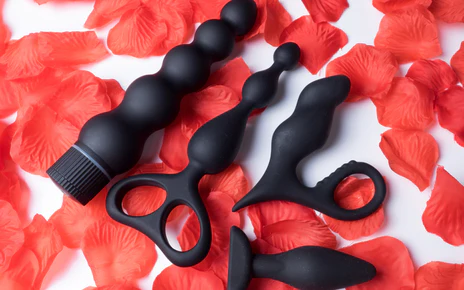
- A new toy. Bullet vibrator or couples vibrator. Lowest-commitment introduction.
- A blindfold. Single biggest sensory shift available. £15.
- Light bondage. Soft cuffs (£30), see first kit under £75.
- A weekend away. Single night in a hotel; different environment; routines reset.
- Roleplay or fantasy work. Costs nothing; works for some couples; doesn't for others.
- Changing the time of day. Couples on Saturday-night rhythm sometimes benefit from Tuesday-morning.
For midlife-specific context, see midlife desire.
What rarely works
- Buying many new toys at once. Becomes a checklist.
- Going somewhere "sexy" expecting transformation. A hotel doesn't fix a fundamentally tired or disconnected dynamic.
- Constant novelty. Pressure to be "interesting" produces anxiety, not desire.
- Making sex the metric of the relationship. Connection produces sex more reliably than sex produces connection.
- Comparing to before-kids / before-stress periods. Different lives produce different sexual rhythms; the comparison rarely helps.
When to consider sex therapy
If the conversation isn't producing change and the issue is genuinely affecting the relationship:
- Relate, UK's longest-standing relationship counselling charity.
- COSRT, College of Sexual and Relationship Therapists; UK directory.
- Pink Therapy, kink-aware therapy directory.
- NHS sexual health clinics, for medical contributors (perimenopause, ED, medication side effects).
Sex therapy is genuinely useful in midlife relationships specifically, UK research consistently shows mid-50s onwards is when therapy is most effective.
The bigger picture
Most long-term couples experience changes in sexual frequency and intensity over years. This isn't failure; it's normal trajectory. The couples who stay sexually connected are typically the ones who:
- Talk about it without judgement.
- Address logistics actively.
- Introduce small novelty regularly.
- Accept that the rhythm at year 5 isn't the rhythm at year 1, and don't treat that as wrong.
See reigniting after a quiet patch and how to talk about kink.