


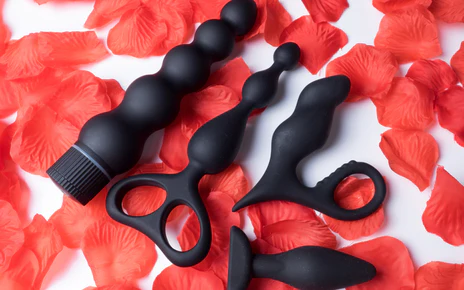


Impact play is the consensual application of force to specific safe zones of a partner's body, using the hand or a chosen implement, within a negotiated framework that distinguishes the practice fundamentally from any form of violence; it is the most-practised modality of BDSM beyond light bondage, the modality most accessible to couples introducing kink to an established relationship, and one of the few BDSM categories with an anatomical safety substrate clear enough to be summarised on a single page. This is the UK guide to impact play: what the practice actually is and how to think about its place in BDSM, the long history that produced the contemporary practice, the anatomy of safe striking zones and the danger zones to avoid, the specific implements (hand, paddle, flogger, cane, crop, slapper) and what each does differently, the pain-type spectrum from thuddy to stingy and where you and your partner sit on it, the warm-up and ramp protocol that turns risky pain into welcome sensation, the real-time reading skills that distinguish safe practice from unsafe, common mistakes and how to avoid them, aftercare specific to impact play including bruise management, the UK implement buying landscape, and how impact play pairs with bondage and D/s in combined scenes. Pair this with our anatomy pillar for the broader nerve and circulation substrate, our safewords and aftercare pillar for the communication and recovery framework, and our D/s pillar for the relational dynamic that impact play often sits within.
What impact play actually is
Impact play covers a defined range of BDSM activities involving consensual striking of a partner\'s body with the hand or with a chosen implement. The most-practised forms include spanking (hand on the buttocks or other safe zones), paddling (paddle on the same zones), flogging (a flogger with multiple tails on the back, buttocks, thighs), caning (cane on the buttocks or thighs), and crop work (crop on safe zones). Less common forms include slapper or strap work, percussion play with specialist implements, and various blended forms.
The practice is consensual, negotiated, and bounded. The bottom has agreed in advance to the activity, has agreed to specific intensity ranges and implements, can stop the activity at any time via safeword, and emerges from the scene with the relationship intact and the experience integrated. This framing distinguishes impact play from violence, where consent is absent, negotiation has not happened, the recipient cannot stop the activity, and the experience produces psychological harm rather than catharsis or pleasure.
The distinction matters because impact play is often the BDSM category that produces the most pause for new practitioners encountering it from outside the community. "Why would you want this?" is a reasonable question; the answer, drawn from the practitioner literature and the contemporary psychological research on BDSM (see our mental health pillar for the research backbone), is that for many people the controlled experience of impact in a context of trust, negotiation, and care produces specific positive states (endorphin release, altered consciousness, intense connection with the partner, catharsis, sometimes erotic response) that the same practice without consent and negotiation does not produce and cannot substitute for. The framing is the practice; the framing is what makes the difference.
Impact play is also one of the most-accessible BDSM categories for couples introducing kink to an established relationship. The implements are inexpensive, the technique can be learned with care, the intensity can be calibrated very precisely, and the practice does not require the long pedagogical investment that more technically-demanding categories (suspension, rope work generally) involve. Many UK couples enter the broader BDSM landscape via impact play; it is often the modality that demonstrates the broader principle (negotiated consent transforms the activity) that subsequent exploration builds on.
The long history of impact play
The contemporary BDSM impact play modality has roots in several distinct historical streams.
The disciplinary tradition. Corporal punishment in British schools, military discipline, and judicial corporal punishment was a major feature of British life through the 19th and into the 20th centuries; the cane in particular has a specific cultural resonance in Britain as a result. The disciplinary tradition was not consensual and the practice as actually conducted has nothing in common with consensual BDSM impact play; but the implements and certain stylistic conventions of contemporary practice descend culturally from this tradition. The "schoolgirl receives the cane" roleplay scenario, for example, is a contemporary BDSM scene type that draws aesthetic content from a specifically British disciplinary history that ended within living memory.
The monastic and ascetic flagellation tradition. Religious self-flagellation in Christian, particularly Catholic, ascetic practice (most prominent from the medieval period through the 19th century) used impact for spiritual purposes; not consensual play, but a documented historical practice of voluntary impact application as a contemplative or devotional act. Some contemporary BDSM practitioners draw consciously on this lineage in terms of how they think about pain and altered states; many do not.
The Victorian erotic literature. The mid-to-late 19th century produced a substantial body of erotic literature centred on flagellation; Algernon Charles Swinburne is the most-cited literary figure (his published work and his private life both reflect the interest), and the underground publishing market produced extensive material. The Cremorne, the Pearl, and a wide range of Victorian erotic periodicals featured flagellation content prominently. Iwan Bloch and other early sexologists treated the British interest in flagellation as a documented cultural phenomenon worth specific study; the term "English vice" appears in the European sexological literature of the period referencing it.
The 20th-century leather and BDSM scene. The post-war leather scene that emerged in San Francisco, New York, London, and other Western cities through the 1950s, 60s, and 70s formalised contemporary BDSM impact play as an explicitly-consensual practice with negotiated frameworks. The "Old Guard" leather tradition of formal protocols for impact play, the development of the safer-sane-consensual (SSC) framework, and the later risk-aware consensual kink (RACK) framework all contributed to the contemporary practice. UK leather and BDSM scenes from the 1970s onward developed alongside their continental and American counterparts.
The contemporary scene. Modern UK impact play sits within the broader contemporary BDSM landscape: practised in private relationships, taught at workshops and events run by groups including LAM (London Alternative Market), Club Pedestal, and various regional UK kink communities, and discussed in the published BDSM education literature (Jay Wiseman\'s SM 101, Janet Hardy and Dossie Easton\'s work, Midori\'s pedagogical material, the more recent UK-context writing on kink). The practice has substantial pedagogical infrastructure and substantial community accountability around safety; both are accessible to new practitioners willing to engage.
The anatomy of safe striking zones
The single most important safety knowledge for impact play is the map of safe striking zones versus danger zones. This is anatomically clear and worth memorising before any impact play begins.
Safe primary zones.
The buttocks. The classical and safest target for impact play. The gluteal muscle mass is substantial, the fat layer is protective, and there are no major organs or vulnerable structures immediately beneath the surface. The buttocks tolerate substantial impact intensity with low risk of significant injury. Most impact play centres on this zone.
The upper back. Specifically the area between the shoulder blades and below the shoulders. The muscle mass is substantial, the kidneys are not in this zone (they are lower, addressed below), and the underlying anatomy is relatively forgiving. The upper back is a standard flogging target.
The upper thighs (back of leg). The hamstring area is well-muscled and tolerates impact reasonably; the practice transitions from buttocks to upper thigh in some scenes. The zone tapers in safety as you move toward the back of the knee (avoid the popliteal fossa area).
The shoulders. Specifically the deltoid muscle mass. Less commonly targeted but available; the zone is safe for moderate intensity.
Danger zones to avoid.
The kidneys. Located in the lower back below the ribs and above the hip bones; approximately the area where a hand on the hip would rest with the thumb angled up. The kidneys are vulnerable to impact injury; a hard strike to the kidney zone can cause significant injury including renal hematoma, blood in the urine, and in severe cases requiring medical attention. This is the most important "no-strike" zone in impact play and the most-commonly overlooked by new practitioners. Note that the kidney zone extends below the rib cage and above the hip bones; the boundary with the safe upper-back zone is the lower edge of the rib cage.
The spine. The vertebral column down the centre of the back. Direct impact on the spine can cause vertebral injury, disc damage, and neurological consequences. Floggers and other multi-tail implements should be aimed to wrap to the sides of the spine, not to land on it directly.
The neck. The cervical spine, the carotid arteries, the trachea, and the brachial plexus all run through the neck. Impact to the neck is high-risk for serious injury and is universally avoided in impact play.
The head and face. Even "play slaps" to the face require specific technique and carry risks (eye injury, eardrum damage, dental damage); face slapping is a specialist subcategory of impact play that should not be approached with general impact-play technique. The head as a target is universally avoided.
The tailbone (coccyx). The bony prominence at the base of the spine. A direct strike on the tailbone can cause significant pain disproportionate to the intensity of the strike and can produce bruising that persists for weeks. Aim impact above the tailbone (mid-buttock) rather than at the base of the spine.
The joints. Knees, elbows, ankles, and wrists are all vulnerable to impact injury; the joint structures do not benefit from the muscle padding that the standard safe zones offer.
The breasts. Some practitioners include breast impact as part of their practice; the breast tissue is vulnerable to both immediate pain disproportionate to apparent intensity and longer-term concerns about tissue damage. Breast impact is a specialist subcategory and is not part of standard impact play technique.
The genitals. Genital impact (CBT for penile genitalia, vulval impact) is a specialist subcategory with its own technique, safety framework, and pedagogy; not addressed here. Standard impact play does not target the genitals.
The summary heuristic: buttocks and upper back are the standard impact zones; lower back (kidney area), spine, neck, head, and joints are off-limits without specialist technique you have not yet acquired. Knowing this map cold is the single most important piece of safety knowledge in impact play.
The implements: what each does differently
The choice of implement determines a great deal about what an impact scene feels like. Each implement has characteristic sensation, intensity range, and technique demands.
The hand. The original and most accessible impact play implement. Sensation: variable, controllable, can range from light tap to substantial spanking. The hand gives the rigger continuous feedback through their own palm about the intensity of contact and the bottom\'s skin temperature and response. Hand spanking is the entry point to impact play for many couples; it requires no equipment, builds the negotiation and reading-the-bottom skills that subsequent implement work depends on, and is the implement most directly tied to relational intimacy. Intensity range: light to moderate-heavy. Hand spanking is what most "I want to try impact play" couples should start with.
The paddle. A flat wooden or leather implement, typically with a handle. Sensation: thuddy (deep impact felt in the muscle rather than sharply on the skin surface); produces broader pain distribution than the hand and can be more intense for the same effort. Paddles range from light leather paddles suitable for moderate play to heavy wooden paddles used for intense play. Technique: the paddle should land flat against the target zone; angled contact produces uneven distribution and can hit unintended areas. UK paddle market: light leather paddles £15-40, mid-range wooden paddles £30-80, premium hand-finished paddles £80-200.
The flogger. A multi-tail implement with a handle; the tails (typically 20-40 in number) are leather, suede, rubber, or specialist synthetics. Sensation: highly variable depending on tail material and weight, ranging from light caressing thud (heavy thick leather flogger used gently) to sharp sting (thinner lighter tails). Floggers are the most versatile single implement in impact play; the same flogger can produce sensations from gentle warm-up to intense scene depending on how it is wielded. Technique: the flogger is wielded with the wrist and forearm; the tails should wrap to the sides of the spine, not land on the spine itself. Floggers take meaningful practice to wield safely; an unpracticed flogger user can easily wrap tails around the body to the front (genital, face) or hit unintended zones. UK flogger market: entry-level synthetic floggers from £20, leather floggers £40-120, premium hand-crafted floggers £100-400.
The cane. A thin rod, typically rattan (the traditional British school cane material), occasionally other materials. Sensation: sharply stingy, very intense for the apparent gentleness of the implement; produces well-defined linear welts (often called "tramlines") that persist for hours to days. The cane is the highest-intensity standard impact implement; a hard caning produces sensations and markings unlike any other implement and is considered an advanced rather than introductory implement. Technique: the cane is wielded with the wrist and forearm; the cane should land at right angles to the body, not at angles that produce a wrapping or rolling strike. The cane requires more technical skill than the paddle or flogger to wield safely. UK cane market: rattan canes from £10-50 (price reflects length, diameter, and finishing quality); collections of canes in different weights are typical for serious practitioners.
The crop. A short rod (typically 50-80 cm) with a small leather flap (the "popper") at the tip. Sensation: very controllable, allows precise targeting of small areas, ranges from light tap to sharp sting. The crop is used for targeted impact on small areas (a single buttock cheek, a thigh, the back) rather than for broad-area work. Technique: lighter and more controllable than most other implements; the crop is often used in combination with other implements rather than as the sole implement. UK crop market: from £15-60 depending on length and quality.
The slapper / tawse / strap. Various flat leather implements designed for striking. The Scottish tawse is a specific historical implement (used in Scottish schools until the 1980s); contemporary BDSM slappers and straps draw on similar engineering. Sensation: thuddy, broad-area, similar to paddle but with leather flexibility producing a different impact profile. UK market: from £20-80.
Specialist implements. Single-tail whips, signal whips, dragon-tongues, percussion sticks, and various specialist implements exist for specific advanced practice. These should not be approached without specialist instruction.
Pain types: thuddy vs stingy and the spectrum
One of the foundational vocabularies of impact play is the distinction between "thuddy" and "stingy" sensation, sitting at opposite ends of a spectrum that most impact play sits along.
Thuddy sensation. Deep impact felt in the muscle and tissue beneath the skin; less skin-surface sting, more deep-body thump. Produced by: heavy paddles, heavy floggers with substantial tails, the hand used with full body weight. Experienced by some bottoms as comforting and grounding; less likely to produce skin breaking or welts; suits bottoms who find sting unpleasant.
Stingy sensation. Sharp surface impact felt prominently on the skin; less deep penetration. Produced by: canes, lighter floggers with thin tails, crops, slappers. Experienced by some bottoms as more challenging or intense; more likely to produce welts and skin markings; suits bottoms who find sting accessible or pleasurable.
Most implements can produce some range across the spectrum depending on how they are wielded; a flogger can be both thuddy and stingy depending on stroke. But each implement has a characteristic profile.
Bottoms vary enormously in their preferences. Some bottoms strongly prefer thud and find sting genuinely unpleasant; some bottoms strongly prefer sting and find pure thud less interesting; many bottoms enjoy variation. The negotiation conversation should establish where the bottom sits on this spectrum and which sensations are welcome.
The "good pain" framing common in BDSM discussion is referring to the specific sensation profile that the individual bottom finds welcome. There is no objective "good pain"; there is the specific intersection of implement, technique, intensity, target zone, the bottom\'s mental state, and the bottom\'s preferences. Mapping this for a specific partner is part of what early impact play sessions are doing.
Warm-up, ramp, and intensity escalation
The protocol that distinguishes practised impact play from amateur impact play is the warm-up and ramp.
Warm-up. Every impact scene begins with light contact that establishes the target zone\'s tolerance, warms the tissue (literally increases blood flow), gives the bottom time to acclimate to the sensation, and allows the rigger to establish baseline reading of the bottom\'s response. Warm-up is not optional. A bottom struck at intended scene intensity without warm-up will experience the same impact as significantly more painful than if the same impact comes after proper warm-up. Warm-up duration: typically 5-15 minutes depending on the scene and the bottom; longer for more intense planned scenes.
The technique. Light open-handed contact on the target zone, gradually increasing in intensity. Mix of slow rhythmic contact and brief firmer touches. Skin should warm noticeably; the bottom should report or display rising arousal and comfort with the contact. The transition from warm-up to the main scene happens when the warm-up has done its work, not on a fixed schedule.
Ramp. The progression from warm-up intensity to scene intensity should be gradual rather than abrupt. A common error is going from gentle warm-up to maximum-intensity strikes; this overwhelms the bottom\'s pain processing, defeats the endorphin response that makes impact play work, and produces a poor experience even if the scene technically completes. The ramp through intermediate intensities lets the body\'s endorphin response build progressively and lets the bottom acclimate to each level before the next.
Peak intensity. The most-intense part of the scene should be relatively brief. Sustained peak intensity is not what well-designed impact play looks like; the rhythm should be peaks separated by lower-intensity passages where the bottom can register the previous peak and prepare for the next. This rhythmic structure is why a 30-minute scene at peaks well within the bottom\'s capacity produces a better experience than 15 minutes of sustained peak intensity.
Cool-down. The scene tapers to lower intensity before stopping entirely. The cool-down lets the bottom\'s system begin returning toward baseline before the formal end of the scene; the abrupt stop is jarring and produces unnecessary drop the following day.
Reading the bottom: the skill that distinguishes safe from unsafe
As with all BDSM modalities, the rigger\'s ability to read the bottom in real time determines whether the practice is safe and welcome or unsafe and harmful. In impact play, several specific signals matter.
Skin response. The target zone changes appearance through the scene. Light pink during warm-up. Deeper pink to red during moderate-intensity play. Specific welts or darker marks during heavier play. The rate of colour change matters; a zone that goes from natural to deep red within seconds is being struck too hard for the bottom\'s current tolerance. A zone that develops broken skin (blood at the surface) has crossed beyond the standard impact play boundary; the scene should pause for assessment.
Bruise development. Bruising during the scene itself is rare; bruises typically develop over hours after the scene. Visible bruise formation during the scene indicates substantial impact intensity and warrants a check-in. Most impact play produces some bruising as a normal outcome (covered in the aftercare section); the rate and extent matter.
Breathing. The bottom\'s breathing tells you about their physiological state. Deep regular breathing: settled, processing the sensation, engaged. Rapid shallow breathing: distress, often a sign the intensity is high or accumulating. Held breath: often a sign of imminent peak distress; pause and check in. Restored deep breathing after a peak: good processing.
Vocalisations. Bottoms vocalise differently; some are quiet, some loud, some verbal. Patterns matter more than volume. A vocalisation pattern that is consistent through the scene with rising intensity peaks is normal. A vocalisation pattern that changes character (from open verbal to constrained, from rhythmic to broken, from engaged to dissociated) is a signal.
Body engagement. A bottom that remains engaged with the scene moves with the impact, anticipates contact, returns the rigger\'s touch between strikes. A bottom that has withdrawn into themselves, stiffened, gone still in a way that is not relaxed but braced, is signalling that the scene is approaching or past its working limit.
Verbal check-ins. At intervals through the scene, check verbally. "Colour?" (traffic-light system: green-going well, yellow-pause and consider, red-stop) is the standard fast check. Detailed check-ins at slower intervals: "how are you doing?", "where are you on intensity?". The frequency tightens as intensity rises; checking every couple of minutes during peak intensity is not excessive.
The stop thresholds: when to end the scene
The scene ends, ideally, at the rigger\'s and bottom\'s mutual recognition that they have had what they came for; the cool-down begins and the scene transitions to aftercare. Several specific thresholds warrant ending the scene earlier than planned.
Skin breaking. Surface blood at the strike zone is the standard "stop" threshold in impact play. The scene pauses, the area is cleaned, the bottom and rigger assess whether to continue with lower intensity on a different zone or end the scene entirely. Broken skin requires straightforward first-aid: clean the area, apply antiseptic if available, cover if practical. Most broken-skin from impact play heals without specific treatment.
Welts that are atypically severe. Some welting is normal in impact play, particularly with canes; the standard cane "tramline" welt is expected and resolves within days. Welts that are atypically severe (substantial swelling, areas where the skin is breaking spontaneously, welts that the bottom is clearly distressed by) warrant stopping.
Bottom\'s safeword or its functional equivalent. Yellow (slow down, change something), red (stop completely). The non-verbal equivalents you have negotiated (dropping a held object, hand signal, particular vocalisation). These are absolute; they are not subject to discussion or override.
Bottom\'s state of mind shifting unfavourably. A bottom who has been engaged becoming withdrawn, dissociated, or going still in a way that reads as distress rather than processing is a stop signal regardless of whether the bottom has used the safeword. New bottoms in particular may not safeword when they should; the rigger\'s independent judgment matters.
Rigger\'s own judgment. The rigger may end a scene before the bottom would; this is acceptable and sometimes correct. The rigger may be reading something the bottom is not aware of, or may have hit their own limit. Either is reason to bring the scene to a careful close rather than push past.
Anything that needs medical attention. The thresholds for medical attention are well-defined: any suspected kidney injury (pain in the kidney zone, blood in the urine following the scene), any suspected spinal injury (neurological symptoms following impact near the spine), any deep tissue injury (significant swelling that persists, signs of hematoma development), any wound that may need stitches or other clinical treatment. UK A&E will treat impact play injuries without judgment; honesty about how the injury occurred allows correct treatment.
Common mistakes and how to avoid them
The mistakes that recur in new-practitioner impact play and the simple corrections for each.
Starting too hard. The single most common error. New riggers, anxious about delivering the "real" experience, begin at intensity that should be the peak rather than the warm-up baseline. The correction: begin so light it feels like nothing; the bottom\'s pain processing builds up across the warm-up. By the time you reach the scene\'s actual intensity, the bottom\'s tolerance has built to receive it. Starting too hard wastes the endorphin build-up that makes impact play work; starting too light gives you somewhere to go.
Hitting wrong zones. Mostly the kidney zone, hit by strikes intended for the buttocks that have landed too high. The correction: know the kidney zone\'s anatomical location (lower back, below the rib cage, above the hip bones) and practise visual targeting on the safe zones. With multi-tail implements (floggers), practise on a target before practising on a person to learn the tail spread and reach.
Going too long. A scene that has done its work should end; continuing past the natural arc produces diminishing return and rising risk. The correction: plan scene durations realistically (a first impact scene might be 20-30 minutes total including warm-up and cool-down; a more established couple might run longer), and recognise the markers of "we have had what we came for" rather than trying to extract more.
Not negotiating beforehand. Impact play sprung on a partner without prior discussion is high-risk for both consent error and execution error. The correction: explicit conversation before the scene about what is on the menu, what intensity range, what implements, what zones, what safewords. The negotiation is not a chore; it is part of the scene\'s erotic structure for many couples, building anticipation while also doing the safety work.
Not warming up. The same scene with warm-up is a different scene to the same scene without. The correction: include warm-up as a non-negotiable part of every impact scene. The warm-up is also where the rigger\'s reading of the bottom\'s current state happens; skipping it loses both physiological and informational benefit.
Overlooking aftercare. The scene ends and the rigger turns away; the bottom is left to process alone. This produces both immediate (drop the following day, see our aftercare pillar) and relational consequences (the bottom feels used rather than cared for). The correction: aftercare is part of the scene, not an optional add-on.
Drinking before impact play. Alcohol substantially impairs the bottom\'s pain processing, the bottom\'s ability to read their own state, and the rigger\'s judgment. The correction: substantive impact play happens sober; the casual "we had a glass of wine and got playful" pattern is fine for very light hand spanking but is not the context for serious implement work.
Wrapping with multi-tail implements. Floggers (and other multi-tail implements) wielded from the side can wrap tails around the body to the front, hitting unintended areas (genitals, breasts, face). The correction: practise flogger technique on a target before on a person; understand the tail reach and how to position so wrapping is unlikely; aim slightly inside rather than across the body.
Aftercare specific to impact play
The standard aftercare protocol (covered fully in our safewords and aftercare pillar) applies to impact play: rest, hydration, gentle reconnection, the 48-hour follow-up. Several impact-play-specific additions.
Bruise care. Some bruising is normal and expected. Bruises typically develop over 12-48 hours after the scene; the visible mark immediately after the scene is often less extensive than the bruise will become over the following day. Standard bruise care: gentle cooling (a cool cloth) within the first 24 hours can reduce extent; arnica cream or gel applied to bruised areas may speed resolution (the evidence base is modest but the intervention is harmless); paracetamol for discomfort is reasonable (avoid ibuprofen in the first 24 hours as it can extend bruising). Most impact play bruises resolve within 5-14 days depending on extent and the individual\'s normal bruise-healing rate.
Skin care for broken skin. If any skin broke during the scene, clean the area thoroughly, apply antiseptic, cover with a clean dressing for 24 hours, leave open thereafter. Watch for signs of infection (increasing redness, warmth, swelling, pus, fever) and seek GP attention if any develop.
Sitting and movement comfort. After substantial buttock impact, sitting may be uncomfortable for hours to days. Cushions, frequent position changes, and time off long sedentary tasks help. Most discomfort resolves within 48 hours.
Emotional processing. Impact play can produce intense emotional experiences that the bottom processes in the hours and days following the scene. The 24- and 48-hour follow-up conversations matter for this; the bottom may have reactions or recollections from the scene that they want to discuss when the immediate intensity has settled. The rigger\'s availability for this conversation is part of aftercare.
Drop management. Sub drop and top drop (covered in our mental health pillar) occur with impact play as with other BDSM modalities. The endorphin cascade taper that produces drop is particularly pronounced after intense impact scenes. Standard drop management applies: rest, food, hydration, gentle connection, the follow-up at 24 and 48 hours, recognition that the low feeling is physiological and time-bounded rather than relational.
UK implements buying landscape
A pragmatic guide to what to buy when, for UK practitioners building an impact play collection.
First purchase: hand only. The hand is free, it is always available, and learning hand spanking technique builds the reading-the-bottom skills that subsequent implement work depends on. Couples should run several scenes with the hand alone before adding implements.
Second purchase: a light paddle. A leather paddle in the £20-40 range, designed for moderate intensity. Allows extension of the practice with a different sensation, with low risk of overshooting if technique is still developing. Many UK suppliers offer suitable entry-level paddles.
Third purchase: a flogger. A mid-range leather or suede flogger, typically £40-80, with a moderate number of medium-weight tails. The most versatile single addition to a collection; can serve as warm-up implement and as scene implement. Spend time practising the flogger technique on a target (a cushion or punch bag) before practising on a person; the tail-spread learning curve is real.
Subsequent additions. A crop for targeted work, a cane once the practice has matured into wanting the sting profile, more floggers in different weights and materials, perhaps a specialist implement chosen for a specific practice direction. There is no universal sequence; let the practice and the partner\'s preferences direct purchases.
UK suppliers. BondageBox carries the standard range across all major impact implements; the UK kink retail market also includes several established competitors with similar ranges. Quality is generally tied to price; entry-level implements are functional, mid-range implements offer better materials and craftsmanship, premium implements (typically hand-crafted by specialist makers) are correspondingly priced. Specialist UK rope and impact-implement makers operate at the premium end; their work is often substantially better than mass-produced equivalents for serious practitioners willing to invest.
Inspection and replacement. Impact implements wear. Leather softens and eventually thins; wooden paddles can crack; rattan canes split. Inspect implements before each scene; replace any showing significant wear or structural compromise. The cost of replacement is small relative to the consequences of an implement failure mid-scene.
Pairing impact play with bondage and D/s
Many UK practitioners combine impact play with other BDSM modalities; the combinations have specific characteristics worth noting.
Impact play with bondage. The bottom restrained while impact happens is one of the most-common BDSM scene types. The bondage limits the bottom\'s movement during impact, which can be erotic or grounding depending on the partners; it also means the rigger must take additional responsibility for reading the bottom\'s state since the bottom cannot move away from contact. Combined scenes require the safety knowledge of both pillars: the nerve and circulation considerations of bondage (see anatomy pillar) plus the safe-striking-zone considerations of impact play. The combined scene is not more dangerous than either pillar alone if executed with care; it does require both safety frameworks to be carried simultaneously.
Impact play within a D/s frame. Impact play often sits within a dominant-submissive dynamic; the impact may be framed as discipline, as service, as part of an ongoing power exchange, or simply as something the dominant partner does for and to the submissive partner within their relationship. The D/s frame can deepen impact play\'s meaning for many couples; see our D/s pillar for the relational structure.
Impact play as part of a longer scene. Impact play is often one phase of a longer scene that includes other activities (sensation play, sex, conversation, rest). The phasing matters: impact play early in a scene can serve as the intensity peak with subsequent activities being lower-key; impact play late in a scene can be a culmination. Both work; the choice depends on the scene\'s shape and the partners\' preferences.
Related pillars in this cluster
- The Anatomy of Bondage, the nerve and circulation substrate; the safe-zones anatomy in this guide pairs with the broader anatomical framework there.
- Safewords and Aftercare, the communication and recovery framework, including the 48-hour follow-up referenced throughout.
- Dominance and Submission, the relational context that impact play often sits within.
- BDSM and Mental Health, the clinical context including drop management and the research on BDSM as a population practice.
- The History of Bondage, the lineage context including the British disciplinary and erotic-literature streams that flow into contemporary impact play.
FAQ
- Q: Is impact play safe?
- Practised with knowledge of safe striking zones (buttocks, upper back, upper thighs primarily; kidneys, spine, neck, head, joints avoided), with proper warm-up and ramp, with appropriate implements wielded with care, and with the reading-the-bottom skills described in this guide, impact play has a strong safety record. Without those, it is dangerous. The relevant variables: knowing where to strike and where not to, building intensity gradually rather than starting hard, choosing implements suited to the practice, and monitoring the bottom continuously throughout. Done well, impact play is one of the safer BDSM modalities for the intensity of experience it produces.
- Q: How do I find the kidney zone to avoid hitting it?
- The kidneys sit in the lower back below the rib cage and above the hip bones. A useful anatomical check: place your hands on your hips with thumbs angled up and toward your spine; the area your thumbs are touching is approximately the kidney zone. Impact in this zone can cause significant injury (renal hematoma, blood in urine, sometimes requiring medical attention). The safe zone for buttock impact is below the iliac crest (the upper edge of the hip bones); the safe zone for upper-back impact is above the lower edge of the rib cage. The narrow band between these (the kidney zone) is what to avoid.
- Q: What should I buy first for impact play?
- Nothing. The hand is the right starting implement; it is free, always available, and using the hand alone for the first several scenes builds the reading-the-bottom skills that all subsequent implement work depends on. The second purchase, after some hand-spanking practice, is typically a light leather paddle (£20-40 in 2026 UK pricing). The third is usually a mid-range flogger (£40-80). Beyond that, additions follow what the practice and the partner\'s preferences are asking for.
- Q: What is the difference between thuddy and stingy?
- Thuddy sensation is deep impact felt in the muscle and tissue beneath the skin; less skin-surface sting, more deep thump. Produced by heavy paddles, heavy floggers, the hand with full body weight. Stingy sensation is sharp surface impact felt prominently on the skin; less deep penetration. Produced by canes, lighter floggers with thin tails, crops. Most bottoms have preferences along this spectrum; some strongly prefer thud, some strongly prefer sting, many enjoy variation. The negotiation conversation before a scene should establish where the bottom sits and what sensations are welcome.
- Q: How long should a warm-up be?
- Typically 5-15 minutes depending on the scene and the bottom; longer for more intense planned scenes. The warm-up does specific physiological work (literally warms tissue and increases blood flow to the target zone), specific neurological work (activates the endorphin pathway that makes impact play work), and specific informational work (the rigger reads the bottom\'s state at the time of the scene). Skipping warm-up causes all three to fail and produces a worse experience even if no injury results. The transition to the main scene happens when the warm-up has done its work, not on a fixed clock.
- Q: Why do bottoms enjoy impact play?
- Several mechanisms operate. Endorphin release: sustained impact triggers the body\'s natural opioid system, producing the euphoria-like state similar to the runner\'s high. Altered consciousness (subspace): the same neurochemical cascade produces the dissociative-but-pleasurable state covered in our mental health pillar. Catharsis: for some bottoms, the impact is a way to release accumulated tension or emotion in a contained way. Intense connection with the partner: the rigger\'s sustained attention to the bottom\'s state, the trust required for the practice, the negotiated framework all produce relational intensity. Erotic response: for some bottoms, the practice is directly sexually arousing; for others, it is non-sexual but valuable. Different bottoms have different combinations of these reasons; there is no single answer.
- Q: How do I avoid causing bruises in impact play?
- You generally do not. Some bruising is normal in impact play that uses any significant intensity; the bruise is the visible record of capillary disruption that the impact causes. Bruise extent depends on intensity, implement, the bottom\'s baseline bruise tendency (some people bruise more readily than others), and other factors. Bruises typically develop over 12-48 hours after the scene and resolve over 5-14 days. If bruising needs to be minimised (the bottom needs to be on a beach, having medical exam, etc.), the options are to reduce intensity, to use less-bruising implements (heavy thud floggers bruise less than canes or thin floggers), or to do impact in zones less visible. There is no impact play technique that produces significant intensity without any bruising.
- Q: Is caning dangerous?
- More technically demanding than paddle or flogger work but not inherently dangerous if practised within the standard framework: safe zones only (buttocks and upper thighs are the standard cane targets), proper warm-up before cane work, escalation through lighter impact before heavy strikes, careful technique that lands the cane at right angles to the body rather than at angles that produce wrapping. Canes produce well-defined linear welts ("tramlines") that are part of the expected outcome; they persist for hours to days. Cane work should be approached after some experience with other implements rather than as a first impact tool. UK practitioners often describe the cane as the most British of impact implements and the one with the steepest learning curve relative to its apparent simplicity.
- Q: How do I know when to stop a scene?
- Several thresholds. Bottom\'s safeword or its negotiated functional equivalent (absolute). Bottom\'s state shifting from engaged to withdrawn or dissociated. Skin breaking. Atypically severe welt development. Your own judgment as the rigger that the scene has reached its natural end. The traffic-light verbal check-in (green-good, yellow-pause-and-consider, red-stop) used at intervals through the scene gives the bottom a low-friction way to communicate without breaking the scene\'s rhythm. The principle: stopping earlier than you might have is not a failure of the scene; it is good practice.
- Q: Can impact play break skin or cause injury?
- Skin breaking can happen, particularly with sting-profile implements (canes, thin floggers) at higher intensities; the standard practice is that broken skin is a stop signal warranting clean-up and assessment before continuing. More serious injury (kidney injury, spinal injury, hematoma needing medical attention) is uncommon in practised impact play that stays within the safe-zones framework but does occur in unpracticed work. UK A&E treats impact play injuries without judgment; honesty about how the injury occurred allows correct treatment. The safety practices in this guide (zone awareness, warm-up, ramp, continuous monitoring, defined stop thresholds) substantially reduce serious-injury risk relative to unpracticed impact play.
- Q: How do I negotiate impact play with a new partner?
- Explicit conversation before the first scene about: what implements (which are okay, which are off-menu); what zones (the safe-zones default plus or minus any specific exclusions); what intensity range (using the bottom\'s previous experience as reference, or starting genuinely light if no previous experience); what safeword system (traffic-light is the standard); what aftercare expectations (who is responsible for what, what the 24-48 hour follow-up looks like); what is on or off the table for combined scenes (impact with bondage, impact within D/s framing). The conversation is not a chore; for many couples it is part of the erotic build-up to the scene. The depth of the negotiation scales with the depth of the scene; a casual hand-spanking session needs less negotiation than a substantive caning scene.
- Q: Is impact play part of D/s or separate?
- Either. Many couples practise impact play within a D/s frame where the impact is part of the dominant-submissive dynamic, framed as discipline or service or simply as part of the relationship\'s structure. Other couples practise impact play outside any D/s frame, as a specific activity they enjoy together without the broader power-exchange context. Both are common. The choice depends on the relationship\'s broader structure and the partners\' preferences; impact play does not require D/s framing to be meaningful, and D/s relationships do not require impact play to function. See our D/s pillar for the relational frame if you are considering combining them.
- Q: What aftercare does impact play specifically need?
- The standard aftercare protocol applies (rest, hydration, gentle reconnection, the 48-hour follow-up; see our aftercare pillar). Impact-play-specific additions: bruise care (cool cloth within first 24 hours, arnica gel optionally, paracetamol for discomfort, avoid ibuprofen in first 24 hours as it can extend bruising); skin care for any broken skin (clean, antiseptic, dressing for 24 hours); sitting and movement comfort accommodations (cushions, frequent position changes for 24-48 hours); availability for the emotional-processing conversations that may occur in the hours and days after the scene as the bottom integrates the experience.
- Q: What UK teachers and venues teach impact play?
- The UK impact play teaching landscape is less institutionalised than the rope-bondage one; few dedicated impact play teaching spaces exist comparable to Anatomie Studio for shibari. Workshops on impact play appear at general kink events including LAM (London Alternative Market), Club Pedestal, Torture Garden educational events, and various regional kink gatherings. The UK kink community on FetLife lists current workshops and teacher reputations; word-of-mouth in regional scenes is the most reliable way to identify currently-active teachers. Online educational resources (the Jay Wiseman SM 101 tradition, contemporary US-based teachers Midori and Janet Hardy, the various kink-education podcast and YouTube material) supplement in-person learning effectively.
- Q: Can I start impact play without a partner experienced in BDSM?
- Yes; many couples do, learning together. The guide here provides the safety framework. Specific recommendations: start very gentle, warm up extensively, use the hand only for the first several scenes, run shorter scenes than you imagine you might want, debrief thoroughly after each scene, treat each subsequent scene as building on the explicit feedback from previous scenes, do not skip the negotiation conversation. Attending a workshop together once you have done some practice on your own often accelerates the learning meaningfully; the in-person observation by an experienced teacher catches things that self-instruction does not. The combined-learning pattern (some self-practice, then workshop, then more informed self-practice) is a reasonable UK-context approach.
Sources & further reading
- Wiseman, J. (1996). SM 101: A Realistic Introduction. Greenery Press. The foundational English-language BDSM safety and education text; substantial impact play coverage; widely used in UK education despite US origin.
- Hardy, J., & Easton, D. (2017). The New Bottoming Book and The New Topping Book. Greenery Press. Long-running pedagogical texts; relevant chapters on impact play as part of broader BDSM practice.
- Midori. Wild Side Sex: The Book of Kink. Greenery Press. Pedagogical text used in workshop teaching; substantial impact play content.
- Henkin, W. A., & Holiday, S. (1996). Consensual Sadomasochism. Daedalus. Clinical and practical text on BDSM including impact play safety.
- Newmahr, S. (2011). Playing on the Edge: Sadomasochism, Risk, and Intimacy. Indiana University Press. Sociology of contemporary US/UK BDSM practice including impact-play community.
- Easton, D., & Liszt, C. A. (2003). The New Bottoming Book. Greenery Press. Bottom-focused pedagogy; substantial chapter on receiving impact play.
- Wismeijer, A. A. J., & van Assen, M. A. L. M. (2013). "Psychological characteristics of BDSM practitioners." Journal of Sexual Medicine, 10(8), 1943-1952. Population-level data on BDSM practitioners including impact-play participants.
- Bloch, I. (1909). The Sexual Life of Our Time. Early sexological treatment including the documentation of the "English vice" (flagellation) as a cultural phenomenon with specific British history.
- Gibson, I. (1978). The English Vice: Beating, Sex and Shame in Victorian England and After. Duckworth. Historical study of corporal punishment and flagellation in British cultural history.
- Swinburne, A. C. Victorian poet and prose writer whose published work and private life both reflect the 19th-century British literary flagellation tradition that contemporary impact play draws aesthetic content from.
- National Coalition for Sexual Freedom (NCSF). Safety guidance for BDSM practice including impact play. ncsfreedom.org.
- Pillai-Friedman, S., Pollitt, J. L., & Castaldo, A. (2015). "Becoming kink-aware: a necessary step for sexual health professionals." Sexual and Relationship Therapy, 30(2), 196-210. Clinical context for practitioners discussing impact play with healthcare providers.
- Williams, D. J., Thomas, J. N., Prior, E. E., & Christensen, M. C. (2014). "From SSC and RACK to the 4Cs: Introducing a New Framework for Negotiating BDSM Participation." Practical framework that applies directly to impact play negotiation.
- Brame, G. G., Brame, W. D., & Jacobs, J. (1996). Different Loving. Villard. Long-form interview-based study of BDSM practitioners across modalities including extensive impact-play material.
- NHS clinical guidance on bruising, soft-tissue injury, and renal injury. Standard NHS reference materials accessible via nhs.uk.
- British Association of Urological Surgeons (BAUS). Clinical reference on renal injury and presentation; relevant for understanding kidney-zone risk in impact play. baus.org.uk.
- Royal College of General Practitioners. Guidance on patient presentation of injuries from consensual sexual practice; framework for kink-aware GP encounters.
- St John Ambulance UK. First-aid reference for bruising, soft-tissue injury, and skin wound care. sja.org.uk.
- LAM (London Alternative Market). Long-running UK kink event with educational workshops including impact play; venue for UK impact-play pedagogy.
- Club Pedestal. London kink event with educational components; venue for UK impact-play and broader BDSM pedagogy.
- Torture Garden. Long-established UK fetish event with educational components; cultural context for UK BDSM community development.
- FetLife UK impact-play and BDSM groups. Active community forums where current UK workshop listings, teacher reputations, and practitioner discussions appear. fetlife.com.
- Backlash UK. UK BDSM legal advocacy with material relevant to consensual impact play under UK law (R v Brown 1993 and subsequent case law). backlash.org.uk.
- Califia, P. (2002). Sensuous Magic. Cleis Press. BDSM education text with substantial impact play material from an established practitioner-teacher.
- Various contemporary UK kink-education podcasts and YouTube channels supplementing in-person workshop instruction; specific creators change frequency-by-year. Community forum listings remain the best source for current recommendations.
Filed under Beginner's Guides
← Back to the Guides