



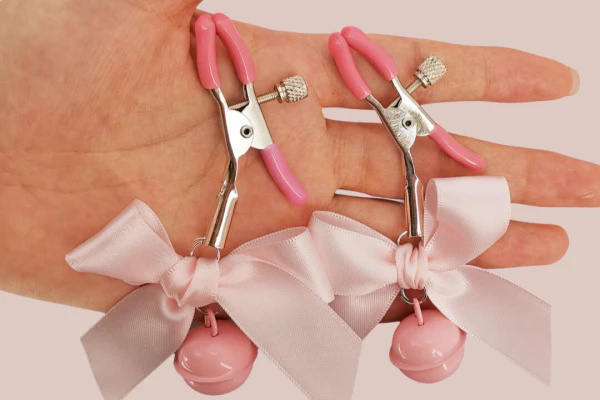
Nipple clamps apply steady pressure to the nipple, and the appeal is twofold: the pressure itself, and the rush of sensation when they come off and blood returns. For a beginner, the single most important feature is adjustability: a clamp with an adjustable screw or slider lets you set the pressure to comfort rather than accepting a fixed clamp's preset bite. The cardinal safety rule is the 15-20 minute limit, restricted blood flow is fine briefly but not indefinitely, and the most intense sensation is the removal anyway, so there is no reason to leave them on long. Types run from adjustable tweezer and clover clamps (the beginner-friendly options) to fixed clamps and weighted sets (more advanced). Start adjustable, start gentle, and treat the removal as the main event. This guide covers types, sensation and safety for a first pair.
Nipple clamps, nipple clips, nipple jewellery
"Nipple clamps" and "nipple clips" are interchangeable, a device that applies pressure to the nipple. "Nipple jewellery" usually means non-piercing decorative pieces that may apply light pressure. This guide is about clamps used for sensation play, where the pressure and its release are the point.
How nipple clamps work
A clamp applies steady, even pressure to the nipple, which produces a sensation that builds from a pinch into a warm ache as the minutes pass. The nipples are densely supplied with nerve endings, so the effect is significant. Then the headline event: removal. When the clamp comes off, blood rushes back into the compressed tissue, producing an intense, brief flood of sensation that many people find is the best part. The clamp is, in a sense, the setup; the release is the payoff.
The types
Adjustable tweezer clamps (beginner-friendly)
A tweezer-shaped clamp with a sliding ring that sets the pressure. Slide the ring up for more grip, down for less. The most forgiving first clamp because the pressure is fully under your control, from barely-there to firm.
Best for: absolute beginners, anyone unsure of their tolerance.
Adjustable clover clamps
A clover clamp tightens further when the connecting chain is pulled, so the pressure responds to movement. Adjustable versions let you set the resting pressure. More intense than tweezer clamps because of the responsive tightening.
Best for: beginners ready for a step up, anyone who wants pressure that responds to a pull.
Fixed clamps
A clamp with a preset, non-adjustable pressure (often spring-loaded). Simple, but you are accepting the manufacturer's chosen bite rather than dialling your own. Better as a second pair, once you know your tolerance.
Weighted clamps
Clamps with weights attached, or designed to take them. The weight adds a dragging, pulling sensation on top of the pressure. An advanced option, not a first pair.
Nipple clamp types compared
| Type | Pressure control | Intensity | Beginner suitability |
|---|---|---|---|
| Adjustable tweezer | Full, slider-set | Gentle to firm | Best first choice |
| Adjustable clover | Resting pressure set, tightens on pull | Moderate to intense | Good second step |
| Fixed clamp | None, preset | Manufacturer-set | Better as a second pair |
| Weighted | Varies | Intense, dragging | Advanced |
A forgiving first pair
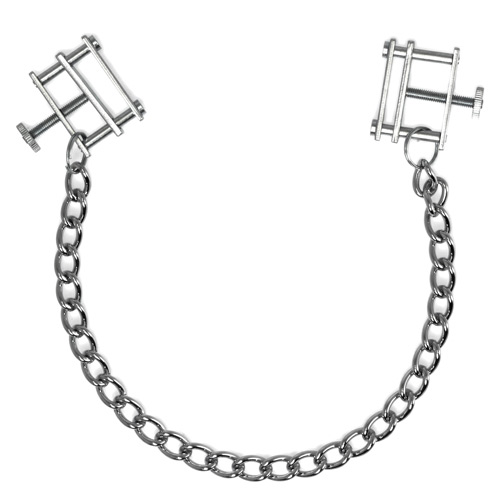
Adjustable Nipple Clamps
Pressure fully under your control, the forgiving first pair. ~£51.
£50.99 →A vibrating option
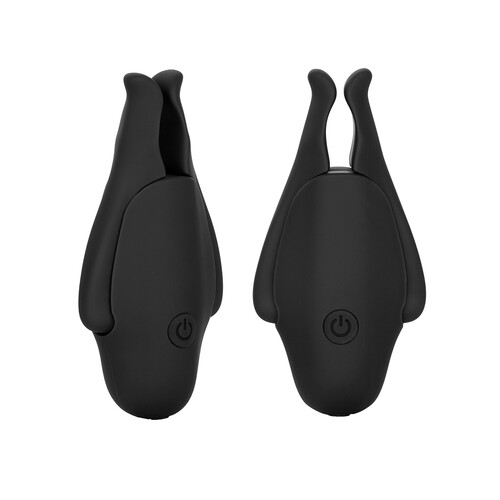
Rechargeable Nipplettes
Vibrating adjustable clamps, pressure plus stimulation. ~£59.
£58.99 →Safety: the rules that matter
- 15-20 minutes maximum. Restricted blood flow is fine briefly, not indefinitely. And since removal is the most intense part, there is no reason to leave them on long.
- Start at the lowest pressure. With adjustable clamps, begin barely-gripping and increase only if you want more. You can always tighten; over-tightening first teaches you to dislike them.
- Remove on any warning sign. Numbness, a colour change to white, blue or grey, or loss of sensation all mean take them off now.
- Removal will sting, briefly. The rush of returning blood is intense for a few seconds. That is expected, not a problem. Going slow on removal does not reduce it much; many people prefer it quick.
- Avoid if you have circulation conditions or reduced nipple sensation, and stop if anything feels wrong rather than pushing through.
Using them the first time
Apply with the clamp at its lowest setting, positioned on the nipple itself rather than just the tip. Let the sensation settle for a minute, it builds. If it is comfortable and you want more, increase slightly. Keep the session short, well within the 15-20 minute window. When you remove them, do it deliberately and be ready for the brief flood of sensation. That release is what the whole thing is for.
Common mistakes
- Buying fixed clamps first. Without adjustability you are accepting a stranger's chosen pressure. Start adjustable.
- Over-tightening at the start. Begin barely-gripping. You can always increase.
- Leaving them on too long. 15-20 minutes maximum, and the removal is the best part anyway.
- Ignoring colour change. White, blue or grey means remove now.
- Starting with weighted clamps. The dragging weight is an advanced sensation, not a first one.
Related reading
Frequently asked
- What are nipple clamps and what do they do?
- Nipple clamps apply steady pressure to the nipple, producing a sensation that builds from a pinch into a warm ache. The headline event is removal: when the clamp comes off, blood rushes back into the compressed tissue, producing an intense brief flood of sensation that many people find is the best part.
- What nipple clamps should a beginner buy?
- Adjustable tweezer clamps. The sliding ring lets you set the pressure to comfort, from barely-there to firm, which makes them the most forgiving first pair. Fixed clamps accept a preset pressure and are better as a second pair once you know your tolerance.
- How long can you safely wear nipple clamps?
- 15-20 minutes maximum. Restricted blood flow is fine briefly but not indefinitely, and because the removal is the most intense part of the experience, there is no reason to leave them on long. Remove immediately on any numbness, colour change or loss of sensation.
- Do nipple clamps hurt?
- They produce a pinch that builds into a warm ache, the intensity is set by the pressure, which on adjustable clamps is fully under your control. Start at the lowest setting. The most intense moment is removal, when returning blood produces a brief flood of sensation lasting a few seconds.
- What is the difference between tweezer and clover clamps?
- Tweezer clamps have a sliding ring that sets a fixed resting pressure, fully adjustable and beginner-friendly. Clover clamps tighten further when the connecting chain is pulled, so the pressure responds to movement, more intense and a better second step than a first pair.
- Are nipple clamps safe?
- Used correctly, yes: adjustable type, lowest pressure to start, the 15-20 minute limit, and removal on any warning sign (numbness, colour change to white, blue or grey, loss of sensation). Avoid them if you have a circulation condition or reduced nipple sensation, and stop if anything feels wrong.
- Why does removing nipple clamps feel intense?
- While the clamp is on, it restricts blood flow to the nipple. When it comes off, blood rushes back into the compressed tissue, and that sudden return produces an intense flood of sensation for a few seconds. For many people this release is the entire appeal of nipple clamps.
- Where can I buy nipple clamps in the UK?
- BondageBox stocks adjustable, clover, fixed and weighted nipple clamps with free discreet UK delivery over £30, plain unmarked packaging, and "BBox" on the bank statement. Browse the nipple clamps range.
Sources & further reading
- NHS, Sexual health hub, NHS UK
- NCSF, Consensual kink safety standards, National Coalition for Sexual Freedom
- St John Ambulance, Circulation and first aid, St John Ambulance UK
Filed under Beginner's Guides
← Back to the Guides