


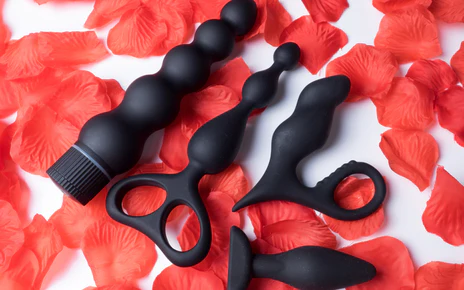


Sex through the menopause is a genuinely underserved topic in mainstream UK adult retail. Most retailer copy targets buyers under 40; the changes that perimenopausal and postmenopausal users actually experience get treated either as a tragedy to be denied or as a problem with the user rather than the gear. This is the plain UK guide to what actually changes, what helps, and the toys that are appropriate at this stage of life. For the broader materials check that applies across all stages, see our body-safe sex toys UK pillar.
What changes (and what does not)
Three changes are common during perimenopause and after; their severity varies enormously between individuals.
Vaginal dryness. The most common change. Falling oestrogen levels reduce natural lubrication; the vaginal walls produce less of the fluid that previously made penetration comfortable. Affects roughly 50-70% of postmenopausal users to some degree; for some it is a minor inconvenience, for others it is the dominant change.
Vaginal atrophy (GSM, genitourinary syndrome of menopause). The vaginal walls become thinner, less elastic, and more prone to small abrasions during penetrative activity. The vaginal opening can narrow somewhat. This is medical; it is also entirely treatable. Topical oestrogen (creams, pessaries, or rings, all prescription) reverses much of the atrophy with consistent use; non-hormonal alternatives include hyaluronic acid moisturisers and consistent dilator use to maintain elasticity.
Shifts in clitoral and erogenous sensitivity. Some users report increased clitoral sensitivity (the clitoris is not affected by oestrogen the way the vagina is, and some users find this becomes more dominant in the sensory profile); others report needing more sustained or intense stimulation than before. Either pattern is normal.
What does not change reliably: orgasm capacity. Most postmenopausal users continue to reach orgasm without difficulty; for some, orgasm intensity actually increases when the practical comfort issues (dryness, thinning) are addressed.
lubricant">Lubricant is the single biggest variable
The default intervention. Generous water-based or silicone-based lubricant applied externally and internally before any insertable activity transforms the experience for almost every user with menopausal dryness.
Water-based is the universal-compatibility default; compatible with every toy material and every condom type. Reapplies easily with a drop of water mid-session. The right choice if you own silicone toys (silicone lube bonds to silicone toys).
Silicone-based lasts significantly longer per application (60+ minutes vs 5-15 for water-based) and stays slippery in water, useful for shower or bath play. Cannot be used with silicone toys; fine on glass, steel, ABS, or with condoms alone.
Hybrid (water plus silicone microparticles) is the middle ground; longer glide than pure water-based, still compatible with most silicone toys (check the manufacturer label).
For users with sensitive skin, choose a glycerin-free, paraben-free, fragrance-free product. ID Free, Sliquid Sea and Lubido are the UK-stocked picks; see our sensitive-skin lube guide for the full breakdown.
Avoid: warming lubes (often contain glycerin which can feed yeast), flavoured lubes, anything with parabens or fragrance if you have any skin sensitivity. The vaginal microbiome shifts in menopause and tolerates less than it used to.
Vaginal dilators
Often presented as a medical device, but functionally a sex-toy-adjacent category that menopausal users benefit from significantly. A dilator set is a graduated series of smooth insertables (typically four to six sizes from finger-width to standard penis-width) used over weeks of consistent insertion (10-15 minutes daily, with plenty of lubricant) to maintain or restore vaginal elasticity.
The evidence base for dilator therapy in postmenopausal atrophy is substantial; NHS gynaecology services prescribe dilator sets routinely for the same indication. Self-purchase is straightforward; medical-grade silicone or borosilicate glass are the appropriate materials.
The practice is not sexual unless you want it to be; for many users it is a maintenance routine in the same category as moisturising. The benefit comes from consistency over weeks, not from any single session.
A wand massager for external use
For clitoral-focused stimulation that does not depend on penetration, a wand massager is the highest-value single purchase a perimenopausal or postmenopausal user can make. Three reasons.
First, the broad surface vibration suits the slightly-shifted clitoral sensitivity many menopausal users experience. Smaller bullets sometimes do not deliver enough sustained stimulation; a wand always does.
Second, the form factor is joint-friendly. Wands are held in a relaxed grip, do not require fine motor control, and can be positioned without the wrist contortion smaller toys sometimes require. For users with arthritis, hand pain, or shoulder issues (all more common in this age group), this matters significantly.
Third, the variable intensity range (low through medium through high) accommodates the wider sensitivity range menopause can produce. Single-speed bullets are less forgiving.
UK picks: the Doxy 3 (mains-powered, the most powerful, £90), the Magic Wand Rechargeable (cordless, more attachment ecosystem, £200), or the Le Wand (quietest, premium build, £190). See our wand vibrator UK buyer\'s guide for the full comparison.
If penetration is still on the table
For users who continue to enjoy penetrative activity, choose toys that are gentler on changed tissue:
Smaller diameter than you may have used before. A 1.2 inch diameter dildo that worked comfortably ten years ago can feel different now. Try one size down before assuming the old size still works; many users find they prefer the smaller version.
Smooth surfaces, not heavily textured. Pronounced ribs or knobs that previously felt pleasurable can now feel sharp against thinner walls. Smooth silicone, glass or steel toys are gentler.
Slow insertion, generous lube, breathing. The internal sphincter and vaginal opening respond to relaxation, not to force. The same principles that apply to anal play apply here; slower is the universal answer.
When to see your GP
Three reasons to make the appointment:
Pain during sex that does not respond to lubricant. Topical oestrogen, hyaluronic acid moisturisers, or referral to a pelvic-health physiotherapist can address this; the GP can prescribe or refer. The conversation is routine for UK GPs; do not delay because you think it is too small a thing to mention.
Persistent dryness affecting daily comfort, not just sex. Same conversation, same treatments; the comfort improvement extends beyond sex once the underlying tissue is treated.
Any unusual bleeding postmenopausally. Always a GP appointment; usually nothing, occasionally important. Do not delay.
HRT (hormone replacement therapy) is a separate conversation. Beyond the scope of this guide; the British Menopause Society maintains good UK-specific resources at thebms.org.uk if you want to start reading.
Common questions
- Q: What is the best sex toy for menopause?
- For a single recommendation, a quality wand massager (Doxy 3, Magic Wand Rechargeable, or Le Wand) plus a 250ml bottle of glycerin-free silicone-based lubricant. The combination handles 90% of postmenopausal sexual practice; everything else is a refinement on it.
- Q: Do I need to use vaginal dilators?
- Not strictly; many users do fine without. They are most useful for users experiencing vaginal narrowing from atrophy or those resuming penetrative activity after a long break (post-illness, post-bereavement). If you are penetratively active regularly, you may not need a separate dilator routine; if not, they are a useful maintenance tool.
- Q: Is silicone lube safe long-term for menopausal use?
- Yes, for body contact. Silicone-based lube sits on the skin surface rather than absorbing; minimal systemic effect. The reason to alternate it with water-based is toy compatibility (silicone lube bonds with silicone toys), not safety. Some users prefer the silkier feel of silicone-based for this reason.
- Q: Will sex toys make atrophy worse?
- No, the opposite. Consistent gentle activity (including with toys, with adequate lubricant) actually supports vaginal tissue health by maintaining blood flow and elasticity. The "use it or lose it" framing is a real medical observation, not just folk wisdom.
- Q: My partner does not understand the changes. How do I explain?
- The shorter version: "the things that used to work need a different setup now; with more lubricant and a slower start, almost everything still works." If they want the longer version, the NHS menopause pages and the British Menopause Society site are good neutral references to share. The change is medical, not personal; the framing helps.
- Q: I haven\'t had sex in years and want to start again. Where do I begin?
- External first. A wand massager, used solo, to reacquaint yourself with what your body responds to now. Then a small smooth dildo with plenty of lubricant, again solo. Partnered activity comes after you know what works on your own. Time pressure is the enemy of comfortable sex at any stage of life; especially so now.
Sources & further reading
- NHS. Menopause. nhs.uk/conditions/menopause/.
- British Menopause Society. thebms.org.uk.
- Portman DJ, Gass MLS. Genitourinary syndrome of menopause: new terminology for vulvovaginal atrophy from the International Society for the Study of Women\'s Sexual Health and The North American Menopause Society. Menopause. 2014;21(10):1063-1068.
- NICE Guideline NG23: Menopause: diagnosis and management. National Institute for Health and Care Excellence, 2015 (updated 2019).
- Pinkerton JV, Bushmakin AG, Komm BS, Abraham L. Relationship between changes in vulvar-vaginal atrophy and changes in sexual functioning. Maturitas. 2017;100:57-63.
Filed under Buying Guides
← Back to the Guides