




The first time a couple uses restraints, the thing that makes it good is not the equipment, it is the structure around it. A first restraint session has four parts and they are all simple: a conversation beforehand (what you are trying, what the safeword is, what is off the table), a calm setup (soft cuffs, the two-finger fit, everything within reach), the scene itself (start gentle, check in, keep it short), and aftercare (water, warmth, a few quiet minutes to reconnect). None of it requires skill. It requires only that you do not skip the structure. The couples who have a good first time are not the ones with the best gear; they are the ones who treated the first session as something to do carefully and unhurriedly. This is the walkthrough of that first session; for choosing the kit, see best beginner BDSM kit UK. For the broader pillar, see bondage for beginners UK.
First time bondage, first restraint session, beginner restraints
"First time using restraints", "first time bondage" and "beginner restraints" all describe the same moment: a couple trying consensual physical restraint together for the first time. This guide walks through that session in order, the conversation, the setup, the scene, the aftercare, so you know what the shape of it is before you begin.
If it helps to know: this is well-trodden ground. A 2017 study in the Journal of Sex Research (Joyal and Carpentier) surveyed 1,040 adults and found 46.8% had engaged in at least one BDSM-adjacent activity, with restraint and light bondage among the most-reported. A first restraint session is a common experiment, not an unusual one, and the structure below is what reliably makes it a good one.
Part 1: The conversation
Before anything is bought out or buckled on, talk. It does not need to be a formal negotiation; it needs to cover three things:
- What you are trying. "I would like to try restraining you to the bed" is concrete and easy to agree to or adjust. Vague is harder than specific.
- The safeword. Agree it now. The traffic-light system, green for continue, yellow for slow down or check in, red for stop, is the UK standard and easy to remember. Both partners can use it.
- What is off the table. Anything either partner does not want, stated plainly. No justification needed. "Not the gag this time" is a complete sentence.
This conversation is not a mood-killer. Done warmly, it is part of the build-up, and it removes the anxiety that actually does kill the mood.
Part 2: The setup
- Use soft restraints. Padded or fabric cuffs, not metal handcuffs, which are too narrow and cause numbness fast. A first session should use forgiving equipment.
- The two-finger rule. When a cuff is on, you should be able to fit two fingers between the cuff and the skin. Tighter risks circulation; looser risks slipping.
- Everything within reach. Safety shears if there is any rope or fabric tie, water, whatever you will want, all reachable without leaving the restrained partner.
- Decide the position together. Comfortable for the restrained partner to hold for the length of the scene. Wrists to the bedframe is the classic first position for a reason: simple, comfortable, easy to release.
The right first equipment
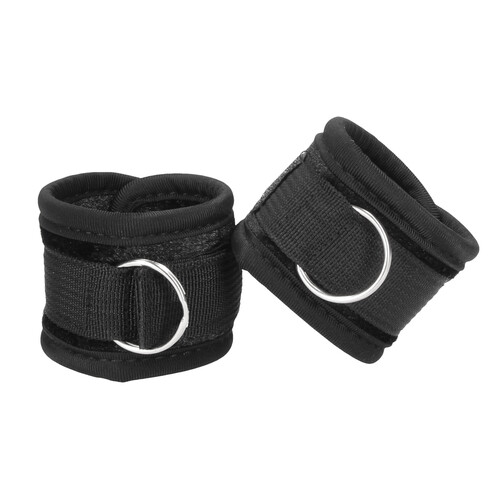
Ouch Velvet & Velcro Wrist Cuffs
Soft, quick-release Velcro cuffs, the forgiving first-session choice. ~£18.
£17.99 →Part 3: The scene
The scene itself is shorter and gentler than people expect, and that is correct for a first time.
- Start gentle. The restraint is the new element. Let it be the thing you are exploring rather than adding intensity on top of it.
- Check in. The active partner should ask "colour?" or "how are you doing?" at natural moments. It is not an interruption; it is the practice working.
- Watch the restrained limb. Numbness, tingling, colour change, loosen or release immediately. Check it without being asked.
- Keep it short. A first scene of 10-20 minutes is plenty. You are learning the shape of it, not setting an endurance record. You can go longer next time, with knowledge you do not have yet.
- End deliberately. Release the restraints in a calm order, head and neck restraints first if any, then arms, then legs. Do not just wander off; the end of the scene is part of the scene.
Part 4: Aftercare
The session is not over when the restraints come off. Aftercare is the deliberate wind-down, and it matters as much for a gentle first session as for an intense one:
- Water and warmth. A drink, a blanket, physical closeness if both partners want it.
- A few quiet minutes. Do not rush back to normal. Let the session land.
- Talk about it, later. Not an immediate debrief, but at some point: what worked, what you would change, what you would try next. This conversation is how the second time is better than the first.
Common first-time mistakes
- Skipping the conversation. The structure is what makes it good. The conversation is the first part of the structure, not an optional preamble.
- Metal handcuffs. Too narrow, cause numbness within 15-20 minutes. Soft cuffs for a first session.
- Going too long or too intense. A short, gentle first scene teaches you more than a long, ambitious one.
- No safeword agreed. The first time you need one is the worst time to be improvising it. Agree it in the conversation.
- Skipping aftercare. The wind-down is part of the session. Treat it as such.
Related reading
- How to use handcuffs safely
- Best beginner BDSM kit UK
- Safe words explained
- A beginner's map of bondage
- Aftercare in BDSM
Frequently asked
- What does a first restraint session look like?
- Four parts: a conversation beforehand (what you are trying, the safeword, what is off the table), a calm setup (soft cuffs, the two-finger fit, everything within reach), the scene itself (gentle, with check-ins, kept short), and aftercare (water, warmth, a few quiet minutes). None of it needs skill, just the discipline not to skip the structure.
- What restraints should a couple use for the first time?
- Soft, padded or fabric cuffs with a quick-release closure, never metal handcuffs, which are too narrow and cause numbness within 15-20 minutes. A soft starter kit covers a first session well. The equipment should be forgiving, because the first time is about learning the shape of it.
- How long should a first restraint scene last?
- 10-20 minutes is plenty. A first scene is about learning what restraint feels like and how the structure works, not setting an endurance record. You can go longer next time, with knowledge you do not have yet. Short and gentle teaches more than long and ambitious.
- Do we need a safeword the first time?
- Yes, always. Agree it in the conversation before anything starts, the traffic-light system (green, yellow, red) is the UK standard and easy to remember mid-scene. The first time you actually need a safeword is the worst possible time to be improvising one.
- How tight should restraints be?
- The two-finger rule: you should be able to fit two fingers between the cuff and the skin. Tighter risks restricting circulation; looser risks the cuff slipping off. Check the restrained limb regularly and loosen or release immediately on any numbness, tingling or colour change.
- Is the pre-scene conversation really necessary?
- Yes, and done warmly it is part of the build-up rather than a mood-killer. It covers three things: what you are trying, the safeword, and what is off the table. It removes the anxiety that genuinely does kill the mood, and it is the first part of the structure that makes a first session good.
- What is aftercare and do we need it for a gentle first session?
- Aftercare is the deliberate wind-down after a scene, water, warmth, physical closeness if wanted, a few quiet minutes before returning to normal. It matters for a gentle first session as much as an intense one, because the end of the scene is part of the scene. A later conversation about what worked is how the second time improves on the first.
- What should we buy for a first restraint session?
- Soft quick-release cuffs at minimum; a soft starter kit (cuffs, blindfold, tickler) covers more. BondageBox stocks both with free discreet UK delivery over £30 and plain unmarked packaging. See best beginner BDSM kit UK for the options.
- Is using restraints common, or unusual?
- Common. A 2017 study in the Journal of Sex Research (Joyal and Carpentier) surveyed 1,040 adults and found 46.8% had engaged in at least one BDSM-adjacent activity, with restraint and light bondage consistently among the most-reported. A first restraint session is a mainstream experiment, and the four-part structure in this guide is what makes it go well.
Sources & further reading
- NCSF, Consensual kink safety standards, National Coalition for Sexual Freedom
- St John Ambulance, Circulation and first aid, St John Ambulance UK
- Brook, Sex and pleasure, Brook Advisory
Filed under Beginner's Guides
← Back to the Guides