


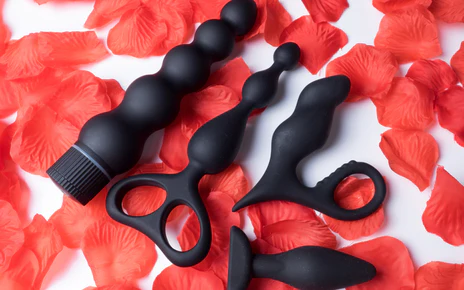


The research is unambiguous about one thing, and most popular advice ignores it: orgasm in women happens through the clitoris far more reliably than through penetration alone. Lloyd's 2005 meta-analysis of 33 studies found roughly 75% of women do not consistently orgasm from intercourse alone, and Frederick and colleagues (2018, Archives of Sexual Behavior) found that the 30-percentage-point orgasm gap between heterosexual men (95%) and women (65%) closes sharply in encounters that include clitoral stimulation, oral, manual, or a vibrator. The techniques that work follow from this: clitoral stimulation as the centre of the encounter, not the warm-up; sustained rather than variable contact; time and communication over performance. This is the plain UK guide.
Women's orgasm, female orgasm, clitoral orgasm
"Women's orgasm", "female orgasm" and "clitoral orgasm" all circle the same conversation. The terminology has shifted toward "women's orgasm" in current sexual-health writing because it is anatomically accurate and the practical advice is the same regardless of gender identity for anyone with a clitoris.
The research consensus
Three findings worth carrying into any encounter:
- Clitoral primacy. Elisabeth Lloyd's 2005 book-length meta-analysis of 33 studies (The Case of the Female Orgasm) found roughly 25% of women orgasm consistently from intercourse alone, with the remainder needing clitoral stimulation in some form. Subsequent research has consistently replicated this finding.
- The orgasm gap is real and largely about technique. Frederick and colleagues (2018) analysed a large US sample: 95% of heterosexual men orgasmed in their most recent encounter against 65% of heterosexual women. The gap closed sharply when encounters included oral sex, manual clitoral stimulation, or a vibrator, not when penetrative time was simply extended.
- The Indiana University data on what women find pleasurable. The 2017 study by Herbenick and colleagues on women's experiences with genital touching surveyed 1,055 US women aged 18 to 94 and produced a detailed taxonomy: most women prefer indirect or up-and-down clitoral motion over direct or side-to-side, light to medium pressure over hard, and a specific consistent rhythm over varied. The technique granularity in this paper is the closest thing to a manual the research has produced.
The anatomy in plain terms
The clitoris is much larger than the visible glans, the small bud at the front of the vulva. Helen O'Connell's anatomical research from 1998 onward documented the full internal structure: the external glans and clitoral hood are connected to internal "legs" (crura) and "bulbs" that wrap around the vaginal canal. The structure that older textbooks called the "G-spot" overlaps with the back of this internal clitoral complex (Foldès and Buisson, 2008 MRI work). What this means in practice: stimulating "the clitoris" and stimulating "the G-spot" are both stimulating the same organ, just from different angles. Most women experience the strongest response from external clitoral stimulation because the glans has the highest density of nerve endings, but internal pressure on the anterior wall reaches the back of the same structure.
The techniques that work
Clitoral stimulation, the foundation
External, with finger, tongue or toy. The Herbenick study found women's preferred patterns are: indirect or up-and-down motion (not direct rubbing of the glans, which is over-sensitive for many); light to medium pressure; a specific consistent rhythm rather than constant variation. Once something is working, stay with it; changing technique mid-build is the single most-cited frustration in the data.
Sustained vibration
A vibrator delivers consistent rhythm in a way fingers and tongues find hard to maintain. Indiana University surveys consistently find a majority of women have used a vibrator (52.5%, Herbenick 2009), with use linked to higher sexual-function scores. For the practical how-to see how to use a vibrator UK and best vibrators UK.
Oral
The most-effective single technique for closing the orgasm gap in heterosexual encounters in Frederick's data. Slow, deliberate, the same Herbenick principles apply: indirect motion, consistent rhythm, light to medium pressure. The receiver giving verbal direction is what makes this go well.
Combined internal and external (G-spot plus clitoris)
Many women find the combination of internal pressure and external clitoral stimulation more reliable than either alone. Rabbit vibrators are designed for this combination, see bullet vs wand vs rabbit vibrators UK and how to find your G-spot UK.
Reliable orgasm routes at a glance
| Route | How reliable | What it needs |
|---|---|---|
| External clitoral, oral | Most reliable in research | Slow, indirect, sustained rhythm, verbal direction |
| External clitoral, vibrator | Highly reliable | Lowest setting, build up, consistent contact |
| External clitoral, manual | Reliable with right technique | Indirect motion, consistent rhythm, the partner listening |
| Combined internal + external | Reliable for many; not all | Rabbit vibrator, or strap-on with simultaneous clitoral access |
| Penetration alone | Reliable for roughly 25% of women | Position with clitoral grinding (cowgirl, coital alignment) |
Time, communication and the underrated technique
Average time to orgasm via reliable clitoral stimulation is around 13 minutes from the start of focused stimulation, per Herbenick's Indiana data. That is considerably longer than typical "foreplay" in a hurried encounter and considerably shorter than the partner often assumes. The fix is both: more time, and more communication about what is working in the moment.
The most-underrated technique in the research is the receiver giving specific verbal direction. "A bit lower"; "stay there"; "lighter"; "keep doing that exactly". Partners cannot read the response by feel alone, and the receiver is the only one with the data. See dirty talk for couples UK for the verbal register and foreplay ideas UK for the broader build.
Common myths worth retiring
- "She should orgasm from penetration." Research-wise, only about a quarter of women do reliably. Treating it as the norm sets the encounter up to fail.
- "Vaginal and clitoral orgasms are different." They are stimulation of different parts of the same internal organ. The experience can feel different; the anatomy is one structure.
- "If she does not orgasm, the man did something wrong." Orgasm depends on many factors including stress, sleep, hormone phase, and mental state. A non-orgasm is not a verdict on technique.
- "Faking it spares the partner's feelings." It produces a partner who thinks the wrong technique is working. Real feedback, even when it means changing approach mid-encounter, is the kinder long-term move.
Common mistakes
- Direct contact too early. The clitoral glans is over-sensitive for many; start indirect, through the hood.
- Changing what was working. Once something is producing build, stay with it. Variation breaks the rhythm.
- Treating clitoral stimulation as warm-up rather than the centre. For most women, clitoral stimulation is the route, not the prelude.
- Rushing. Average time to clitoral orgasm is much longer than typical foreplay allows; give it more time than feels intuitive.
- No verbal feedback. Partners are guessing without it; the receiver has the data.
Related reading
- How to use a vibrator UK
- How to find your G-spot UK
- Foreplay ideas UK
- Dirty talk for couples UK
- Bullet vs wand vs rabbit vibrators UK
- Browse clitoral toys
Frequently asked
- Why do most women not orgasm from penetration alone?
- Anatomy. The clitoris has the highest concentration of nerve endings in the genital region, and penetration alone provides little direct clitoral stimulation. Lloyd's 2005 meta-analysis of 33 studies found roughly 25% of women orgasm consistently from intercourse alone, with the remainder needing clitoral stimulation in some form.
- What is the most reliable way to make a woman orgasm?
- Sustained external clitoral stimulation, oral, manual or with a vibrator, with indirect or up-and-down motion (not direct rubbing of the glans), light to medium pressure, and a consistent rhythm. Once something is working, stay with it; the most-cited frustration in Herbenick's Indiana research was partners changing technique mid-build.
- How long does it take a woman to orgasm?
- Around 13 minutes from the start of focused clitoral stimulation, per Indiana University research. That is longer than typical hurried foreplay allows, and shorter than partners often assume. The fix is both: more time, and more communication about what is working in the moment.
- Does a vibrator help close the orgasm gap?
- Yes, dramatically. Frederick and colleagues (2018) found the 30-point orgasm gap in heterosexual encounters closed sharply when encounters included a vibrator. Indiana University surveys find 52.5% of women have used one, with use linked to higher sexual-function scores. See how to use a vibrator UK.
- Are "vaginal" and "clitoral" orgasms different?
- They feel different to many women but anatomically they are stimulation of different parts of the same internal organ. Helen O'Connell's anatomical research documented the full internal clitoral structure connecting the visible glans to internal "legs" that wrap around the vaginal canal; what older texts called the G-spot overlaps with the back of this complex.
- Should I keep going if my partner has not orgasmed?
- Ask. Specifically, not as a status check. Some women want to keep going; others want to stop without orgasm because the build has passed; others want a switch to a different technique. The conversation removes the guessing. The encounter is not a verdict either way: many factors (stress, sleep, hormones, mental state) shape orgasm response.
Sources & further reading
- NHS, Sexual health hub, NHS UK
- Brook, Sex and pleasure, Brook Advisory
- Differences in orgasm frequency in heterosexual and same-sex encounters, Frederick et al. (2018), Archives of Sexual Behavior
- Kinsey Institute, Sexual response research, Kinsey Institute
Filed under Techniques
← Back to the Guides

