


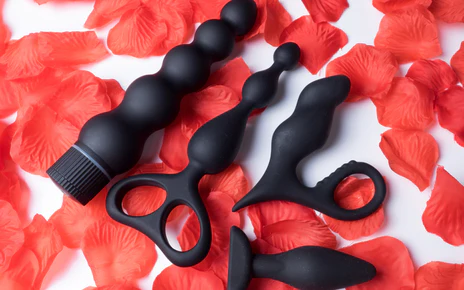


The conversation about BDSM with a long-term partner is one of the most reliably postponed conversations in relationships. The fear is usually disproportionate to the actual stakes: most partners, on hearing that the person they love is curious about something kink-adjacent, respond somewhere between mild surprise and "OK, tell me more". The catastrophic outcomes people imagine are rare. The bungled-because-rushed conversations are common. Once the conversation has landed and you are choosing what to try together, see sex toys for couples UK or, for the bondage-side starting points, bondage for beginners UK.
This is a calm UK framework rather than another listicle. The principles are: preparation matters more than delivery, timing matters more than wording, and the partner's response matters more than your script.
Why this feels harder than it is
Three predictable fears, each addressable:
"They'll think I'm a freak." The 2017 Joyal & Carpentier study in the Journal of Sex Research (1,040 surveyed adults) found 46.8% had engaged in at least one BDSM-adjacent activity, and 22.5% practised regularly. Curiosity about BDSM is statistically ordinary; what they'll mostly think is "huh, OK".
"They'll wonder why I never said anything before." Almost always less of a concern than you think. Partners who care about you tend to react more to the openness than to the disclosure timing. "I've been working out how to talk about this" is a fine framing.
"They'll think I'm not satisfied with our sex life." This one is the most worth addressing in the framing. The disclosure that lands badly is usually framed as "what we do isn't enough"; the same disclosure framed as "I'm curious about adding something" lands well. Frame it as addition, not deficit.
Preparing yourself first
Before the conversation, work out for yourself what you actually want. This is the step most people skip, and it's the step that makes everything else easier.
Three questions to answer first, on your own:
1. What's the smallest version of what I want? The fantasy may be elaborate, but the smallest realistic first step is usually much smaller. Pinning instead of full restraint. A blindfold instead of sensory deprivation. A spank during regular sex instead of an impact play scene. Knowing the smallest version gives the conversation a concrete first move that doesn't sound overwhelming.
2. Is this primarily fantasy or primarily practice? Some kink interests are most enjoyable as fantasy (read about, watched, thought about); others as practice (done in the bedroom). Both are valid, but they lead to different conversations. "I'm interested in reading more about X together" is a different ask than "I'd like to try X".
3. What's my actual hard limit? Before asking the partner about theirs, know yours. This protects against accidentally agreeing to something in the moment that doesn't actually appeal.
Spend a few quiet sessions with these three questions before raising the topic. Honesty with yourself is the foundation for honest conversation with the partner.
Choosing the right moment
The wrong moment, almost universally: in bed, post-coitus, mid-foreplay. The bedroom is a context where any conversation about sex carries performance pressure, and where a hesitant partner response can short-circuit existing intimacy. Don't have this conversation in the bedroom.
The right moment, in priority order:
- A relaxed evening at home with no schedule pressure. Both sober enough to think clearly. No phones. The kind of evening where conversation naturally lasts a while.
- A long walk together. The side-by-side rather than face-to-face configuration removes some of the eye-contact intensity that can make difficult conversations harder.
- A long drive on a quiet road. Same logic as walking, plus the captive context allows the conversation to develop without escape.
The wrong moments to add to the list: in the middle of a stressful week; just after an argument (about anything); just before either of you has to go to work or social commitment; immediately after sex.
The opening line
Three opening framings that work, depending on the partner and the relationship:
The curiosity opener: "I read this guide and it got me thinking about something I wanted to talk about with you." The framing of curiosity-based external prompt is low-stakes and gives the partner an easy first response ("oh, what guide?").
The fantasy opener: "I've had this kind of fantasy for a while and I've been wondering whether to talk to you about it." Names the disclosure as long-considered, which is usually heard as deliberateness rather than as deception.
The exploration opener: "I've been thinking about trying something new together and I wanted to see what you'd think." Most neutral; works for partners likely to be open. Less suitable if the partner is the kind to need more preamble.
The wrong opener: "I have something to tell you", "I need to confess something", or any framing that pre-loads the disclosure as alarming. The framing predicts the partner's emotional response; alarm-loaded openers produce alarmed responses.
Reading the response
Three broad response categories, each with a different next move:
Response 1: Curious or interested
"Tell me more" / "What kind of thing?" / "Oh, I've been curious about that too." This is the response that lets the conversation continue naturally. Practical move: have one specific small thing ready to suggest. "I thought we could try a blindfold" is concrete and doesn't require the partner to do research.
This is also the moment to share specific resources: the kink personality test (couples take it separately, compare results), the yes/maybe/no checklist, or our beginner's map of bondage as a shared first read.
Response 2: Hesitant
"Hmm, I don't know" / "I'm not sure what to think about this" / "Can we talk about it another time?" Hesitant is not no. It's "I need to process". The right move is to pull back the pressure, not to over-explain.
Specifically: "Take whatever time you need. There's no pressure. I just wanted to put it on the table." Then drop the topic for the evening. Don't return to it that night. Wait for the partner to bring it up, or come back to it a few days later with low pressure.
Hesitant partners often warm up to ideas over weeks, especially if the framing stays low-pressure. The mistake is over-pressing in the moment; the right move is patience.
Response 3: Uncomfortable or opposed
"That's not for me" / "I'm not interested in any of that" / "I don't want to do this." Take this at face value, immediately. Don't argue, don't explain why they'd like it if they tried, don't ask them to reconsider in the moment. "OK, thanks for being honest. I won't keep pressing it" is the right response.
What this doesn't mean: that the topic can never come up again. It's reasonable to revisit a year later, once, as "I wondered if your view on this has changed". If they say no again, drop it for good. Sexual compatibility is a real factor in relationships, and a definitively-not-interested partner combined with a definitely-interested partner is something to think about over time. It's not a thing to negotiate within a single conversation.
If they're curious: the smallest possible first step
Once a partner has shown curiosity, the temptation is to escalate quickly: order a kit, plan a full scene, suggest a specific elaborate thing. Don't. The smallest possible first step is almost always the right next move.
Three "smallest version" starting points:
- A blindfold. Removes one sense, intensifies others. Cheap, no skill required, low commitment, easily abandoned. The highest-pleasure-per-pound piece of bondage kit in any catalogue. We have a first-time wand guide that pairs well; a wand and a blindfold together is the most-recommended starter combination.
- Light spanking during regular sex. Not a scene; just a few open-handed strikes on the buttocks during otherwise standard sex. Easy to incorporate, easy to stop, no kit required. Tests appetite without commitment.
- Soft cuffs. Velcro or fabric, not metal. Restraint without serious commitment to the BDSM aesthetic. Quick to remove. Around £15-£25 for a quality starter pair. Our first-time using restraints guide walks through the session.
What not to suggest as the first thing: full impact play, suspension, sensory deprivation, anything involving multiple pieces of kit. The smallest version protects both of you from the cliff-edge of trying too much too soon and concluding "this isn't for us".
The kink negotiation toolkit
If the conversation goes well and you're moving toward actual play, three tools the BondageBox catalogue provides for free:
The Kink Personality Test: 24 questions, 5 minutes, returns a profile across 8 traits. Take it separately; compare results. Useful for finding the overlap and the gaps without having to articulate everything from scratch.
The Yes/Maybe/No Checklist: longer (15 minutes), covers specific activities rather than personality profiles. Each partner marks each activity Yes/Maybe/No; the shared URL compares both. The standard structured-negotiation tool.
The Negotiation Script Generator: produces a one-page scene-negotiation document tailored to the specific scene. Hard limits, soft limits, safeword, aftercare. Print it or save the URL.
The safewords and negotiation guide explains the wider framework. The aftercare guide covers the equally important post-scene part.
After the conversation
Whatever the response, three things matter in the days afterward:
Don't repeat the disclosure unnecessarily. If they said yes, you've said it; now you talk about specifics rather than re-pitching. If they said no, you've said it; don't keep returning to it as evidence that you "need" them to engage.
Continue normal intimacy. The conversation shouldn't reshape your sex life. Whatever was working before still works. Adding BDSM is an addition; subtracting normal connection because you're focused on the new thing is a worse outcome.
Re-check in a few weeks. "Are you still interested in talking about that thing we discussed?" gives the conversation room to evolve. Sometimes the partner's initial response shifts with time; sometimes it stays the same; either way, the check-in is gentle and brief.
- When is the right time to tell my partner I\'m into BDSM?
- Outside the bedroom, on a relaxed evening or walk, when neither of you is stressed or distracted. Not in bed, not after an argument, not before either of you has to leave for work. The framing of "I\'ve been thinking about something I want to share" works better than "I need to confess something".
- What if my partner is shocked?
- The Joyal & Carpentier 2017 study found 46.8% of adults have engaged in some BDSM-adjacent activity and 22.5% practise regularly. Shock is usually disproportionate to the actual disclosure. Stay calm, don\'t back-pedal, let them process. Many partners who initially seem alarmed move to "tell me more" within hours or days.
- What should the first thing we try be?
- The smallest possible version: a blindfold, light spanking during regular sex, or soft Velcro cuffs. Avoid suggesting full kits or elaborate scenes as the first step; the cliff-edge between "let\'s try this" and "this isn\'t for us" is real, and small first steps are the way around it.
- What if my partner says no?
- Take it at face value. Don\'t argue, don\'t over-explain, don\'t ask them to reconsider in the moment. It\'s reasonable to revisit a year later once, as a low-pressure check-in. If they say no again, drop it for good and think about what that means for the relationship over time.
- How do I know if I\'m actually into BDSM or just curious?
- Take the kink personality test on your own first. Read a few guides on the specific area you\'re curious about. If the interest persists over weeks and you find yourself thinking about practical first steps rather than just abstract fantasy, it\'s practice-curiosity rather than pure fantasy. Both are valid.
- What if we want to try BDSM but neither of us knows what we\'re doing?
- Start with the beginner\'s map of bondage, the safewords guide, and one piece of kit (a blindfold). The body of practical knowledge isn\'t large for the beginner tier; most couples get to confident first scenes within 2-3 sessions, given the right resources and the willingness to ask.
Sources and further reading
- Joyal, C. C., & Carpentier, J. (2017). The Prevalence of Paraphilic Interests and Behaviors in the General Population: A Provincial Survey. Journal of Sex Research, 54(2), 161-171.
- National Coalition for Sexual Freedom (NCSF)
- Relate UK (relationship counselling, including sex therapy)
- Brook (UK sexual health charity)
Filed under Couples
← Back to the Guides
