


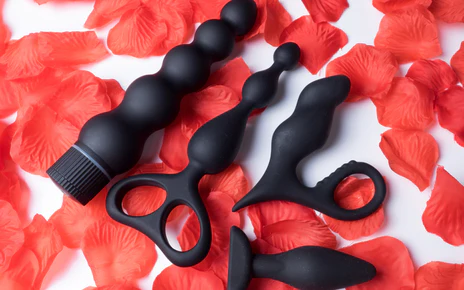


Pegging, penetrative anal sex from a partner wearing a strap-on dildo, has moved firmly into the UK mainstream over the last decade. Broad City joked about it; the Guardian's relationships column ran a serious essay on it in 2024. UK sex-toy retailers now sell more "for him" anal kits than at any point in the category's history. None of which makes the first conversation any easier. For the broader couples-toys context if pegging is not yet on the table, see sex toys for couples UK. For the anal-toys context, see anal sex toys UK.
This guide is written for the couple for whom pegging is new, to one of you, the other, or both. The order matters: conversation first, equipment second, technique third. Most pegging that goes badly does so because that order is reversed.
The strap-on is the easiest part. The conversation that goes around it is what makes the rest work.
What pegging actually is
The practice: one partner wears a harness and dildo, the other receives anal penetration. In the canonical heterosexual configuration, a woman pegs a man, but the dynamic isn't gendered. Couples of any combination peg.
What pegging is not, despite the marketing: a "humiliation" act, a "fetish", or a moral category. It's a sex act with the same intimacy and care any other sex act needs. The cultural baggage attached to it, particularly around male receivers, comes from a separate place and is worth recognising precisely so you can put it down.
UK pegging interest tracks roughly with overall acceptance of male anal pleasure: research from Indiana University's Kinsey-affiliated team (2020) found 21–30% of men aged 18–60 in studied Western populations had received anal stimulation, with prostate-stimulation interest specifically growing year-on-year in UK survey data. The "minority practice" framing it once had no longer fits the numbers.
The first conversation
The conversation that introduces pegging is the harder version of the conversation that introduces most new things in a relationship. Two reasons:
- If you are the receiving partner suggesting it, you may be worried what your giving partner will think of the suggestion.
- If you are the giving partner suggesting it, you may be worried what your receiving partner will think you think of them.
Both worries are predictable, both are usually overstated, and both melt fastest when the conversation happens out of bed and out of the moment.
If you're the one who wants to receive
Frame it as a curiosity, not a need. Say specifically what about it interests you, the sensation, the role reversal, a fantasy you've had, rather than presenting it as a long-considered position. Tell your partner what you would and wouldn't enjoy alongside it (would you still want oral first, would you still want to penetrate them after, etc.). Wait for their response without managing it.
If you're the one who wants to give
Be clear that you're suggesting it because you find it appealing, not because you've decided your partner is "secretly into it" or because you want to assert a power dynamic. Most receivers we've spoken with say the giver's enthusiasm, wanting to do this, finding it sexy, was the single biggest factor in whether they tried it.
Equipment: three pieces, picked properly
The dildo
For first-time pegging, smaller is better. Internal anal tissue is sensitive and not naturally elastic, it accommodates well once relaxed but only with time. Start at 3–3.5 cm diameter and 12–14 cm insertable length. That's substantially smaller than the average straight-sex dildo; resist the temptation to size up.
- Body-safe silicone only. No jelly, no TPE/TPR. (See our materials guide.)
- Flared base, non-negotiable. A flared base is the only thing stopping a dildo getting lost. Smooth-base dildos and tapered dildos do not belong in any anal context.
- Slight upward curve if you want to angle towards the prostate. Straight shafts work too but require more positioning effort.
Good entry-level options in the BondageBox catalogue start around £25–£40. Strapless designs (Doxy, Tantus Bend Over) exist but are an intermediate-tier purchase, start with a flat-based dildo and a separate harness.
The harness
Three styles, each suiting a different body shape and dynamic:
| Style | How it sits | Best for |
|---|---|---|
| Jock / brief | Underwear with O-ring on the front | Snug, secure fit; closest to "natural" feel for the giver |
| Two-strap (between legs + waist) | Belt at waist, straps either side of vulva | Vulva access during, adjustable on most body shapes |
| Single-strap (thong style) | Belt at waist, single strap between legs | Mid-range; common entry harness |
Look for: nickel-free hardware, quick-release buckles (rather than tie-laces, slower in the moment), removable O-ring so the dildo can be swapped. Leather harnesses age beautifully; neoprene/nylon are easier to wash and a better starting price point.
The lubricant
More than you think you need, pegging requires roughly 2–3 times the lube of comparable vaginal sex. Anal tissue produces no natural lubrication; the silicone dildo's surface provides no glide of its own.
Use a water-based lube, silicone-based lubes bond to silicone toys and degrade the surface, so they're out for silicone-on-silicone strap-on use. Pick one with the consistency of a thick gel rather than thin oil; thinner lubes vanish too fast. Reapply liberally during; pegging benefits from a small dispenser pump on the bedside.
For longer scenes consider a hybrid water/silicone lube (Sliquid Silk, Pjur Med Premium Soft), these last roughly 3x longer than pure water-based without the silicone-on-silicone problem of full silicone lubes.
Full lube guide → · Anal lubricants →
Preparation: bodies and rooms
Bodies
"Douching", internal water-rinsing before anal sex, is optional and not necessary for most people. If you eat normally and have had a bowel movement that day, you can have anal sex without preparation. If you'd prefer to feel "extra clean", an enema bulb syringe with plain warm water (not soap, not perfumed solutions) used 1–2 hours beforehand is the safer route.
Cut and file fingernails on the receiving partner's side; fingers will likely be involved in warming up.
Rooms
Set up before you start. Lube within arm's reach. Two clean towels (one to lie on, one to wipe). A small bin for tissues. Phone on do-not-disturb. The kit you don't have to fumble for at the wrong moment is the kit that gets used at the right one.
The first scene: how to actually do it
- Warm up first. 20–30 minutes of foreplay before any anal contact. Don't skip this, anal tissue takes time to relax, and tense tissue is what makes first attempts hurt.
- Fingers before dildo. Receiving partner is far more relaxed if they've been warmed up with one finger, then two, with plenty of lube. This step takes its own 5–10 minutes.
- Position the receiving partner on their back or side for the first try. Doggy-style works but limits eye contact; spooning is gentler but harder to control angle. On the back with a pillow under the hips is the easiest position for the receiver to communicate.
- The receiver controls the pace, always. Giver enters slowly, fully stops on the first signal to pause. "Stop and breathe" is a useful first-scene cue, receiver tells you, you stop completely, you both breathe, you wait for the green light to continue.
- Shallow before deep, slow before fast. The first session is about familiarity, not depth or speed. Most receivers find shallow rhythmic motion (the first 7–10 cm of the dildo, in/out at conversational pace) more enjoyable than deep thrusting for at least the first few times.
- Combine with what already works. Hand stimulation of the receiver's genitals throughout. For a male receiver, this is non-optional for the first scene, without external stimulation, prostate-only orgasm is unusual on a first attempt.
Signs to stop
Sharp pain (different from pressure or stretch), bleeding, or any feeling that something's "wrong inside", stop immediately, withdraw slowly, check in. Small streaks of blood on the dildo after withdrawal can indicate a minor surface tear; most heal without intervention but warrant a 5–7 day pause. Persistent bleeding, ongoing pain, or any tear that's larger than a paper-cut warrants a GP visit. Genuine injuries from pegging are rare when warm-up + lube are adequate, but they happen.
Aftercare
Both partners need it; the receiver especially. Standard four-element protocol: hydration, warmth, contact, verbal reassurance. Set aside 20–30 minutes before either of you tries to do anything ordinary like answer a message or get up. Receiver may feel emotional in unexpected ways the next day, partly endorphin crash, partly the symbolic weight of the act. Both pass. Full aftercare protocol here →
Cleaning the gear
Silicone dildo: soap and warm water immediately after use; deep-clean by boiling for 3 minutes weekly (if without electronics). Harness: spot-clean leather with a damp cloth; neoprene/nylon harnesses can go in a delicates wash bag in the machine on a cool cycle.
Lube residue inside the dildo bore (on hollow strap-ons): rinse with a syringe of warm water until it runs clear. Trapped lube is the single most common cause of strap-ons developing an off smell.
Frequently asked
- How much lube is "enough"?
- More than you think. A first pegging scene typically uses 30–50 ml of water-based lube. If at any point the dildo isn't gliding effortlessly, add more. Drying friction is the single most common cause of pain.
- Will the giving partner get any sensation?
- Yes. both physical and emotional. Physically, vibrating strap-ons (with a small motor in the base of the dildo facing the giver) and harnesses with internal pockets for a clitoral toy add direct stimulation. Emotionally, the act itself produces strong arousal in many givers regardless of toy-side sensation.
- Is pegging painful?
- It shouldn't be. Sharp pain is a sign to stop. Pressure, fullness, and a stretch sensation are normal at first; pain is not. Adequate warm-up (20–30 minutes), proper lube quantity, and a small dildo on the first attempt prevent most discomfort.
- What's the difference between pegging and prostate massage?
- Pegging is penetrative; prostate massage uses a small dedicated toy (prostate massager) that sits internally and stimulates the prostate via pressure/vibration without thrusting. Many couples start with prostate massage as a gentler introduction before moving to pegging. See our prostate massager guide →
- How often do couples peg?
- Varies hugely. Some couples make it a regular part of their repertoire; many others enjoy it occasionally as one option among many. There's no "correct" frequency.
- Are there positions that work better than others for first-timers?
- Receiver on back with pillow under hips (knees apart) gives the giver the most control of angle and depth while allowing eye contact. Spooning on the side is gentler but harder to control. Doggy-style works once both partners have done it a few times but is less ideal for a first scene.
- Where can I read more from couples who've done this?
- The Reddit communities r/peggingadvice and r/sexover30 carry a lot of considered first-person discussion. The FetLife "Pegging" group is also a good source for UK-specific perspectives. Both sit on the considered end of the internet's pegging coverage.
A starting kit, if you want one
The minimum-viable pegging kit is three items: a small body-safe silicone dildo, a comfortable harness, and a generous-sized bottle of water-based lube. A bottle of toy cleaner is optional but recommended. Budget for the whole kit: £70–£120 in our catalogue at reasonable quality. Less if you're patient; more if you go for premium leather harnesses or brand-name silicone.
Browse strap-on dildos → · harnesses → · anal lubricants →
Every BondageBox order ships in plain unmarked UK packaging with "BBox" on the bank statement. Delivery details →
Sources & further reading
UK pegging guide, anatomy, lubricant compatibility, and consent frameworks.
- NHS, Prostate problems, NHS UK
- Brook, Consent resources, Brook Advisory
- Prostate Cancer UK, Charity resources, Prostate Cancer UK
- FPA, STI help, Family Planning Association
Filed under Couples
← Back to the Guides
