

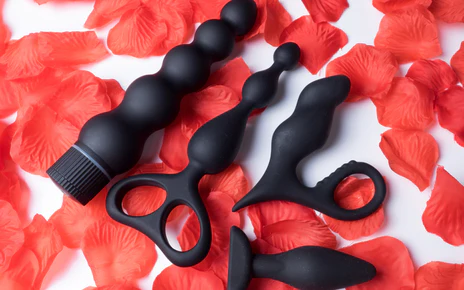


A prostate massager is an insertable toy designed to apply pressure to the prostate gland, a walnut-sized organ sitting 5-7cm inside the rectum, against the anterior (abdominal-side) wall. UK retail covers three distinct mechanism types: hands-free / contraction-based (Aneros line, £40-£90, moved by the user's own pelvic-floor contractions), vibrating (Lelo Loki, Nexus Vibro, £80-£155, motor delivers stimulation), and rotating (Nexus Revo Embrace, Revo Air, £145-£155, mechanical rotation around the prostate). Most users prefer one mechanism distinctly over the others; partnered couples often own pieces from two categories. NHS guidance treats prostate stimulation between consenting adults as normal sexual practice; the BJU International literature documents that roughly 60-70% of users with prostates who try targeted stimulation find it pleasurable, with the rest finding it neutral or not preferred, that's normal, not failure. For the broader anal-toy categories overview, see anal sex toys UK.
Prostate massager, prostate toy, prostate vibrator, same category, different names
UK retail uses several interchangeable terms. "Prostate massager" is the dominant retail term, covers any curved insertable toy designed to apply pressure to the prostate. "Prostate vibrator" specifically means motor-vibrating prostate massagers (most modern options). "Prostate toy" / "prostate stimulator" / "prostate massage toy" are colloquial and cover all of the above. "Male prostate massager" / "mens prostate massager" are common UK search variants. This guide covers the full category.
What the prostate is, and why pressure works
The prostate gland is a walnut-sized organ (typically 15-25g in adult men) sitting at the base of the bladder, surrounding the urethra. Its primary biological role is producing seminal fluid. Externally inaccessible: the gland sits 5-7cm inside the rectum, against the anterior (front, abdominal-side) rectal wall, about two-finger-knuckle depth from the anal opening.
Why pressure produces sensation:
- Dense innervation: The prostate is surrounded by branches of the pelvic nerve and hypogastric nerve plexuses, the same nerve clusters that carry signals from the penis and perineum. Direct stimulation of these nerves via the prostate produces a distinct sensation that's notably different from penile or testicular stimulation.
- Different orgasm profile: 2016 BJU International research surveyed men reporting prostate-stimulation orgasm and found ~71% described it as qualitatively different from penile-stimulation orgasm, longer-building, more diffuse, sometimes more intense, sometimes without ejaculation (a "dry orgasm").
- Not universal: Roughly 60-70% of users who try targeted prostate stimulation find it pleasurable; 30-40% find it neutral or actively don't enjoy it. The variation is normal; users who don't enjoy it haven't done anything wrong.
The three prostate-massager mechanisms, distinct experiences
The single most important purchase decision: which mechanism category. The three types produce fundamentally different sensations; users who try one and find it doesn't work for them often respond well to a different mechanism.
1. Hands-free / contraction-based (the Aneros style)
Aneros pioneered this category in the 1990s. The toy has no motor, its ergonomic shape (curved internal shaft, perineum tab, narrow waist) means it moves slightly with each pelvic-floor contraction. The user does the work; the toy translates contractions into prostate pressure.
- Sensation profile: Slow-building, requires patience. Often described as more "internal" or "diffuse" than vibrating alternatives. Hands-free orgasm (also called "Super-O" or "P-spot orgasm") is the much-discussed achievable outcome, most users report 5-15 sessions of practice before reaching it.
- Learning curve: The steepest in the category, first session often feels underwhelming. Aneros recommends 20-30 minute sessions, 2-3 per week, for 4-6 weeks before judging.
- UK price band: £40-£90 for body-safe silicone-coated pieces.
- Best for: Users wanting the most-distinct prostate-specific experience; users who don't want motor / battery dependency; meditation-style intentional sessions rather than goal-oriented use.
2. Vibrating (the dominant modern category)
The dominant modern UK prostate-massager category. Curved silicone insertable shaft with a motor (typically in the shaft or at the base), often a second motor in an external perineum arm. Lelo Loki, Nexus Vibro, Rocks Off Naughty Boy, We-Vibe Vector dominate this band.
- Sensation profile: Motor vibration delivers the stimulation; user remains relatively still. Most direct path to noticeable sensation; less patience-dependent than Aneros.
- Learning curve: Mild, most users feel meaningful sensation in the first session.
- UK price band: £30-£155 depending on brand, motor quality, and features (app control, multiple motors, etc.).
- Best for: First prostate toy for users who prefer vibration; couples (vibration is more accessible to share); users wanting predictable, repeatable stimulation.
3. Rotating
The newest mechanism category. The shaft tip physically rotates within the rectum, producing varying pressure points around the prostate rather than concentrated single-point pressure. Nexus pioneered this in the UK (Revo line). Some pieces (Revo Air) add suction; others (Rev Twist) combine rotation with vibration.
- Sensation profile: Pressure that moves around the prostate, rather than vibration at one point. Some users describe it as "fuller" or "deeper" than pure vibration; others find rotation distracting.
- Learning curve: Moderate, sensation is immediate but takes a few sessions to find optimal positioning.
- UK price band: £80-£155.
- Best for: Users who've tried vibration and want a step up; users specifically wanting the rotating mechanism after reading about it; couples wanting the toy to "do more" than vibrate.
Mechanism comparison table
| Property | Hands-free (Aneros) | Vibrating | Rotating |
|---|---|---|---|
| First-session sensation | Subtle, requires patience | Immediate, strong | Immediate, distinct |
| Learning curve | Steep, 5-15 sessions | Mild, 1-3 sessions | Moderate, 2-5 sessions |
| "Hands-free orgasm" potential | Highest | Possible w/ partnered touch | Possible |
| Power source | None (user contractions) | USB-rechargeable battery | USB-rechargeable battery |
| Battery dependency | None | ~60-120 min/charge | ~60-90 min/charge |
| Partnered-use friendly | ★★ | ★★★★★ | ★★★★ |
| UK price band | £40-£90 | £30-£155 | £80-£155 |
| UK example | Aneros Maximus Trident | Lelo Loki | Nexus Revo Embrace |
What every quality prostate massager has
Regardless of mechanism, every body-safe prostate massager shares four design features:
- Internal shaft, 9-14cm long, 3-3.5cm diameter at the bulb, with a 25-45° anterior curve at the tip. The curve angles the head toward the prostate without the user having to angle their hips. Curve angles below 25° miss the prostate; above 45° creates uncomfortable insertion geometry.
- Perineum tab or external arm. Contacts the perineum (between testicles and anus) during use, applying external pressure that intensifies the internal sensation. The "dual-pressure" design, internal prostate pressure plus external perineum pressure simultaneously, is what distinguishes prostate-specific toys from general anal toys.
- Flared retrieval base. Non-negotiable for any anal toy. The base must be physically wider than the largest part of the shaft so the toy cannot migrate past the external sphincter. NHS / Royal College of Surgeons retention guidance applies.
- Platinum-cure silicone or surgical stainless steel construction. Body-safe under EU REACH and ISO 10993. Reject jelly rubber, "TPR" / "TPE" without phthalate-free guarantee, or skin-feel rubber, these are porous and not suitable for anal use.
Materials, silicone, steel, glass
Platinum-cure silicone (the standard)
Most prostate massagers in UK retail are platinum-cure silicone over an ABS plastic core (motorised pieces) or solid silicone (non-motorised Aneros line). Body-safe, non-porous, sterilisable (silicone-coated motorised pieces: wipe with 70% isopropyl; non-motorised: boil 3 min or dishwasher top rack).
Surgical stainless steel
The Rouge Stainless Steel Prostate Probe is the steel option in our range, solid 316L steel, no motor, weight-based stimulation. Different sensation profile from silicone (heavier, rigid, temperature-conductive). Fully sterilisable; lifetime durability.
Borosilicate glass
Less common but exists for prostate-shaped wands. Same body-safety profile as steel; lighter weight; temperature play possible (warm or cool in tap water before use). Inspect before every use for chips.
What to look for in 2026
- Platinum-cure silicone or 316L stainless steel. The contact surface matters most, verify the listing says "platinum-cure silicone" or "medical-grade silicone" specifically, not just "silicone".
- Curve angle 25-45°. Critical for prostate contact. Out of band = misses the prostate.
- Perineum arm (motorised pieces). Single-shaft toys without perineum contact are essentially anal vibrators marketed as prostate toys, the prostate-specific stimulation is much weaker without external pressure.
- Flared base. Mandatory safety feature (RCS retention guidance).
- USB-rechargeable for motorised pieces. Battery-powered toys are obsolete in this category.
- IPX7 fully waterproof for ease of cleaning, submerge under running water for thorough wash, especially important for anal toys.
- Rumbly motor (not buzzy). Same test as any vibrator, hold to fingertip for 30 seconds; if it numbs, the motor is buzzy. Quality prostate vibrators (Lelo, Nexus, We-Vibe) are rumbly.
- Real warranty from an established brand. Lelo: 1-year plus extended. Nexus (UK manufacturer): 1-year. Aneros: 1-year. Avoid sub-£25 unbranded prostate toys, high failure rate, often porous materials.
The editor's picks, six prostate massagers worth knowing
Best hands-free (Aneros line)
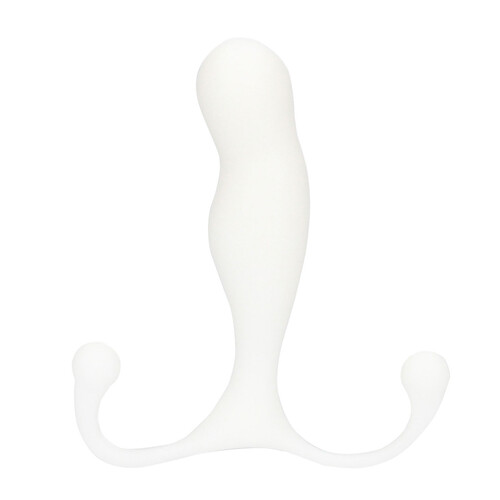
Aneros Maximus Trident
No motor, moved by pelvic-floor contractions. The contraction-based approach that produces the most-distinct prostate sensation for committed practitioners. Three-pronged perineum tab. ~£77.
£76.99 →Best entry vibrating
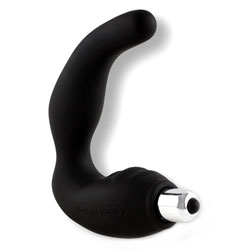
Rocks Off 7-Speed Naughty Boy
The UK budget pick for first vibrating prostate massagers. 7 vibration patterns, body-safe silicone, perineum arm, ~£50. Built by UK manufacturer Rocks Off.
£49.99 →Best mid-range vibrating
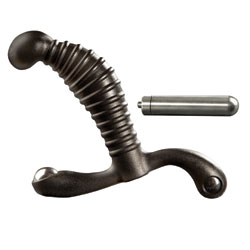
Nexus Vibro
Nexus is the UK prostate-massager specialist. The Vibro is their entry vibrating piece, body-safe silicone, ergonomic curve, USB-rechargeable, ~£80.
£79.99 →Best premium vibrating (Lelo Loki)
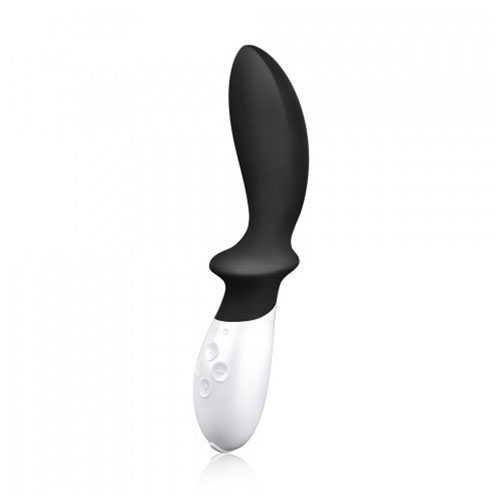
Lelo Loki
Premium platinum silicone, steep 40° curve for first-time prostate contact, dual motors (shaft + perineum), 8 vibration patterns, ~£153.
£152.99 →Best rotating (Nexus Revo Embrace)
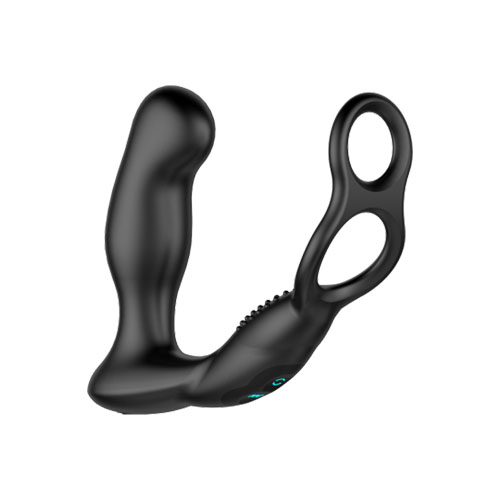
Nexus Revo Embrace
Shaft tip rotates rather than vibrates, pressure moves around the prostate. 5 rotation speeds, 6 perineum-vibration patterns, USB-rechargeable, ~£150.
£149.99 →Best rotation + vibration combo
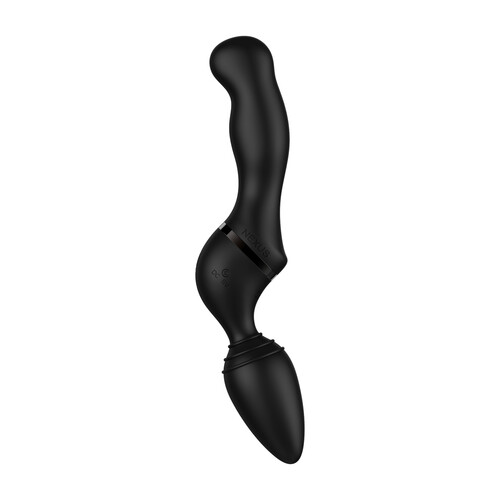
Nexus Rev Twist
Slimmer shaft than the Revo Embrace (1.1" vs 1.3") for first-time rotation users. Twist mechanism plus vibration; 5 rotation modes, 3 vibration intensities. ~£145.
£144.99 →For the full range including app-controlled (Svakom Vick Neo), suction-rotating (Nexus Revo Air), and inflatable (Nexus Boost), browse our prostate massager range.
How to use a prostate massager, the protocol
Preparation (1-2 hours before)
- Bathroom break 1-2 hours before. A natural bowel movement clears most of the lower rectum. See anal training sensible starting point for the full protocol.
- Optional: small warm-water enema (under 200ml lukewarm tap water, no soap, no scented additives). Once is plenty; over-douching disrupts rectal flora and increases irritation risk.
- Warm up the body first. 10-15 minutes of partnered or solo external stimulation (penile, manual, oral) significantly relaxes the sphincter before insertion. Cold-start anal insertion is the most common cause of first-time discomfort.
Insertion
- Lubricant, 5× what you'd use for vaginal sex. The rectum doesn't self-lubricate; lubricant is the entire safety system. Glycerin-free water-based or hybrid on silicone toys; silicone-based lasts longer but degrades silicone toy surfaces. Pre-warm to hand temperature. See UK lube guide.
- Apply externally first, then internally. A finger's worth around the anal opening, allow 30 seconds, then a small amount on the toy's tip and continue along the shaft.
- Slow, tapered insertion. Narrow tip enters first; body of toy follows. Pause whenever there's tightness, the sphincter relaxes within 30-60 seconds if you stay still.
- Stop when the perineum arm seats against the perineum (between testicles and anus). The toy is now correctly positioned; the prostate is being pressed by the curved head. Don't push deeper, the prostate sits 5-7cm in; deeper insertion misses it.
The session, three approaches
Aneros-style (hands-free)
Slow pelvic-floor contractions move the toy slightly with each squeeze. Each contraction translates into prostate pressure. Aneros describes this as the "Super-O" approach: patience, slow contractions, 20-30 minutes minimum, often 4-6 weeks of practice before reaching hands-free orgasm. Most users feel mild but not intense sensation in the first session, that's normal, not failure.
Vibrating-toy style
The motor does the work; the user remains relatively still. Start at the lowest intensity setting. Combining with another form of stimulation (manual penile, partnered oral, or hands-free with built-in cock ring) is common, most users find prostate vibration alone produces gentler sensation than combined stimulation.
Rotating-toy style
Position the toy, activate rotation, find the rotation speed that produces noticeable prostate pressure. The mechanical motion changes contact point continuously, so the experience is less "static intensity" and more "moving pressure". Adjust rotation speed rather than chasing higher intensity.
Common mistakes
- Insufficient lubricant. The single biggest first-time error. Use significantly more lube than feels necessary; reapply during the session.
- Skipping warm-up. Going straight to insertion makes the sphincter resist; 10-15 minutes of arousal builds before reduces discomfort substantially.
- Buying TPE / sub-£25 prostate toys. Porous material in anal use is the highest-risk combination for bacterial accumulation and material degradation. Sterilising isn't possible.
- Pushing the toy deeper than the perineum arm allows. The arm is the depth-stopper, past it and you're past the prostate. Stay at the natural seat.
- Concluding after one session that prostate stimulation isn't for you. Sensation often "deepens" over 3-5 sessions. Give it a fair run, especially with hands-free Aneros-style pieces where the learning curve is real.
- Choosing a single-shaft toy without perineum arm. The dual-pressure (internal prostate + external perineum) is what produces the prostate-specific experience. Single-shaft vibrators are basically anal vibrators marketed as prostate toys.
- Not cleaning between anal and any other use. Anal flora is different from genital flora; cross-contamination causes most yeast / UTI cases traced to sex-toy use.
Cleaning and storage
Prostate massagers carry rectal flora, the cleaning standard is higher than for any other toy category. Protocol:
- Routine clean (every use): Warm water and fragrance-free antibacterial soap, rinse thoroughly, air-dry. Splash-resistant (IPX5) toys wipe down; fully waterproof (IPX7) submerge entirely.
- Deep clean (between partners or after illness): Non-motorised silicone pieces (Aneros), boil for 3 minutes or run dishwasher top rack (no detergent). Motorised pieces, 70% isopropyl alcohol wipe-down, then rinse with water (don't submerge motorised toys unless IPX7).
- Stainless steel pieces (Rouge Probe): Boil, dishwasher, bleach-soak, steel takes everything.
- Air-dry fully before charging or storage. Damp toys grow mould; water in charge ports kills batteries.
- Store separately from other silicone toys in a breathable cotton pouch. Silicone-on-silicone contact between different formulations can bond surfaces.
See how to clean sex toys for the full protocol.
Using a prostate massager with a partner
Partnered prostate-massager use is increasingly common in UK couples, the conversation around male pleasure beyond direct penile stimulation has shifted considerably since 2020. Practical approaches:
- Partner inserts during foreplay. Receiver focuses on relaxation; partner handles toy mechanics. Verbal check-ins between phases.
- Combine with penile / clitoral stimulation. Most partnered prostate-massager use isn't isolated, the prostate stimulation runs alongside hand, oral, or partnered penetration. Combined stimulation often produces the strongest sensation.
- Pegging is a related but distinct practice. Pegging uses a strap-on dildo for active thrusting; prostate massagers are typically more static or use mechanical rotation. The two cover different sensation profiles, see UK pegging couples' guide.
- App-controlled toys (Svakom Vick Neo, Lelo Loki via app) enable long-distance partnered use, one partner controls intensity / pattern remotely.
NHS prostate health context
For UK readers: prostate pleasure and prostate health are separate topics, though they intersect.
- NHS prostate guidance: The NHS covers prostate problems (BPH, benign prostatic hyperplasia, prostatitis), prostate cancer, and screening considerations. The UK has no national prostate-cancer screening programme; the NHS recommends a GP conversation for men 50+ regarding PSA testing. See NHS prostate problems.
- Pleasure ≠ health screening: Using a prostate massager for pleasure doesn't replace screening or substitute for clinical examination. Conversely, prostate stimulation for pleasure has no documented health risk for the prostate itself in users without existing conditions.
- If you have a prostate condition (active prostatitis, BPH, recent prostate surgery, prostate cancer treatment), consult your GP before using a prostate massager. Some conditions are aggravated by mechanical pressure; some aren't. Your specific situation matters.
- Prostate Cancer UK is the leading UK charity in this space, covers screening, treatment, and support: prostatecanceruk.org.
How much should you spend?
- £30-£50: Entry vibrating (Rocks Off Naughty Boy). Body-safe silicone, sufficient for first-time use.
- £50-£90: Aneros range, Nexus entry vibrating. Either the contraction-based approach or quality first vibrating piece.
- £90-£155: Premium vibrating (Lelo Loki), rotating (Nexus Revo Embrace, Rev Twist). The "second prostate massager" or premium-first band.
- £150-£200: Specialty pieces (Nexus Revo Air with suction). Niche features for users who've established preferences.
Most UK first-time buyers find £50-£100 covers the entry point that delivers reliable sensation. Don't go below £25 (TPE materials, porous, fail rapidly); don't go above £155 unless you've established what mechanism works for you.
Related reading
- How to last longer in bed UK
- Anal training: a sensible starting point
- Anal training kits UK: pacing and progression
- Best anal beads UK 2026
- UK pegging couples' guide
- UK lube guide, water, silicone, hybrid
- How to clean sex toys UK
- Browse prostate massagers
Frequently asked
- What is the best prostate massager in the UK in 2026?
- Depends on the mechanism. For hands-free / contraction-based: Aneros Maximus Trident (~£77). For premium vibrating: Lelo Loki (~£153). For rotating: Nexus Revo Embrace (~£150). For first-time entry-priced vibrating: Rocks Off Naughty Boy (~£50). Most UK buyers start with the Lelo Loki or Rocks Off entry piece; experienced users add a rotating Nexus as a second toy.
- How does a prostate massager work?
- A prostate massager applies pressure to the prostate gland, a walnut-sized organ sitting 5-7cm inside the rectum, against the anterior (abdominal-side) rectal wall. The curved internal shaft (typically 25-45° anterior curve) angles the head toward the prostate; the perineum arm applies external pressure simultaneously. The dual-pressure stimulates the pelvic nerve plexus, producing a distinct sensation different from penile stimulation. Three mechanism categories deliver this: hands-free (contraction-based), vibrating, and rotating.
- What's the difference between a prostate massager and a prostate vibrator?
- "Prostate massager" is the broader retail category covering all toys designed for prostate stimulation, including hands-free Aneros-style pieces. "Prostate vibrator" specifically refers to motor-vibrating prostate massagers (most modern options). All prostate vibrators are prostate massagers, but not all prostate massagers are vibrators.
- Is the Aneros prostate massager really hands-free?
- Yes. Aneros pieces have no motor and no batteries. The toy is moved by the user's own pelvic-floor contractions (the same muscles you'd use to stop urine mid-flow). Each contraction translates into a small movement that produces prostate pressure. The learning curve is real, most users report 5-15 sessions of practice before reaching the "Super-O" hands-free orgasm. First sessions often feel underwhelming compared to vibrating alternatives; this is normal.
- What does a rotating prostate massager do that a vibrating one doesn't?
- Rotating prostate massagers (Nexus Revo line) physically rotate the shaft tip within the rectum, producing pressure that moves around the prostate rather than concentrated single-point pressure. The sensation is "fuller" or "deeper" for many users, the contact point continuously changes. Vibration delivers a single oscillating pressure point; rotation delivers shifting pressure. Most users distinctly prefer one over the other; couples often own pieces from both categories.
- Are prostate massagers safe?
- Yes. prostate massagers from established UK brands (Aneros, Lelo, Nexus, Rocks Off, We-Vibe) with body-safe materials and a flared retrieval base are safe for use by adults without prostate conditions. NHS guidance treats prostate stimulation between consenting adults as normal sexual practice. The two non-negotiable safety features: platinum-cure silicone or surgical-grade steel contact surface, and a flared base wider than the toy body. Avoid TPE / jelly / sub-£25 unbranded toys.
- Can a prostate massager cause prostate problems?
- No documented evidence supports prostate massagers causing prostate conditions in users without pre-existing issues. Mechanical pressure on the prostate during sexual activity (including conventional partnered sex) doesn't trigger prostatitis, BPH, or cancer. For users with existing prostate conditions (active prostatitis, BPH, recent prostate surgery, prostate cancer treatment), consult a GP before use, some conditions are aggravated by mechanical pressure. See NHS guidance on prostate problems.
- What lubricant should I use with a prostate massager?
- 5× the quantity you'd use for vaginal sex, the rectum doesn't self-lubricate, so lubricant is the entire safety system. For silicone prostate massagers: glycerin-free water-based or hybrid lubricant only (silicone-based degrades silicone toy surfaces). For steel or glass pieces: any body-safe lubricant. Anal-specific lubes are slightly thicker than vaginal-grade, which suits insertion better. See UK lube guide.
- How long does it take to feel something from a prostate massager?
- Mechanism-dependent. Vibrating massagers (Lelo Loki, Nexus Vibro, Rocks Off): immediate noticeable sensation, first session. Rotating massagers: immediate sensation, optimal positioning takes 2-5 sessions. Hands-free Aneros-style: subtle in first session; many users report 4-6 weeks of regular practice before the "Super-O" hands-free orgasm. If first-session sensation is mild, that's normal, give the toy 3-5 sessions before concluding it isn't for you.
- Can a prostate massager produce an orgasm without penile stimulation?
- Yes. a "hands-free" or "P-spot" orgasm via prostate stimulation alone is possible and well-documented. Hands-free orgasm is the explicit goal of the Aneros contraction-based approach; some users report achieving it within 5-15 sessions of regular practice. Vibrating and rotating prostate massagers can also produce hands-free orgasm but it's less common, most users combine with light penile or partnered stimulation. The orgasm itself is often described as longer-building, more diffuse, and sometimes "dry" (without ejaculation).
- Can I use a prostate massager with a partner?
- Yes. partnered prostate-massager use is increasingly common in UK couples. The partner can insert during foreplay while the receiver focuses on relaxation, monitor comfort, time the climax. Combining prostate stimulation with partnered manual, oral, or penetrative stimulation often produces stronger sensation than prostate alone. App-controlled toys (Lelo Loki via app, Svakom Vick Neo) enable long-distance partnered use. Distinct from pegging, pegging uses a strap-on dildo for active thrusting; prostate massagers are typically more static.
- How do I clean a prostate massager?
- Warm water and fragrance-free antibacterial soap immediately after every use. For motorised silicone-coated pieces, wipe with 70% isopropyl alcohol then rinse with water, don't submerge unless rated IPX7. For non-motorised silicone (Aneros) or steel (Rouge probe), boil in clean water for 3 minutes or run through dishwasher top rack (no detergent) for deep cleaning. Air-dry fully before storage; store in a breathable cotton pouch. Never share between anal and any other use without thorough sterilisation.
- What's the difference between a butt plug and a prostate massager?
- A butt plug delivers sustained fullness; a prostate massager applies targeted pressure to the prostate. Butt plugs are typically symmetric (round or pear-shaped) and don't target any specific gland. Prostate massagers have a curved insertable shaft (25-45° anterior curve) plus an external perineum arm, the dual-pressure design specifically targets the prostate. Many users own both: a plug for general anal sensation, a prostate massager for the specific prostate experience.
Sources & further reading
UK prostate health, anatomy, and product safety references.
- NHS, Prostate problems and prostate health, NHS UK
- NHS, Prostate cancer information, NHS UK
- Prostate Cancer UK, Prostate information hub, Prostate Cancer UK
- BJU International, Prostate stimulation research, Wiley / BJU International
- Royal College of Surgeons, Foreign-body retention guidance, RCS England
- WHO, Lubricant osmolality safety, World Health Organization
- Brook, Sex and pleasure: practical sexual health, Brook Advisory
- ECHA, Restricted plasticisers in body-contact products, European Chemicals Agency
Filed under Buying Guides
← Back to the Guides