

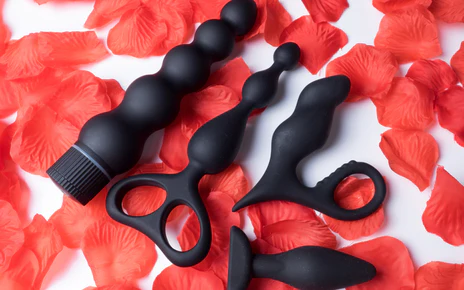


Anal training means progressive practice, over days, weeks, or months, to comfortably accommodate larger insertable items than the body initially allows. The two anal sphincters (external, under conscious control; internal, autonomous) need time and repeated relaxation to stretch comfortably. The standard UK practice for beginners: start small (a finger-tip or 25-30mm diameter plug), use plenty of body-safe lubricant (water-based or hybrid, never silicone with silicone toys), progress in 5-7mm diameter increments over multiple sessions, stop immediately if pain occurs (discomfort is normal; pain is a signal to slow or stop). A typical 3-piece training kit (~£25-35 from established UK brands like Me You Us, COLT, Admiral, Black Velvet) covers small, medium, and large progression. Anal training is not the same as one-off insertion; the "training" specifically means measured, repeated practice with rest between sessions. Two non-negotiable basics: body-safe materials only (silicone, glass, steel, avoid jelly / TPE with unknown plasticisers), and a flared base on any insertable (the rectum doesn't have a natural stop point, unlike the vagina). For the wider anal pillar with all five toy categories, see anal sex toys UK.
Anal training, anal stretching, butt training, same practice
UK retail and community sources use "anal training", "anal stretching", and "butt training" interchangeably. All describe the same progressive practice: measured insertable sessions that allow the body to accommodate larger items over time. "Anal play" is the broader category (includes one-off insertion); "anal training" specifically implies the progressive multi-session approach.
The anatomy, what you're actually training
Two distinct sphincter muscles control the anal opening, and they work differently:
- External anal sphincter: Skeletal muscle under conscious control. Responds to relaxation, you can deliberately relax it like flexing or releasing any other muscle. This is the muscle most beginners are aware of.
- Internal anal sphincter: Smooth muscle, autonomous (not under conscious control). Relaxes gradually with sustained gentle pressure and breath work, but you cannot consciously command it to release. This is the muscle that catches most beginners by surprise, even with the external relaxed, the internal can clench unexpectedly.
The training works because the internal sphincter learns to anticipate and gradually accommodate insertion when practice is consistent and unhurried. Brook Advisory and NHS sexual health resources cover the anatomy in more detail.
Pre-training essentials
1. Body-safe materials only
Anal tissue is more absorptive than vaginal tissue, material safety matters more for anal use than any other insertable use case. The body-safe materials list:
- Platinum-cure silicone: Medical-grade silicone. Non-porous, hypoallergenic, heat-stable. Most quality UK anal training kits use this.
- Borosilicate glass: Non-porous, easy to clean, can warm or cool. Heavier than silicone, some prefer the weight, some don't.
- Stainless or surgical steel: Non-porous, durable, weighted. Highest cost but longest-lasting.
- Ceramic: Glazed ceramic is body-safe; unglazed is porous and not recommended.
Avoid: Soft jelly / rubber materials without published material disclosure (often contain phthalate plasticisers restricted by ECHA REACH), porous TPE blends, anything that smells strongly of chemicals out of packaging.
2. Flared base, non-negotiable
Unlike the vagina, the rectum has no natural stop point. Any insertable used anally must have a flared base, a wider section that prevents the item from passing fully inside. Anal training kits and butt plugs come with flared bases standard; multi-use dildos may or may not. Check before use.
UK A&E departments report regular admissions for retrieved foreign objects, the flared base requirement isn't precaution, it's necessity.
3. Lubricant choice
Anal tissue produces no natural lubrication. External lubricant is essential, not optional. Three categories:
- Water-based: Compatible with all body-safe toy materials including silicone. Needs occasional reapplication during longer sessions. Standard pick for silicone toys and partner play. UK examples: ID Lube range, Lubido, Sliquid, Aloe Cadabra.
- Hybrid water-silicone: Longer-lasting than water-based; safe with most toy materials but check the specific toy's compatibility. Useful for longer training sessions.
- Silicone-based: Longest-lasting and the most-frictionless. Incompatible with silicone toys (the silicone in the lube degrades the silicone toy surface). Safe with glass, steel, and ceramic. Some anal training practitioners prefer silicone-based for the longer glide.
Anal-specific lubes (Doc Johnson Anal Lube, Intimate Earth Soothe) include desensitising agents in some formulations, UK community guidance discourages numbing lubes for training specifically. Pain is a useful signal; numbing it removes that signal.
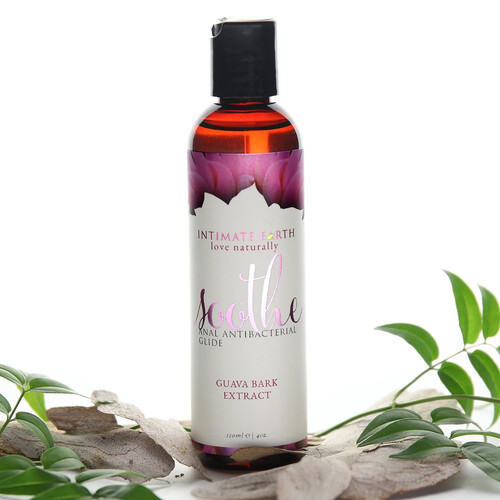
Intimate Earth Soothe Anal Lube
Water-based, body-safe, no numbing agents. 120ml ~£22.
£21.99 →Size progression
Anal training kits come in 3-piece sets covering small, medium, and large diameters. Typical UK kit progression:
| Stage | Typical diameter | Use after |
|---|---|---|
| Small (training start) | 25-30mm (1.0-1.2") | Comfortable with single-finger insertion |
| Medium (training intermediate) | 33-40mm (1.3-1.6") | Comfortable with small plug at full insertion |
| Large (training advanced) | 40-50mm (1.6-2.0") | Comfortable with medium plug for 15+ minutes |
The standard rule of thumb: spend 2-4 sessions at each size before progressing. Some practitioners move faster, some slower, body response varies. The signal that you're ready to progress is sustained comfort with the current size for 10-15 minutes, not a calendar date.
Recommended UK starter kits
Best value entry kit
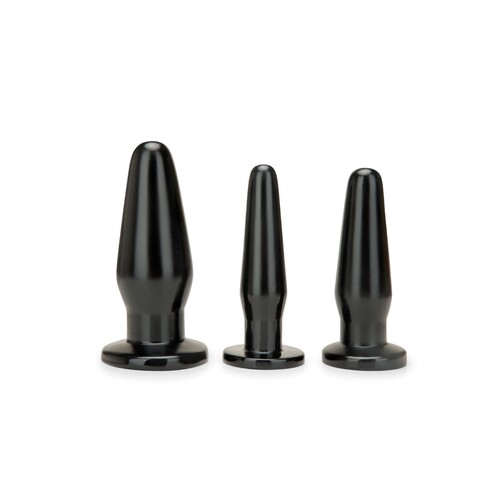
Me You Us Anal Training Kit
Three-piece progressive silicone kit. ~£29.
£28.99 →COLT brand alternative
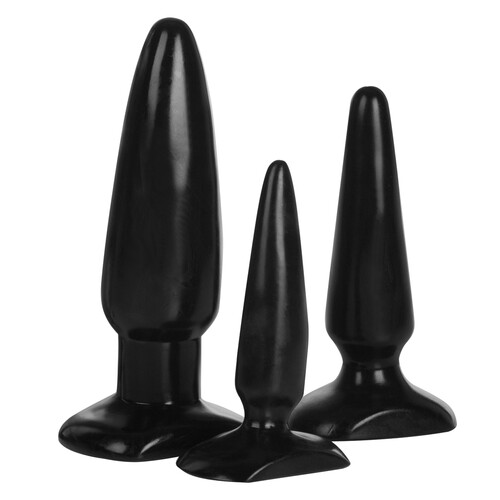
COLT Anal Trainer Kit
3-piece body-safe silicone, COLT-brand reliability. ~£35.
£34.99 →Admiral starter set
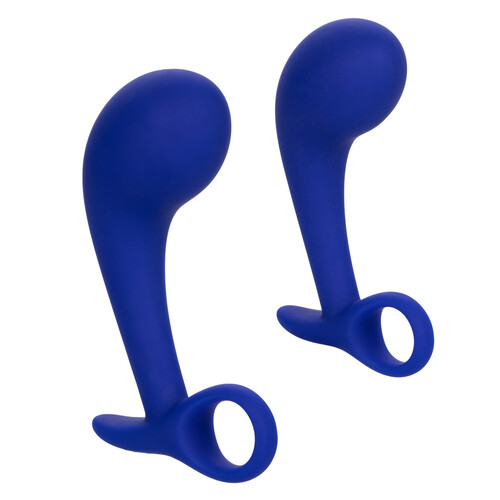
Admiral Anal Training Set
UK-market 3-piece kit. ~£29.
£28.99 →Premium silicone option
Black Velvet 3-Piece Silicone Set
Smooth silicone progressive set with flared bases. ~£26.
£25.99 →Anatomy of a training session
Before
- Empty bladder. Some practitioners also use a small douche / anal shower 30-60 minutes before, optional, not required for most light training.
- Bath or shower for relaxation. Heat increases muscle pliability.
- Set up: lube within reach, towel down, no time pressure. Allow 20-30 minutes for a session including rest.
During
- Apply lubricant generously to both the plug and external opening. More than feels necessary.
- Start with self-stimulation in a non-anal area (clitoris, penis, nipples, wherever relaxes you). Relaxation matters more than position.
- Bring the plug to the opening with gentle pressure. Don't push. Wait for the external sphincter to relax against the pressure.
- Breathe out through the moment of insertion. The exhale relaxes both sphincters.
- Pause at full insertion. Don't move immediately. Let the internal sphincter adjust, 30-60 seconds.
- Slow movement only for the first sessions. Build to longer or more dynamic use over multiple sessions.
After
- Slow removal, pull only during exhale.
- Clean the toy: warm water + body-safe toy cleaner for silicone. Dry fully before storage.
- Rest day before next session. The tissue needs recovery time.
Signs you're going too fast
Stop or slow down immediately if you experience any of these:
- Sharp pain at insertion or during. Pain is distinct from stretch sensation, pain says stop.
- Bleeding at any time, bright red or dark. Stop, rest, see a GP if bleeding doesn't resolve within 24 hours.
- Persistent discomfort that doesn't resolve when you pause and breathe.
- Difficulty controlling bowel movements after training, this can indicate going too quickly. Pause training for 1-2 weeks.
- Skin irritation at the external opening, could be lube allergy, friction, or insufficient lubrication. Switch lube and add more.
NHS guidance: any persistent anal symptoms (bleeding, pain, control issues) lasting more than 24-48 hours should be assessed by a GP regardless of cause.
Common training mistakes
- Skipping the small plug to start with medium. The progression matters. Starting too big means tearing or pain that sets back training.
- Not enough lube. Use more than feels necessary. Reapply during sessions.
- Using numbing lubes. Pain is a useful signal, numbing it removes the body's warning system. Avoid for training.
- Inconsistent practice. Long gaps between sessions reset progress. 2-3 sessions per week with rest days between is more effective than one long session per month.
- Forgetting the flared base requirement. Any insertable used anally must have a flared base. Multi-use dildos may not, check before use.
- Buying jelly / TPE plugs without material disclosure. Anal tissue is absorptive. Body-safe materials matter more here than in any other use case.
Related reading
- Anal training kits, pacing and progression detail
- UK lube guide: water, silicone, hybrid
- Safe words explained
- Aftercare
- Browse anal range
Frequently asked
- How long does anal training take?
- Highly individual, weeks to months. Most beginners reach comfortable small-plug use within 2-3 sessions; medium-plug comfort in 1-3 weeks of 2-3 sessions per week; large-plug comfort in 1-3 months. Some progress faster, some slower. The signal to advance is sustained comfort at the current size, not a calendar date.
- Is anal training painful?
- It shouldn't be. Stretch sensation and mild pressure are normal; sharp pain is a signal to stop. Pain typically indicates going too fast, insufficient lubrication, or insufficient relaxation. If pain persists despite slowing down and adding lube, pause training for 1-2 weeks and consult a GP if symptoms continue.
- What size plug should I start with?
- 25-30mm diameter (about 1.0-1.2"). Most quality UK 3-piece training kits start at this size for the small plug. If even this feels too large initially, finger-tip practice (clean, well-lubricated, single finger) is the pre-plug starting point.
- How often should I train?
- 2-3 sessions per week with rest days between. Tissue needs recovery time; daily training is counterproductive. Long gaps (1-2+ weeks between sessions) reset progress. Consistency matters more than session length or intensity.
- Do I need to use enema or douche before anal training?
- Optional for most light training; not required. A small anal shower / douche 30-60 minutes before can increase psychological comfort but isn't medically necessary for typical training sessions. Avoid daily douching, it disrupts the rectal microbiome.
- What lube is best for anal training?
- Water-based or hybrid water-silicone for silicone toys (silicone-based lube degrades silicone toy surfaces). Silicone-based lube is the longest-lasting option for glass or steel toys. Avoid numbing / desensitising anal lubes during training, pain is a useful signal you don't want to mute.
- Can I do anal training solo?
- Yes. solo training is the standard approach. Working solo gives you full control over pace, depth, and stopping. Partnered training adds communication complexity that's easier to manage after solo comfort is established.
- What's the difference between butt plugs and anal training kits?
- Anal training kits are progressive 3-piece sets (small / medium / large) sold together for graduated training. Butt plugs sold individually are typically single-size pieces for sustained wear at one specific size. Training kits are the right purchase for progression; individual plugs are for sustained-wear use once size comfort is established.
- How do I clean anal training toys?
- Silicone, glass, steel, ceramic: warm water + body-safe toy cleaner or mild unscented soap. Dry fully before storage. Don't share toys between people without thorough cleaning (or use individual toys per person). Silicone toys can survive top-rack dishwasher cycles on cool wash but check manufacturer guidance.
- Will anal training affect bowel control?
- Properly-paced training should not affect long-term bowel control. The sphincter muscles regain tone naturally between sessions. Going too fast or too intensely can cause temporary control issues, pause training for 1-2 weeks if this occurs, then resume more gradually.
- Is anal training safe long-term?
- Yes, with appropriate pacing and body-safe materials. NHS sexual health resources cover the basic safety framework. Anal training within reasonable progression doesn't damage tissue or cause lasting dysfunction. Going too fast, using inappropriate materials, or ignoring pain signals can cause short-term issues but typically resolve with rest.
- What if I have haemorrhoids or other anal conditions?
- Consult a GP before starting anal training if you have active haemorrhoids, anal fissures, IBS, IBD (Crohn's, ulcerative colitis), or any pelvic-floor condition. Training is often compatible with these conditions when managed appropriately but the approach may need adjustment.
Sources & further reading
- NHS, Sexual health hub, NHS UK
- Brook, Sex and pleasure, Brook Advisory
- ECHA, Restricted plasticisers in body-contact products, European Chemicals Agency
- ISO 10993, Biocompatibility for body-contact products, ISO
Filed under Beginner's Guides
← Back to the Guides