


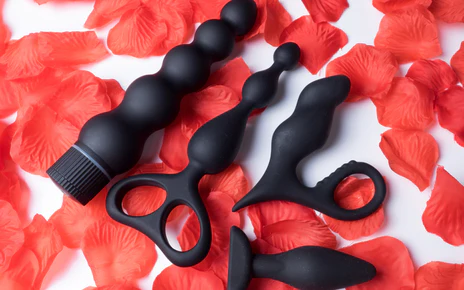


Mainstream parenting media treats postnatal sex either as a fairy-tale six-week return to normality or as a topic too sensitive to discuss directly. Neither matches what most new parents actually experience. This is the plain UK guide to where sex toys fit (and where they should wait) in the months after childbirth: the timing the NHS actually advises, what is appropriate to start with, what to skip for now, and how to find the unhurried way back to a sexual practice without making yourself feel behind.
The medical timing
The NHS recommends waiting until your 6-week postnatal check before resuming penetrative vaginal sex, regardless of delivery type. The reasoning: the cervix takes about six weeks to fully close, perineal tissue (whether stitched or torn) takes that long to heal, and the body needs time to clear lochia (postnatal bleeding) and re-establish basic vaginal flora.
The 6-week mark is not a hard line into "everything is fine now"; it is the earliest point at which insertable activity carries no specific medical contraindication. Many people are not ready at six weeks, and that is entirely typical. Survey data (NCT, Mumsnet panels) consistently finds the median return to penetrative sex sits around 8-12 weeks after birth, with significant variation either side.
Touch, external stimulation and non-insertable toys can resume earlier than six weeks once you feel ready. The medical concern is specifically about anything that enters the vagina (or vigorous activity that strains stitches); external activity is on a different timeline driven entirely by your own comfort.
For caesarean deliveries, the wait is for the abdominal scar to heal (typically 6-8 weeks of no abdominal strain) plus the same cervical/lochia timeline. For deliveries with perineal stitching or third/fourth-degree tears, take guidance from your midwife or GP at the postnatal check; the timeline can extend to 3-4 months for full comfort.
What is appropriate to start with
Two categories work well in the early weeks (with no insertion), assuming you feel ready:
A wand massager for external clitoral stimulation. Wands like the Doxy 3 or Magic Wand Rechargeable apply broad surface vibration to the vulva without insertion; you can use them clothed or unclothed, in any position, with no positional strain on healing tissue. The sustained external stimulation is often what postnatal bodies respond to most readily; clitoral sensitivity sometimes increases in the postnatal period.
Mutual touch with no specific goal. Sensual massage, gentle skin contact, lying together without it needing to lead anywhere. The pressure to "have sex again" can itself become the obstacle; releasing that pressure is often the work that needs to happen first. See our sensual massage guide for the technique side of this.
Pelvic floor recovery
Pelvic floor exercise after birth is one of the most-evidenced interventions in postnatal recovery. The 2020 Cochrane review of 31 trials concluded that pelvic floor training "substantially reduces or cures" stress urinary incontinence; the same training supports sexual function, including orgasm strength and vaginal tone.
Manual kegel exercises can start in the first week postnatally (no equipment needed; the NHS leaflet covers the technique). Weighted kegel balls or trainers should wait until your 6-week check and GP clearance; insertion of any object before then has the same contraindications as penetrative sex.
Once cleared, the standard protocol is one 30-40g ball, ten minutes daily, progressing to heavier or twin sets after four to six weeks. See our kegel balls UK guide for the specific picks and the progression timeline.
What to skip in the first months
Three categories belong on the shelf for now:
Insertable toys (until cleared by your postnatal check). Dildos, G-spot vibrators, the insertable arm of a rabbit. The six-week wait is for these; longer if your check identifies any specific healing concern.
Anal play (longer caution). Postnatal pelvic floor weakness can make anal play uncomfortable or counterproductive even after the vaginal six weeks; many midwives suggest waiting 3-4 months and reviewing how things feel. If anal was part of your sex life before, it can come back; just not first.
Anything involving forceful contraction or strain. This is more about position than gear: scenes or positions that put significant load on the abdominal wall, perineum or core. The healing tissue is doing its work; do not interrupt it. Gentler positions, lower intensity, plenty of pillows.
Lubrication is non-optional
Postnatal hormonal shifts (particularly when breastfeeding) suppress oestrogen and reduce natural vaginal lubrication. This is normal, temporary, and entirely manageable with the right lubricant. A water-based or hybrid lube applied generously transforms the experience; without it, friction is the limiting factor and small abrasions can occur even with healed tissue.
Water-based is the universal-compatibility default and is fine with breastfeeding. Hybrid (water plus a small percentage of silicone microparticles) gives longer glide and is sometimes the more comfortable choice in this period. Silicone-based works but bonds with silicone toys; not the first choice. See our full UK lube guide for the detailed breakdown.
Avoid: warming lubes (often contain glycerin which can feed yeast), flavoured lubes (same concern), oil-based products near the vulva (disrupt pH).
The emotional side
The body is not the only thing recovering. Sleep deprivation, identity shift, hormonal upheaval and the bandwidth a small baby consumes all genuinely change how desire works in the postnatal months. The shift is usually temporary (most couples find desire returning by 6-12 months, often gradually) but the temporary version is real while you are in it.
Two practical points. First, the partner who did not give birth is often unsure how to engage and ends up either pushing too hard or not pushing at all; explicit conversation about what you each want (and do not want) helps more than guessing. Second, the "we are now parents" identity shift takes time to integrate with the "we are also each other's partners" identity; spending non-baby time together, even if it is just thirty minutes in the evening, is the maintenance work.
When to see your GP
Persistent pain during or after sex three or more months postnatally is worth a GP visit. Causes range from straightforward (low oestrogen, treatable with topical hormone preparations) to less so (scar tissue requiring physical therapy, pelvic organ prolapse needing specialist referral). All are common, all are addressable; none of them should be tolerated as "just how it is now". UK GPs can refer to a women's health physiotherapist on the NHS for pelvic floor and scar tissue work.
Postnatal depression and anxiety also affect libido significantly; if mood has been low for more than a few weeks, that is a GP conversation too, separately from the sexual one.
Common questions
- Q: How long after giving birth can I use sex toys?
- External (non-insertable) toys like a wand massager can be used as soon as you feel ready, often within the first few weeks. Insertable toys should wait until your 6-week postnatal check and GP clearance, the same timeline as for penetrative sex.
- Q: Is it safe to use a vibrator while breastfeeding?
- Yes. Orgasm releases oxytocin which can trigger let-down (milk release), so feeding the baby first or wearing breast pads is the practical adjustment. Otherwise no specific contraindication.
- Q: When can I start kegel exercises after birth?
- Manual kegels (no equipment) can start in the first week, including after a caesarean. Weighted kegel balls or trainers should wait until your 6-week check and GP clearance. The NHS leaflet on postnatal pelvic floor exercise covers the manual technique.
- Q: I had a third-degree tear; how is the timeline different?
- Significantly longer. Third- and fourth-degree perineal tears typically take 3-4 months for full comfort; the postnatal check at six weeks will assess healing and your midwife or GP can advise on the appropriate timeline for both penetrative sex and insertable toys.
- Q: My partner gave birth, and I am unsure how to bring up sex again. How?
- Outside the bedroom, in a low-pressure moment, with no expectation of action soon. The framing that works: "I miss being close to you and I want to know how to be helpful while we work out what feels right again." Avoid the framing "when will we have sex again", which lands as pressure even when it is not intended.
- Q: Does the lubrication change ever go back to normal?
- Yes, in almost all cases. The hormonal suppression of natural lubrication continues through breastfeeding and resolves within a few months of weaning. Some users find a residual mild dryness persists; topical oestrogen (GP-prescribed) addresses this completely if needed.
Sources & further reading
- NHS. Your body after the birth. nhs.uk/pregnancy/labour-and-birth/after-the-birth/your-body/.
- NHS. Pelvic floor exercises. nhs.uk/conditions/pelvic-floor-exercises/.
- Dumoulin C, Cacciari LP, Hay-Smith EJC. Pelvic floor muscle training versus no treatment, or inactive control treatments, for urinary incontinence in women. Cochrane Database of Systematic Reviews. 2018;10:CD005654.
- NCT (National Childbirth Trust) guidance on postnatal sex and intimacy. nct.org.uk.
Filed under Buying Guides
← Back to the Guides