


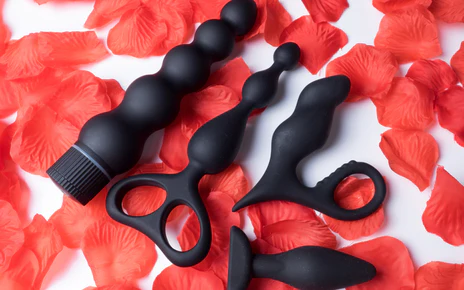


BDSM is an umbrella term for consensual practices involving Bondage, Discipline, Dominance, Submission, and Sadomasochism. A 2017 study in the Journal of Sex Research (Joyal & Carpentier) found that 46.8% of 1,040 surveyed adults had engaged in at least one BDSM-adjacent activity, and 22.5% practised regularly. It is not a fringe interest. It is a vocabulary for desires most people have, organised around one absolute principle: enthusiastic consent. For the practical first-steps companion, see bondage for beginners UK.
The B-D-S-M letters, decoded
Each letter is a category of practice. They overlap; nobody does all of them.
- B, Bondage. The use of restraint: rope, cuffs, tape, harnesses. Restraint is sometimes the whole point; sometimes it just frames whatever else is happening.
- D, Discipline. Rules, structure, and consequences for breaking them. Often quietly verbal, protocol, posture, address, rather than dramatic.
- D / S, Dominance and Submission. A negotiated power exchange. The dominant partner directs; the submissive partner agrees, in advance, to follow within the limits the two of them have set together.
- S / M, Sadism and Masochism. The giving and receiving of intense sensation, heat, pressure, impact, chosen for the pleasure both parties take in it.
Most people who identify with the term practise some combination, perhaps light bondage and discipline, perhaps a domestic D/s dynamic that never includes pain at all. The letters are a vocabulary, not a checklist.
Is BDSM legal in the United Kingdom?
BDSM between consenting adults is legal in the UK, with one important and frequently misquoted caveat. Following the 1993 case R v Brown (the Operation Spanner ruling), the House of Lords held that consent is not a defence to assault occasioning actual bodily harm (ABH), even when that harm was sought, planned, and welcomed. In practice this means:
- Restraint, mild impact, sensation play, role play, sex toys, and almost everything most British adults will ever want to try is unambiguously legal.
- Activities that risk lasting bruising, marking, or injury exist in a grey zone, not actively prosecuted in private between adults, but technically not protected by consent.
- Anything that would require medical attention is best avoided, full stop.
The Crown Prosecution Service has not since 1993 brought any high-profile case against private adults practising consensually. The risk in 2026 is not police, it is hospital, the concern is your own safety, not the law.
Consent is the one non-negotiable
The kink scene has a longstanding shorthand: SSC (Safe, Sane, Consensual) and a more recent variant, RACK (Risk-Aware Consensual Kink). Both are taught in scene workshops and on every reputable forum because they describe what separates BDSM from abuse:
- Both parties agree, in advance, to what will and will not happen. "I'm up for anything" is not informed consent; it is a refusal to negotiate.
- Both parties can stop at any time. A pre-agreed safe word, covered in detail here, overrides any role play. "No" inside the scene may mean nothing; "red" or "safeword" always means stop.
- Aftercare is part of the activity, not optional. See our aftercare guide for what this looks like in practice.
This is near-universal practice among people who do this seriously, not just etiquette. In community surveys run by the National Coalition for Sexual Freedom, the large majority of practitioners report using safe words and negotiating scenes in advance; the small minority who skip those steps account for most of what goes wrong. The single best predictor of whether a scene goes well is how thoroughly it was negotiated beforehand, not the fancy gear, not the experience level, not the intensity.
Practices, briefly, in plain English
A short tour of what people actually do. None of this is required. Most British couples who try BDSM stop at the first one or two on the list and never feel the need to go further.
- Light bondage. Hands tied with a soft cuff or scarf. Removes the restrained partner's choice for a while; the freedom of having that choice removed is, for many, the whole appeal.
- Sensory deprivation. A blindfold, possibly headphones with white noise. Heightens every other sensation. The single highest-impact-per-pound piece of gear in any starter kit.
- Spanking, paddling, flogging. Impact play. Range from playful to intense. See our spanking guide for technique and safety.
- Power exchange / Dominance & submission. Verbal more often than physical. Roles agreed for the evening, the weekend, or as a quietly continuous part of the relationship.
- Role play. Scenarios, teacher / student, doctor / patient, abduction fantasy. The fiction provides permission to ask for things that feel awkward to ask for as yourself.
- Sensation play. Ice, wax, feathers, Wartenberg pinwheels. Low risk, high theatre. More ideas here.
- Shibari and rope. Decorative Japanese-influenced rope work. As much craft as kink. Explained here.
What BDSM is not
The five myths worth dispelling, because they keep curious people from trying anything at all.
- It is not abuse. Abuse is unilateral, unwanted, and damaging. BDSM is mutual, requested, and bounded. The presence of pain does not make it abuse; the absence of consent does.
- It is not a sign of past trauma. Multiple peer-reviewed studies (Connolly, 2006; Wismeijer & van Assen, 2013) have found BDSM practitioners score equal or better than the general population on standard measures of psychological wellbeing.
- It does not require expensive gear. A blindfold, a couple of scarves, a hairbrush, and a clear conversation will get you the first six months of an interesting practice.
- It is not all leather and dungeons. Most British practitioners are middle-aged couples doing soft bondage in their own bedrooms with the lights low and the dog locked out.
- It is not a "phase that gets darker". Most people find their level inside the first year and stay there. The scene calls this "settling" and considers it a sign of maturity.
Getting started, sensibly
If you've read this far and want to try something this week, here's the shortest credible route.
- Have a 30-minute conversation, not in bed. What appeals? What does not? What's an absolute no? A safe word? Both partners do this. Both can change their mind later.
- Start with sensory deprivation, not restraint. A blindfold removes one sense and adds nothing else. It is the lowest-stakes, highest-impact thing you can introduce.
- Add restraint second. Soft cuffs from our bondage gear range or even a pair of stockings. Wrists only. Both parties learn what restraint feels like before adding anything else.
- Add light impact third, if you want to. Hand spanking is sufficient for the first few sessions. No one needs a flogger in week one.
- Aftercare every time. Water, blanket, a short conversation about what worked. This is not optional.
Where to read further
Three books are universally recommended on any UK kink forum and all are easy to find: Jay Wiseman, SM 101 (the foundational technical text); Janet Hardy & Dossie Easton, The New Topping Book / The New Bottoming Book (the relational pair); and the website Kink Academy for video instruction. Our own beginner trail starts with Bondage for Beginners and continues through Safe Words, Negotiation, and Aftercare.
None of this is required reading to be human. Most adults will read this guide, decide one of the four corners interests them, and quietly try one new thing this month. That is the whole point. BDSM is a vocabulary, not a club.
- What does BDSM stand for?
- BDSM is an umbrella initialism standing for Bondage and Discipline, Dominance and Submission, Sadism and Masochism. The letters describe overlapping categories of consensual sexual practice; almost no practitioner engages in all of them.
- Is BDSM legal in the UK?
- Yes, between consenting adults. The 1993 R v Brown ruling means that consent is not a legal defence to causing actual bodily harm, so activities that produce lasting injury exist in a grey zone, but restraint, mild impact, sensory play, and almost everything most couples ever attempt is unambiguously legal in private between adults over 18.
- What percentage of adults practise BDSM?
- A 2017 peer-reviewed study published in the Journal of Sex Research surveyed 1,040 adults and found 46.8% had engaged in at least one BDSM-adjacent activity, with 22.5% reporting regular practice. It is among the most common sexual interests not openly discussed.
- Is BDSM a sign of past trauma?
- No. Multiple peer-reviewed studies (Connolly 2006, Wismeijer & van Assen 2013) have found BDSM practitioners score equal or better than the general population on standard measures of psychological wellbeing, attachment style and life satisfaction.
- How do I introduce BDSM to my partner?
- Have a relaxed conversation outside the bedroom, share specific things that interest you (rather than the whole topic), invite their interests in return, and start with the lowest-stakes element, usually a blindfold. Our full guide on introducing bondage covers the full conversation script.
- What is a safe word?
- A safe word is a pre-agreed word, typically "red" for stop and "amber" for slow down, that overrides any role play and signals an immediate halt. Within a scene, "no" may be playful; the safe word is always literal. Our full guide on safe words.
- Do I need expensive gear to start?
- No. The first six months of a meaningful BDSM practice can be done with a blindfold, a couple of scarves, and an open conversation. Specialist gear comes later, once you know what you actually enjoy.
Sources & further reading
UK consent frameworks, BDSM-safety research, and legal context.
- CPS, Sexual offences and consent (UK law), Crown Prosecution Service
- Brook, Consent resources, Brook Advisory
- NCSF, BDSM safety research, National Coalition for Sexual Freedom
- Stonewall, UK LGBTQ+ resources, Stonewall UK
Filed under Beginner's Guides
← Back to the Guides