


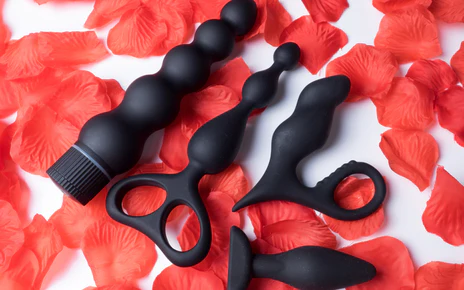


For your first set of restraints, bondage tape is the safest choice. It sticks only to itself (not to skin or hair), removes in one tug, and requires no knot skill. Cuffs are the most repeatable, a quick-release buckle handles the next 200 sessions. Rope offers the most theatre and the highest skill ceiling but mandates safety scissors within arm's reach. All three start under £25; the choice is about intent, not budget. Below is the framework that helps most couples pick the first one to buy. For the broader beginner overview, see bondage for beginners UK.
The three restraints compared at a glance
| Aspect | Bondage Tape | Cuffs | Rope |
|---|---|---|---|
| Skin contact | None, sticks to itself only | Buckle on padded cuff | Direct rope-on-skin |
| Quick release | Tear or cut (1 second) | Buckle (3 seconds) | Safety scissors required |
| Skill required | None | Minimal | Significant, knot training |
| Reusable | Yes (single roll = ~10 sessions) | Yes (decades) | Yes (decades, with care) |
| Visual aesthetic | Industrial | Classic kink | Editorial / artistic |
| Entry price | ~£9 | ~£20 (basic) / £75 (set) | ~£15 (10 m natural rope) |
Bondage tape, the best beginner restraint, and we'll defend that
Bondage tape is a low-tack vinyl-coated material that sticks to itself and only itself. It does not adhere to skin or body hair (the most painful failure mode of regular adhesive tape). It comes off in one motion. It can be re-stuck several times before it begins to lose tack. A standard 57 ft roll is enough for ten or more sessions before replacement.
Why beginners should usually start here:
- No knot skill required. Wrap, press to itself, done. The receiver is restrained inside a minute.
- One-second release. A quick tug separates it. There is no "stuck" failure mode.
- Zero risk of circulation issues. The tape's give means it cannot be over-tightened the way rope can. It will yield before it cuts off blood flow.
- No marks. Skin shows no impression after removal. The most discreet restraint by a wide margin.
- Inexpensive. A £9 roll handles your first ten scenes. By the time it runs out you will know whether you want to invest in cuffs or rope.
Where it falls short: the visual is industrial, utilitarian rather than aesthetic. It does not look like the bondage in any film or photograph. For couples who care about the visual aesthetic, tape is a means to an end, not the destination.
Cuffs, when you want quick release and reusability
The 200-session restraint. A pair of buckled leather (or padded synthetic) cuffs lasts decades and produces no learning curve. Once you've put them on once, you've put them on for life.
Why cuffs are usually the second purchase:
- One buckle release. The receiver can be free in three seconds. Critical if anything unexpected happens (cramp, panic, fire alarm, anything).
- Padded interior. Quality cuffs distribute pressure across a wider area than rope; safer for sustained wear.
- Rated for connection. Cuffs come with O-rings or D-rings, designed to be clipped together (wrist-to-wrist) or to bed posts. The connection ecosystem is what makes cuffs versatile.
- Aesthetic. Leather cuffs look like the bondage in films and editorials. They photograph well. Many couples find this matters.
Where to spend. Cheap cuffs (under £10) are typically thin synthetic; the buckle is plastic; the padding is foam. They work, but they don't feel like equipment. Spend £25–£40 on a single quality leather cuff set or £75 on a coordinated 5-piece kit (wrists, ankles, collar). Anything below this tier you'll replace within a year.
Rope, why you need a safety plan first
Rope is the most theatrical restraint and the highest skill ceiling. It is also the only restraint that requires safety equipment in the room before you start: EMT safety scissors (£8 from any first-aid supplier), kept within arm's reach of wherever you tie. Without scissors, rope is the restraint with the worst failure mode, a tightened knot under stress can be impossible to untie quickly with hands.
If you have considered all of that and still want to start with rope, the case for it is strong: rope work is genuinely beautiful, the skill is rewarding to develop, and the same set of rope can be used in dozens of configurations as you learn. Shibari is the art form rope-bondage has organised itself around.
The minimal rope kit:
- Two 10 m lengths of 6–8 mm cotton or jute rope. Cotton is softer and more forgiving for beginners; jute is the traditional shibari material. Our rope materials guide covers the choice.
- EMT safety scissors. One pair, kept on the bedside table during use, full stop.
- One book or one course. "Shibari You Can Use" by Lee Harrington is the standard introduction; YouTube has dozens of free starter tutorials. Do not improvise rope work from photographs.
Anchor points (and why headboards are mostly wrong)
Whatever restraint you choose, you will at some point want to attach it to something. The bedposts you have are probably not what you want.
- Headboards (most beds). Often the wrong attachment point. Ornamental, not load-bearing; a sustained pull breaks them. A purpose-built bed strap or bondage-rated rope bridge is the right answer if you want to use the bed as anchor.
- Bed frames. The structural frame (under the mattress) is load-bearing on most beds. A long strap can be threaded through it for any attachment point along its length.
- Door anchors. A foam-padded door-jam strap (~£15) creates a temporary anchor at door height, removed when you're done. Excellent for couples renting or sharing space.
- Dedicated equipment. Spreader bars, restraint cuffs with built-in O-rings, our commissioned furniture for a longer-term setup.
Safety scissors: the £8 item everyone ignores
EMT shears (also called "trauma scissors" or "bandage shears") are the £8 item that should be in any room where rope or tape is used. The blunt-tipped lower jaw slides safely between rope and skin; the offset handle gives leverage to cut through 8 mm jute in one squeeze. Buy from any first-aid supplier; keep on the bedside table; never start a rope scene without them.
Cuffs do not require scissors, the buckle handles the same job, but they're cheap insurance. Most experienced couples keep a pair within arm's reach for any restraint scene, full stop.
The restraints we stock
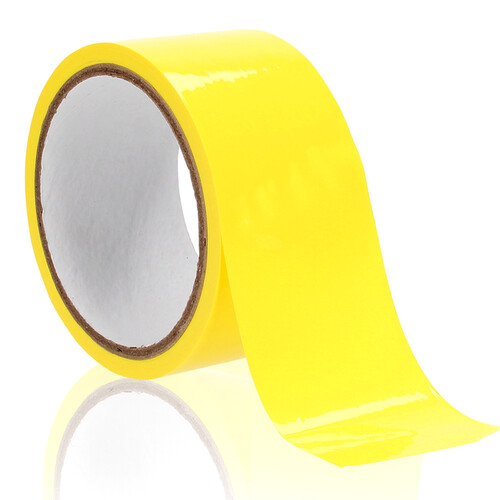
Ouch Xtreme Bondage Tape 57FT Yellow
Ouch Xtreme Bondage Tape, 57 ft, sticks only to itself, removes instantly. The single best beginner restraint.
£8.99 →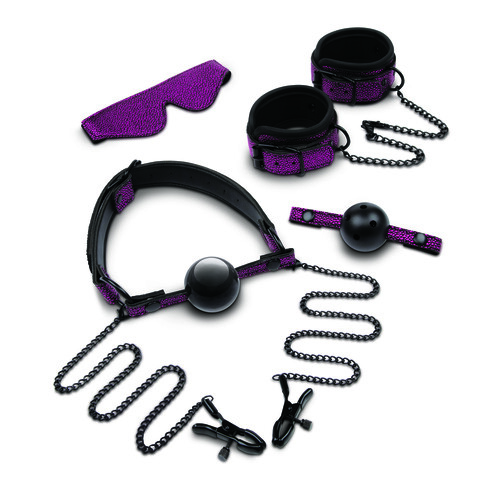
5 Piece Dragonskin Bondage Set
Dragonskin 5-piece, a complete starter cuff set (wrists, ankles, collar, lead). One purchase, full kit.
£73.99 →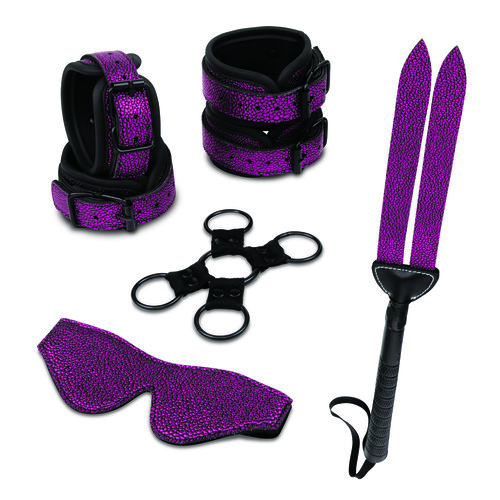
7 Piece Dragonskin Bondage Set
Dragonskin 7-piece, the larger Dragonskin set, adds a hogtie strap and a connector. For couples who know they'll keep going.
£92.99 →Related reading
For the materials side of rope (cotton vs jute vs hemp vs silk), our rope materials guide. For your first knots, five rope knots worth knowing. For the broader question of cuffs vs rope, when each one wins. And for the conversation that should precede any restraint scene, our safe words guide.
- What is the safest restraint for beginners?
- Bondage tape is the safest beginner restraint, it sticks only to itself (not skin or hair), removes in one tug, requires no knot skill, and has a built-in safety property: it yields before cutting off circulation. A 57 ft roll costs around £9 and handles ten or more sessions.
- What is bondage tape?
- Bondage tape is a low-tack vinyl-coated material that adheres to itself and only itself, it does not stick to skin, hair or fabric. It is used by wrapping around wrists or ankles and pressing to itself; it removes in one motion and can be re-stuck several times before losing tack.
- Are bondage cuffs better than rope?
- Cuffs are better for quick release, ease of use, and longevity (decades with no skill required). Rope is better for visual theatre, skill development, and the variety of configurations possible. Most couples buy cuffs first and add rope later when they're ready to invest in the learning curve.
- Do you need safety scissors for rope bondage?
- Yes. EMT trauma shears (around £8) should be within arm's reach for any rope scene. A tightened knot under stress can be impossible to untie quickly with hands; the offset blunt-tipped scissors slide safely between rope and skin and cut through 8 mm rope in one squeeze.
- How much does a beginner bondage kit cost?
- A meaningful beginner kit starts at £25–£35: a £9 roll of bondage tape, an £18–£25 single cuff set, plus a £8 pair of safety scissors as essential safety equipment. A coordinated 5-piece cuff set with collar, wrists, ankles and lead is £60–£75 and replaces several individual purchases.
- Can you tie someone to a normal bed?
- Most ornamental headboards are not load-bearing; the structural bed frame under the mattress usually is. A long strap threaded through the frame creates an attachment point. For renters and couples without bondage-rated furniture, padded door-jam straps are an inexpensive temporary alternative.
- What's the difference between cotton and jute bondage rope?
- Cotton rope is softer, more forgiving on skin, and the better choice for beginners, it grips well at moderate tension and rarely chafes. Jute rope is the traditional shibari material, stiffer, with a distinctive natural smell, holds knots beautifully but requires the receiver's skin to acclimatise. Our rope materials guide covers all four common types.
Sources & further reading
Restraint safety, materials, and UK first-aid references.
- NHS, Peripheral neuropathy, NHS UK
- St John Ambulance, First aid, St John Ambulance
- ECHA, Restricted substances (bondage tape PVC), European Chemicals Agency
- British Red Cross, First aid, British Red Cross
Filed under Beginner's Guides
← Back to the Guides