


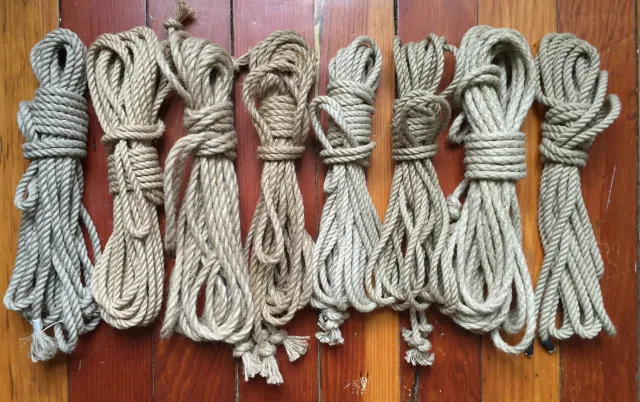
Bondage rope is chosen by fibre, and the fibre decides almost everything about how the rope behaves. Cotton is the beginner default: soft, forgiving, low friction-burn risk, machine-washable, cheap. Jute is the traditional shibari fibre: light, holds knots well, has the characteristic "tooth" that grips, but needs care and is less forgiving on skin. Hemp is jute's hardier cousin: stronger, slightly softer than jute, the choice for ties that take load. Satin and nylon are smooth synthetic-feel ropes: gentle on the wrists, good for decorative and light ties, but the slickness means knots can slip. The one material to be wary of is cheap unfinished nylon, which can cause friction burns and melt-edge fraying. For a true beginner, start with cotton; it is the most forgiving fibre and the cheapest way to find out whether rope is for you. This guide compares the fibres; for the technique of tying, see shibari knots for beginners.
Bondage rope, shibari rope, kinbaku rope
"Bondage rope", "shibari rope" and "kinbaku rope" describe rope used for consensual restraint and rope art. "Shibari" and "kinbaku" specifically reference the Japanese rope-tying tradition, where natural-fibre ropes (jute, hemp) are the traditional choice. "Bondage rope" is the broader term and includes the softer cotton and synthetic ropes most beginners actually start with.
Cotton
Feel: soft, smooth, gentle against skin. The most comfortable fibre for a beginner.
Behaviour: low friction-burn risk, easy on the hands, holds basic knots adequately. More stretch than natural shibari fibres, which makes it forgiving but less precise for advanced ties.
Care: machine-washable, which no other rope on this list is. The lowest-maintenance fibre by a wide margin.
Best for: beginners, anyone with sensitive skin, anyone who wants low-fuss rope they can wash. The right first rope for almost everyone.
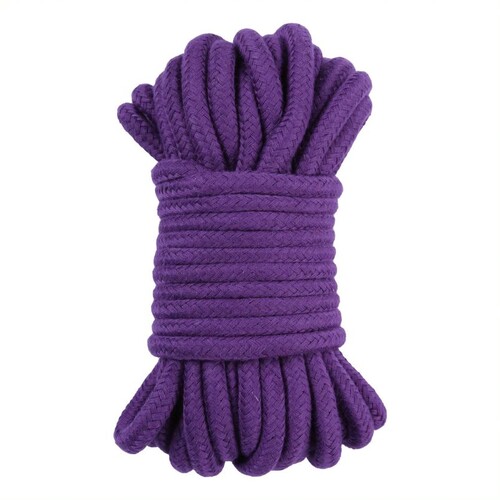
Me You Us Soft Cotton Rope, 10m
Soft, machine-washable, the forgiving beginner default. ~£7.
£6.99 →Jute
Feel: light, slightly coarse, with a characteristic "tooth" that grips. The classic shibari texture.
Behaviour: holds knots and frictions well because of that tooth, very little stretch so ties stay precise, light enough for extended sessions. Less forgiving on skin than cotton, and the fibre needs conditioning and care.
Care: not washable. Jute needs occasional conditioning (oiling) and careful storage to stay supple and avoid becoming brittle.
Best for: shibari practitioners who want the traditional feel and the grip that makes complex ties hold.
Hemp
Feel: similar to jute but slightly softer and noticeably stronger.
Behaviour: the hardier natural fibre, more durable than jute and a little kinder to skin, while keeping good knot-holding grip. The choice when a tie needs to take load.
Care: like jute, not washable, needs conditioning and careful storage. More resilient than jute over a long life.
Best for: rope users who want natural-fibre grip with more durability than jute, and ties that bear weight.
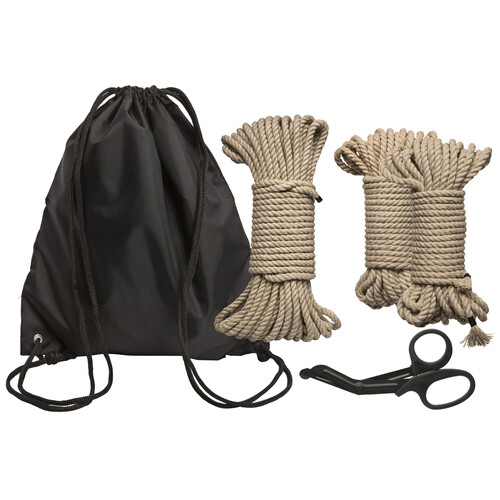
Kink Bind & Tie Hemp Rope Kit
Five-piece hemp rope kit, durable natural-fibre grip. ~£125.
£124.99 →Satin and nylon
Feel: smooth, soft, slippery. Gentle on the wrists, visually glossy.
Behaviour: the slickness is the headline trade-off, knots can slip and need backing up, but the smooth surface means almost no friction-burn risk. Often machine-washable. Good for decorative ties and light restraint.
Care: low-maintenance, usually washable, durable.
Best for: beginners who want maximum comfort, decorative and light ties, anyone who finds natural-fibre texture too coarse. Watch out specifically for cheap unfinished nylon, which can cause friction burns and frays at the cut ends.
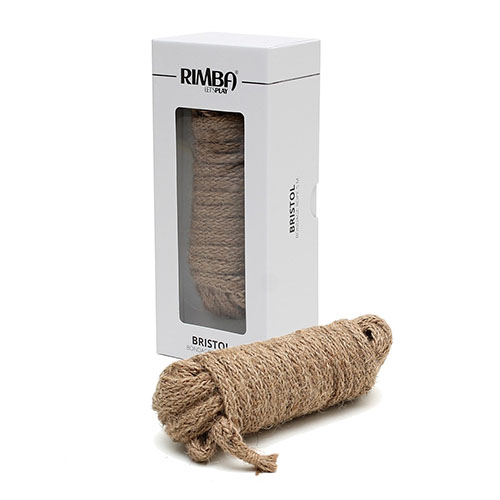
Rimba Bristol Bondage Rope, 5m
Smooth finished bondage rope, gentle on the wrists. ~£20.
£19.99 →Rope fibres at a glance
| Fibre | Feel | Knot hold | Skin kindness | Care | Best for |
|---|---|---|---|---|---|
| Cotton | Soft | Adequate | High | Machine-washable | Beginners |
| Jute | Light, has tooth | Excellent | Moderate | Conditioning needed | Shibari |
| Hemp | Light, slightly soft | Excellent | Moderate-high | Conditioning needed | Load-bearing ties |
| Satin / nylon | Smooth, slippery | Knots can slip | High | Usually washable | Decorative, light ties |
A note on diameter and length
Beyond fibre, two specs matter. Diameter: 6mm is the standard all-rounder, thick enough to grip and distribute pressure, thin enough to knot cleanly. Length: single ties need only a few metres, but most rope is sold in 8-10m lengths because that is what body harnesses and multi-wrap ties consume. A beginner is well served by one or two 8-10m lengths of 6mm cotton.
Rope safety basics
- Keep safety shears within reach. EMT-style blunt-tip shears, a few pounds, for any rope scene. Never rely on being able to untie under pressure.
- Avoid slip knots. They tighten under load and cannot be released if the bottom panics. Use non-tightening ties.
- Check circulation. Numbness, tingling, colour change, loosen or release immediately.
- Avoid the front and sides of the neck and keep ties off joints that bear weight.
Common mistakes
- Starting with jute or hemp. The traditional fibres are less forgiving and need care. Start with cotton.
- Buying cheap unfinished nylon. It can cause friction burns and frays at the ends. If you want synthetic, buy properly finished rope.
- Ignoring conditioning on natural fibre. Unconditioned jute and hemp become brittle. They are a maintenance commitment.
- Trusting slippery rope to hold knots. Satin and nylon knots slip; back them up.
- No safety shears. Non-negotiable for any rope scene.
Related reading
- Shibari knots for beginners
- Rope vs cuffs: when each wins
- Five rope knots worth knowing
- Browse bondage rope
Frequently asked
- What is the best bondage rope for beginners?
- Cotton. It is soft, forgiving, low friction-burn risk, machine-washable, and cheap, which makes it the lowest-fuss way to find out whether rope is for you. The traditional shibari fibres, jute and hemp, are less forgiving and need conditioning, so they are better left until you know you want to continue.
- What rope is used for shibari?
- Traditionally jute, with hemp as the hardier alternative. Both natural fibres have a characteristic "tooth" that grips, so knots and frictions hold well, and very little stretch so ties stay precise. They need conditioning and careful storage in exchange. Cotton is the common beginner substitute before moving to natural fibre.
- What is the difference between jute and hemp rope?
- Hemp is jute's hardier cousin: stronger, slightly softer on skin, and more durable over a long life, while keeping similar knot-holding grip. Jute is lighter and is the classic traditional shibari fibre. Both need conditioning. Choose hemp for ties that take load and longevity; jute for the traditional feel.
- Is satin or nylon rope good for bondage?
- For decorative and light ties, yes, it is smooth, gentle on the wrists, often machine-washable, and has almost no friction-burn risk. The trade-off is that the slick surface means knots can slip and need backing up. Avoid cheap unfinished nylon specifically, which can burn skin and fray at the ends.
- What rope diameter should I buy?
- 6mm is the standard all-rounder, thick enough to grip and distribute pressure across the skin, thin enough to knot cleanly. Most beginners are well served by one or two 8-10m lengths of 6mm cotton.
- How do I care for natural-fibre rope?
- Jute and hemp are not washable. They need occasional conditioning (oiling) to stay supple, and careful dry storage to avoid becoming brittle. Cotton, by contrast, is machine-washable and the lowest-maintenance fibre by a wide margin.
- Is bondage rope safe?
- Used correctly, yes. Keep EMT-style safety shears within reach for every scene, avoid slip knots that tighten under load, check circulation regularly and release on any numbness or colour change, and keep ties off the front and sides of the neck and off weight-bearing joints. See our shibari knots guide for technique.
- Where can I buy bondage rope in the UK?
- BondageBox stocks cotton, hemp and finished synthetic bondage rope with free discreet UK delivery over £30, plain unmarked packaging, and "BBox" on the bank statement. Browse the bondage range.
Sources & further reading
- NCSF, Consensual kink safety standards, National Coalition for Sexual Freedom
- St John Ambulance, Circulation and first aid, St John Ambulance UK
- Brook, Sex and pleasure, Brook Advisory
Filed under Materials & Care
← Back to the Guides