




Cuffs win on speed, rope wins on versatility. That is the comparison in one line. Cuffs buckle on in seconds, release in seconds, need no skill, distribute pressure comfortably across a padded band, and handle the large majority of what couples actually want to do, wrist-to-wrist, wrist-to-bedframe, ankle restraint. Rope opens a far wider range of ties, body harnesses, decorative work, full shibari, and has an aesthetic and ritual quality cuffs do not, but it carries a real learning curve, a higher circulation-monitoring responsibility, and slower application and release. For most couples the honest answer is buy cuffs first: they cover roughly 90% of beginner play with none of the learning curve. Add rope later, when you want the range and are ready to learn it properly. This is the focused two-way comparison; for the three-way version including bondage tape, see bondage tape vs cuffs vs rope.
Rope vs cuffs, restraints comparison
"Rope vs cuffs" is the most common first-restraint decision in bondage. Both are restraint methods; the choice is about how you want to get there. Cuffs are an engineered product; rope is a material plus a skill. This guide compares them across the dimensions that actually decide it.
Speed: cuffs win
Cuffs buckle or Velcro on in seconds and release just as fast, which matters more than it sounds. Fast release is a safety feature, not just a convenience, and it lowers the stakes of a first scene. Rope takes minutes to apply and minutes to remove safely, and rushing either is where mistakes happen. If speed and easy release matter to you, cuffs win clearly.
Skill: cuffs win
Cuffs require essentially no skill. You put them on; they work. Rope requires learning ties that hold without tightening dangerously, learning what to avoid, and building enough confidence to do it calmly under the gentle pressure of a scene. That learning is rewarding, but it is real, and it is the single biggest reason rope is not the right first restraint for most couples.
Comfort: cuffs usually win
A padded cuff distributes pressure evenly across a wide band, which is comfortable for sustained wear. Rope concentrates pressure along narrower lines, and while a well-dressed tie spreads load well, a poorly-dressed one does not. Cuffs are the more forgiving option for comfort; rope can be very comfortable but only with competence.
Versatility: rope wins, decisively
This is where rope earns its place. Cuffs do a defined set of things, restrain a limb to another limb or to an anchor point. Rope does almost anything: body harnesses, chest ties, decorative work, full shibari, ties that connect multiple points, configurations cuffs simply cannot make. If your interest runs past basic restraint into rope as a practice or an art, nothing replaces rope.
Aesthetics and ritual: rope wins
Rope has a quality cuffs do not: the slow, deliberate process of tying is part of the experience for many people, an act of focus and trust that is itself the point. Cuffs are functional and quick; rope is a ritual. Neither is better, but they are genuinely different experiences, and for some couples the ritual is the whole appeal.
Rope vs cuffs at a glance
| Dimension | Cuffs | Rope |
|---|---|---|
| Speed on / off | Seconds | Minutes |
| Skill needed | None | Significant |
| Comfort (sustained) | High, padded band | Good with competence |
| Versatility | Defined set of ties | Almost unlimited |
| Aesthetic / ritual | Functional | A practice in itself |
| Entry price (UK) | ~£20-£50 a set | ~£7-£20 a length |
| Circulation responsibility | Lower, two-finger rule | Higher, active monitoring |
The verdict
Buy cuffs first. For roughly 90% of what beginner couples want to do, padded buckle or Velcro cuffs are faster, safer, more comfortable, and require no learning. They handle wrist and ankle restraint, restraint to a bedframe or spreader, and most of the foundational vocabulary of bondage, with three-second release and zero skill curve.
Add rope when you want the range. Once cuffs have shown you that you enjoy restraint, rope opens the higher ceiling: harnesses, decorative ties, shibari, the ritual of tying. Add it as a deliberate second step, with cotton rope and proper attention to technique and safety, not as your first purchase.
A good first cuff set
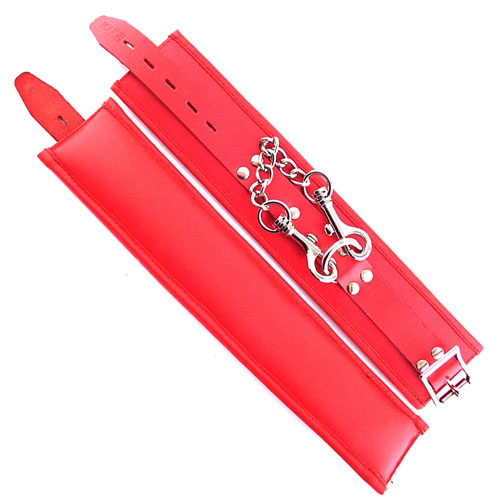
Rouge Garments Padded Cuffs
UK-made padded leather cuffs, comfortable and quick-release. ~£48.
£47.99 →A good first rope
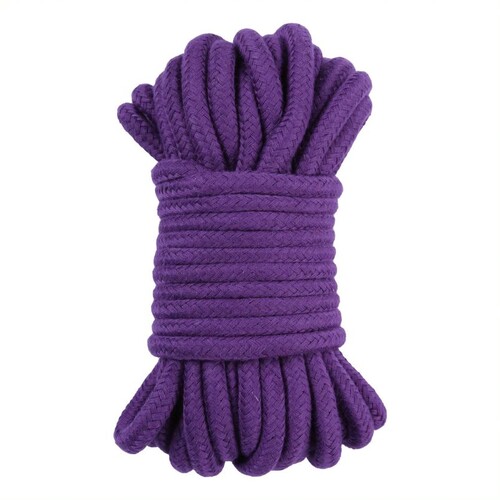
Me You Us Soft Cotton Rope, 10m
Soft, forgiving, machine-washable cotton, the right first rope. ~£7.
£6.99 →Safety for both
- Agree a safeword first. Traffic-light system. See safe words explained.
- Cuffs: the two-finger rule. Two fingers between cuff and skin.
- Rope: keep safety shears within reach, avoid slip knots, monitor circulation actively.
- Both: check the restrained limb regularly and release immediately on numbness or colour change.
Common mistakes
- Buying rope first because it looks more serious. Rope's learning curve makes it the harder first restraint, not the more committed one.
- Treating cuffs as a lesser option. Cuffs handle the large majority of beginner play better than rope does. They are not a compromise.
- Buying rope and never learning to use it. Rope without technique is just rope. Budget time for learning before you buy it.
- Skipping safety shears with rope. Non-negotiable.
Related reading
- Bondage tape vs cuffs vs rope (three-way)
- Rope materials compared
- Shibari knots for beginners
- Browse bondage range
Frequently asked
- Should I buy rope or cuffs first?
- Cuffs. For roughly 90% of what beginner couples want to do, padded buckle or Velcro cuffs are faster, safer, more comfortable and require no skill. Rope opens a much wider range but carries a real learning curve. Buy cuffs first, add rope later when you want the versatility and are ready to learn it.
- What can rope do that cuffs cannot?
- A great deal: body harnesses, chest ties, decorative work, full shibari, ties that connect multiple points, and configurations cuffs simply cannot make. Cuffs restrain a limb to another limb or an anchor point; rope does almost anything. If your interest runs past basic restraint, rope is irreplaceable.
- Are cuffs or rope more comfortable?
- Cuffs, usually. A padded cuff distributes pressure evenly across a wide band, which is forgiving for sustained wear. Rope concentrates pressure along narrower lines; a well-dressed tie spreads load well, but a poorly-dressed one does not. Rope can be very comfortable, but only with competence.
- Is rope harder to use than cuffs?
- Yes, significantly. Cuffs require essentially no skill. Rope requires learning ties that hold without tightening dangerously, learning what to avoid, and building the confidence to tie calmly during a scene. The learning is rewarding but real, and it is the main reason rope is not the right first restraint for most couples.
- Which is safer, rope or cuffs?
- Cuffs carry lower risk for beginners: fast release, even pressure, the simple two-finger rule. Rope demands active circulation monitoring, avoidance of slip knots, and safety shears kept within reach. Both are safe used correctly, but cuffs are more forgiving of a beginner's inexperience.
- How much do rope and cuffs cost in the UK?
- A padded cuff set runs roughly £20-£50. Bondage rope runs roughly £7-£20 for a 8-10m length. Rope is cheaper to buy but, factoring the time to learn it, cuffs are the lower total cost to actually start playing.
- Can I use both rope and cuffs?
- Yes, and many couples do, cuffs for quick and comfortable restraint, rope for the times they want a harness, a decorative tie, or the ritual of tying. The recommendation to start with cuffs is about sequencing, not exclusivity. Add rope as a deliberate second step.
- Where can I buy rope and cuffs in the UK?
- BondageBox stocks padded cuffs and cotton, hemp and finished synthetic rope with free discreet UK delivery over £30, plain unmarked packaging, and "BBox" on the bank statement. Browse the bondage range.
Sources & further reading
- NCSF, Consensual kink safety standards, National Coalition for Sexual Freedom
- St John Ambulance, Circulation and first aid, St John Ambulance UK
- Brook, Sex and pleasure, Brook Advisory
Filed under Buying Guides
← Back to the Guides