


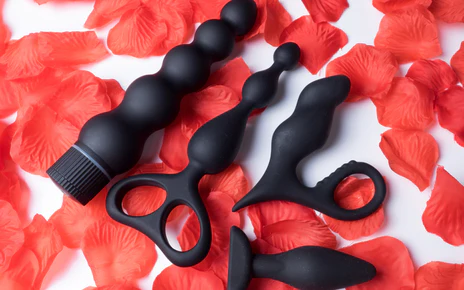


Your first dildo needs three things right: material (platinum-cure silicone, body-safe, non-porous, sterilisable; NOT jelly, TPE, or "skin-feel"), sizing (5"-6" insertable length, 1.4"-1.5" diameter, the UK average comfort band), and base (flared, not just suction-cup, mandatory for any anal use, useful for harness use later). Budget £30-£60 for a body-safe first piece from an established brand (Lovetoy Sliding Skin at £26, Silexd Premium at £30, ToyJoy Get Real at £27 are the UK first-piece picks). Below £20 is almost always TPE-blend or jelly PVC and should be avoided regardless of brand claims. Buying too large is the most common first-time error, you can always size up later; what looks small in product photos feels larger in actual use.
What a dildo does (and what it doesn't)
A dildo is a non-vibrating insertable toy, the difference between a dildo and a vibrator is the motor. Vibrating realistic dildos exist (covered separately) but the "dildo" category specifically is unmotorised. UK first-time buyers often choose between a dildo and a vibrator; both are valid first sex toys serving different use cases:
- Dildo: Insertable stimulation. Solo vaginal or anal use, partnered double-penetration scenarios, harness use (pegging), strap-on with a partner.
- Vibrator: External or internal vibration. Primarily clitoral, sometimes G-spot, sometimes prostate.
Kinsey Institute research (2018) found ~75% of vulva-owning users report orgasm primarily through clitoral stimulation rather than internal, so for first-time vulva-owner buyers, a clitoral toy often produces stronger results than a dildo. A dildo is the right first piece if you specifically want insertable stimulation. See our first vibrator guide for the alternative.
Material, the only spec that genuinely matters
Material is the only spec that affects body safety. The UK and EU regulate sex-toy materials primarily through the REACH regulation (chemical safety) and ECHA's restricted-substances list. Four materials pass every body-contact safety test:
- Platinum-cure silicone (the dominant first-piece material). Two-part silicone cured at 200°C, fully inert, non-porous, biocompatible per ISO 10993. Sterilisable in boiling water or dishwasher top rack. The standard for any modern body-safe dildo.
- Borosilicate glass. Laboratory-grade glass; same material as Pyrex ovenware. Non-porous, hypoallergenic, takes temperature beautifully (warm or chilled). Fragile if dropped; inspect for chips before each use.
- 304/316 surgical stainless steel. Medical-grade alloy; non-porous, sterilisable, indestructible. Heavy (~250-500g for a 6" piece), different sensation profile from silicone.
- ABS plastic. Used in some toy bases and external components; rarely the primary material on a dildo.
For first-time buyers, platinum-cure silicone is the right answer. It's body-temperature responsive, flexible enough to be comfortable, durable for years, and easy to sterilise.
What to reject
- Jelly rubber / PVC jelly. Soft, translucent, often phthalate-plasticised. ECHA has restricted phthalates in children's products; adult-toy market is unregulated. Internal use risks endocrine disruption.
- "TPE" / "TPR" / "skin-feel" / "silicone blend". Marketing terms for porous synthetic materials. Can't be sterilised; may contain phthalates. Avoid for first internal use.
- Cyberskin / Ultraskin / Fanta Flesh. Branded TPE variants with the same porosity issues.
Sizing, start small, build later
The "average penis size" debate is irrelevant for first-dildo buying; what matters is what's comfortable for you. UK average comfort for first-time buyers:
- Insertable length: 5"-6" (the visible shaft portion that goes inside).
- Maximum diameter: 1.4"-1.5" (~3.5-3.8 cm, measure at the widest point of the shaft, usually mid-shaft).
- Total length: Including base and balls, typically 6.5"-8".
Two universal observations:
- What looks small in product photos feels larger in use. Photos lack anatomical context; visual estimation produces 20-30% underestimation in our customer feedback data.
- What looks large is overwhelmingly large. First-time buyers consistently choose toys too big for their comfort range and end up with pieces they don't use.
Start at the smaller end. You can always size up later; selling on a too-large first dildo isn't a thing.
Base type, flared is the safety standard
Three base types exist:
- Flared base. A wide platform at the bottom. Mandatory for any anal play (without it, the toy can be drawn past the external sphincter, the leading cause of UK A&E foreign-body presentations per Royal College of Surgeons retention guidance). Also enables harness mount and suction-cup mounting via accessory.
- Suction-cup base. A flat circular base with adhesion. Sticks to smooth surfaces (tile, glass, wood). Useful for solo hands-free play. Some flared-base dildos have integrated suction cups at the bottom of the flare, best of both.
- Smooth / no base. Avoid for any insertable use. No retention safety; no harness compatibility.
For a first dildo, flared base is the universal recommendation, even if you don't plan to use it for anal or harness work today, the safety margin matters and your use cases may change.
Shape, smooth or realistic?
This is preference, not safety:
- Smooth dildos. Curved or straight shaft without sculpted detail. Easier to clean, more neutral aesthetic, often slightly cheaper. G-spot-targeted smooth dildos (curved shaft, bulbous tip) often work better for G-spot stimulation than realistic shapes.
- Realistic dildos. Sculpted shaft veining, defined glans, sometimes textured testicles. More visually realistic; texture adds sensation variety; cleaning is slightly more involved (textured surfaces hold residue).
- Curved. G-spot or prostate-angle pieces. Different sensation profile from straight or realistic shapes.
If unsure, smooth dildos suit most first-time users better, fewer variables, simpler use, easier cleaning.
Three first-dildo picks under £35
Best entry single-density

Silexd Premium Silicone 7"
Spanish-engineered platinum silicone. Single-density, suction cup, body-safe. The reliable first piece. ~£30.
£29.99 →Best entry dual-density (closest to skin)
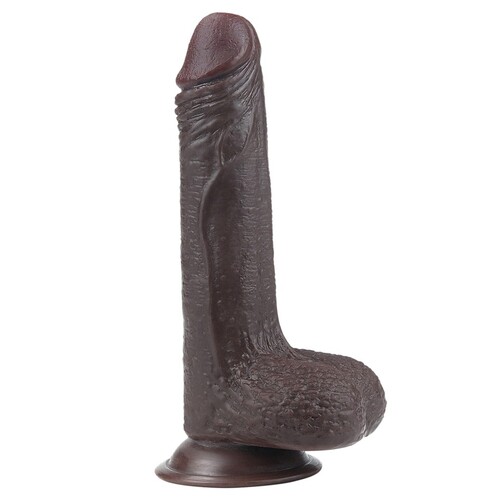
Lovetoy Sliding Skin 7"
Dual-density at the entry-level price. Soft outer over firm core for body-tissue feel. Suction-cup, body-safe silicone. ~£26.
£25.99 →Best entry realistic dual-density
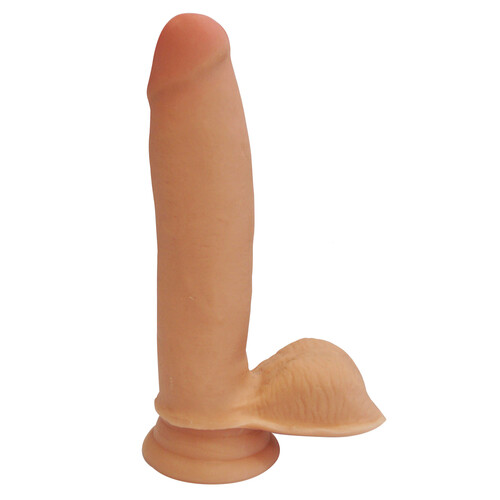
ToyJoy Get Real 7" Dual-Density
Dutch-engineered dual-density. Soft outer over firmer core, suction-cup, body-safe silicone. ~£27.
£26.99 →Browse the full realistic dildos range for more options. For G-spot-curved smooth dildos, see the dedicated G-spot range (many of which are non-vibrating).
Lube, choose with the dildo
Silicone dildos take water-based or hybrid lubricant only. Pure silicone-based lube degrades silicone toy surfaces over weeks of repeated exposure. Budget £8-£18 for a quality glycerin-free water-based lube alongside the dildo, silicone toys without lube are uncomfortable. See our UK lube guide.
- Water-based, glycerin-free (Lubido 250ml at £6, Sliquid H2O, Pjur Aqua). Universal first choice, works with everything.
- Hybrid (water + small silicone tail) (Sliquid Silk, Skins Hybrid). Lasts longer than pure water-based; still silicone-toy-safe in good brands.
- Avoid: Silicone-based lube (degrades silicone toys), oil-based (destroys latex condoms), spit (insufficient and antibacterial enzymes irritate intimate tissue), DIY substitutes.
First-use protocol
- Wash before first use. Even body-safe silicone has factory residue from molding. Warm water + fragrance-free antibacterial soap; rinse fully; air-dry on a lint-free cloth.
- Warm to body temperature. Cold silicone is uncomfortable; run under warm water for 30-60 seconds before use.
- Use generous lubricant. Silicone toys need more lube than skin-on-skin contact. Apply to both the toy and the body. Re-apply during the session as needed.
- Go slowly on first insertion. The first inch determines comfort for the entire session. If there's resistance, pause and add more lube; if there's sharp pain, stop and try again later.
- Listen to your body. Mild stretch is expected; sharp pain isn't. The body relaxes at its own pace; rushing produces discomfort that can take minutes to recover from.
- Clean immediately after use. Body fluids and lube residue dry into a film within an hour, making cleaning harder.
Common mistakes
- Buying too large. The single biggest first-time error. Photos under-represent size; start small.
- Choosing TPE / jelly / "skin-feel" instead of platinum silicone. Porous, can't be sterilised, may contain phthalates. Verify "platinum-cure silicone" specifically.
- Insufficient lubricant. Silicone toys without enough lube produce friction that feels like sandpaper. Better to over-apply.
- Using silicone-based lube on silicone toys. Degrades the surface over weeks of exposure.
- Skipping warm-up. Cold silicone is uncomfortable; 30-60 seconds under warm water solves it.
- Storing damp. Wet toys in sealed bags grow mould; air-dry fully before storage.
- Storing with other silicone toys in contact. Different silicone formulations can bond over time. Cotton pouch per toy is the standard.
When to upgrade
Signs you're ready for a second / upgraded piece:
- You're using the toy weekly and have established what kind of stimulation works.
- You want to try a different mechanism (vibrating, dual-density, glass for temperature play).
- You want to introduce harness / pegging, needs a flared-base dildo that pairs with a harness.
- The first piece is showing wear (silicone tackiness, plasticiser sweat, smell changes).
Common second-piece progressions: silicone smooth → silicone realistic (or vice versa); single-density → dual-density; non-vibrating → vibrating; everyday → glass or steel for temperature play. See silicone vs glass vs steel dildos.
Cleaning and storage
- Routine clean (every use): Warm water and fragrance-free antibacterial soap. Rinse fully. Air-dry on a lint-free cloth before storage.
- Sterilisation (partner-sharing, post-illness): Boil 3 minutes in clean water, OR run through dishwasher top rack (no detergent, no rinse-aid). Single-density silicone tolerates both; dual-density is slightly more delicate, use boil method only.
- Storage: Breathable cotton pouch in a cool, dry, dark drawer. Separate from other silicone toys.
- Inspection: Surface tackiness, plasticiser "sweat", smell changes, or shape distortion mean the toy is past its useful life. See when to throw a toy away.
Solo vs partnered use
First dildos are typically bought for solo use; partner introduction comes later. UK couples' research (Relate, 2024) finds that incorporating toys into partnered sex increases overall satisfaction for ~60% of couples, but the path matters. For partner introduction:
- Have the conversation outside the bedroom first. Frame as exploration, not replacement.
- Start solo with the toy first. Know what you like before introducing to the dynamic.
- Pre-discuss what the toy is for. Solo continuation? Mutual exploration? Pegging? Each has its own conversation.
See UK couples sex toys quiet guide.
Discretion considerations
BondageBox ships in plain unmarked UK packaging; the return-address reads "BBox Ltd". Card statements show the same descriptor, neither identifies the company nor the product category. For storage at home: a lockable bedside drawer or labelled box at the back of a wardrobe is the standard discrete arrangement. See discreet sex-toy storage.
Related reading
- Best realistic dildos UK 2026
- Silicone vs glass vs steel dildos
- UK lube guide, water, silicone, hybrid
- How to clean sex toys UK
- What's the best dildo size for beginners?
- Browse realistic dildos
Frequently asked
- What's the best dildo for a first-time buyer in the UK?
- The Lovetoy Sliding Skin 7" (£26), ToyJoy Get Real 7" Dual-Density (£27), and Silexd Premium 7" (£30) are the three most-recommended UK first-dildo picks. All three are body-safe platinum silicone, 7" total length with ~5.5" insertable, 1.4-1.5" diameter, suction-cup base. The Sliding Skin and Get Real are dual-density (body-tissue feel); the Silexd is single-density (firmer, easier to clean).
- What size dildo is right for first-time buyers?
- 5"-6" insertable length and 1.4"-1.5" diameter is the UK average-comfort band for first-time use. "Average penis size" varies dramatically; what looks small in product photos often feels large in use. Bigger isn't better; start at the smaller end and size up later if you want to.
- Is silicone safe for a first dildo?
- Yes. platinum-cure silicone is the body-safe gold standard for sex toys. Biocompatible per ISO 10993, non-porous, sterilisable (boil 3 minutes or dishwasher top rack), phthalate-free under EU REACH. Verify the listing says "platinum-cure silicone" or "medical-grade silicone" specifically, "silicone-blend", "skin-feel silicone", or "TPR-silicone" usually mean TPE or jelly.
- What lubricant do I use with a silicone dildo?
- Water-based or hybrid lubricant only. Pure silicone-based lubricants degrade silicone toy surfaces over weeks of repeated exposure. Glycerin-free water-based lube (Sliquid H2O, Pjur Aqua, Lubido) is the universal recommendation. See UK lube guide.
- Should I get a flared-base or suction-cup dildo for my first?
- If unsure, choose flared base, even if you only plan solo use today, the flared base enables harness mount, anal-safe use, and won't migrate inside the body. Some flared-base dildos have an integrated suction cup at the bottom of the flare, giving both functions. Smooth-base / no-base dildos limit future use cases and aren't recommended.
- Can a first-time dildo be used anally?
- Yes, with three conditions: (1) flared base (mandatory, NHS / Royal College of Surgeons retention guidance), (2) generous water-based or hybrid lubricant (the rectum doesn't self-lubricate), (3) start smaller than vaginal-comfort sizing because anal use is less forgiving of size mismatches. See anal training sensible starting point.
- How long should a first dildo last?
- Quality platinum silicone dildos last 10+ years with proper care. Cleaning after every use, sterilising occasionally, storing in a breathable cotton pouch, all extend lifespan. Signs the toy has reached end-of-life: surface tackiness, plasticiser "sweat" on the surface, smell changes, shape distortion. Cheap TPE / jelly pieces typically last 1-3 years.
- Is it normal to feel nervous about buying my first dildo?
- Yes. UK consumer research consistently shows first-time sex-toy buyers report anxiety around buying, receiving, and using the toy. Modern UK retailers (BondageBox included) ship in plain unmarked packaging with non-identifying card descriptors, the discretion is engineered. Once the package arrives and the toy is in hand, anxiety typically drops fast.
- What's the difference between a smooth dildo and a realistic dildo?
- Smooth dildos have a curved or straight shaft without sculpted anatomical detail, cleaner aesthetic, easier to clean (no texture to hold residue). Realistic dildos have sculpted veining, defined glans, sometimes textured testicles. Both are insertable in the same way; preference is the only difference. Many first-time buyers find smooth dildos less intimidating; many find realistic shapes more appealing. There's no "right" choice.
- Can I share my first dildo with a partner?
- Yes, after thorough cleaning between users. Platinum silicone is fully sterilisable, boil 3 minutes in clean water or run through dishwasher top rack. For couples in non-monogamous arrangements or any partner-sharing scenarios, sterilisation between users is the standard. Never share between anal and vaginal use without thorough cleaning, anal flora is different from genital flora.
- What if my first dildo doesn't work for me?
- UK Consumer Contracts Regulations 2013 exempt sealed-for-health products from the standard right to return once the seal is broken. For dildos this means: choose carefully before opening. If the size or material isn't right after use, the toy is yours; many users keep first pieces as backup or for travel even after upgrading. For faulty toys (motor failure on vibrating models, silicone defects), the 1-year manufacturer warranty applies regardless of seal status.
- How do I store a dildo discreetly?
- Breathable cotton pouch in a lockable bedside drawer is the standard. The cotton pouch protects the toy from dust and contact with other silicone items; the lockable drawer addresses visitor / housemate privacy. Avoid plastic bags (trap moisture, grow mould) and avoid storing in heat (cars, attics) or direct sunlight (degrades silicone). See discreet sex-toy storage.
Sources & further reading
UK sexual-health, material-safety, and consumer-product references.
- NHS, Sexual health hub, NHS UK
- Brook, Sex and pleasure, Brook Advisory
- ECHA, Restricted plasticisers in body-contact products, European Chemicals Agency
- ISO 10993, Biocompatibility for body-contact products, International Organization for Standardization
- FPA, Family Planning Association, Family Planning Association
Filed under Beginner's Guides
← Back to the Guides