



There are three categories of sex-toy material to actively avoid: any toy described as "jelly" or "rubber" without a stated grade; any toy whose material claim is "TPE/TPR" without a phthalate-free guarantee; and any porous toy that two people will share without a condom. The UK adult-novelty industry is unregulated, there is no British equivalent of the toy-safety rules that protect children. The choice is entirely yours. For the positive counterpart (the four materials that do pass), see body-safe sex toys UK.
The problem: adult toys are unregulated in the UK
Toys for children sold in the UK must comply with the Toys (Safety) Regulations 2011, which transpose EN 71 standards on phthalates, heavy metals, flammability and small-parts. None of these protections apply to adult sex toys. The European Chemicals Agency's REACH Regulation (EC 1907/2006) restricts six phthalates to ≤0.1% in children's items but explicitly excludes adult-novelty products from the same restriction.
This means a sex toy on a UK shelf can legally contain phthalate plasticisers in concentrations that would be illegal in a teething ring. The Greenpeace 2006 study "Playing Dirty" tested eight popular sex toys and found phthalate concentrations between 24% and 51% by weight, orders of magnitude above any limit considered safe for prolonged contact with mucous membranes.
Twenty years on, the better brands have voluntarily adopted body-safe materials. The lower-end of the market has not. The label remains the only protection a buyer has.
The three-bucket framework
Every toy material falls into one of three buckets. Memorise them and most of the rest of this guide is intuition.
- Body-safe (non-porous). Bacteria cannot enter the surface. The toy can be cleaned to a hygienic standard between uses. Platinum-cure silicone, borosilicate glass, 316L surgical stainless steel, and ABS plastic.
- Marginal (porous, used solo with care). Surface absorbs body fluids and lubricant residue. Can be used safely solo if cleaned thoroughly and replaced every 12–18 months. Most TPE, TPR, "skin-feel", and "cyberskin" toys.
- Avoid. Porous, often phthalate-bearing, sometimes mislabelled. Jelly, "rubber" without grade, and any unbranded "skin"-style material with no published material safety sheet.
Specific materials to avoid (and why)
Jelly rubber
The classic offender. "Jelly" is not a regulated term, it usually means PVC plasticised with phthalates. Smells strongly of plastic when new. Often labelled "for novelty use only", a loophole that lets the manufacturer place the responsibility on the user. The smell is not aesthetic, it is volatile organic compounds outgassing. Avoid.
"TPR" / "TPE" without a phthalate-free guarantee
Thermoplastic Rubber and Thermoplastic Elastomer are broad categories. Some TPE/TPR formulations are body-safe and phthalate-free; many are not. The honest brands publish a material safety sheet stating "phthalate-free, latex-free, BPA-free". The dishonest ones print "TPR" on the box and hope you assume.
Rule of thumb: a TPE toy without the words "phthalate-free" on the packaging or product page is a TPE toy you should not buy.
"Skin-feel" / "Cyberskin" / "UR3"
These are TPE blends designed to mimic skin. The most porous category of all toy materials, they trap lubricant, body fluid and residue inside the surface. They cannot be sterilised; they break down within 12–18 months even with perfect care; and they cannot be safely shared.
If you own one and like it, fine, keep using it solo, with a condom if you want to extend its life. But do not buy one expecting it to be cleanable in any meaningful sense.
Latex (with one caveat)
Latex itself is body-safe and is the basis for most condoms. The problem is allergies, roughly 1–6% of the UK population has a clinically relevant latex allergy (NHS estimate). Latex toys outgas a slightly bitter smell that is normal but can transfer to lubricant. Best for solo use or with a non-allergic partner.
Anything porous, in shared use
The categorical rule: two people sharing a toy that is not non-porous must use a condom over the toy. Bacterial vaginosis, yeast infections, and STIs including HSV-2 and HPV have all been documented to transfer via shared porous toys (Marrazzo et al., 2014, Sexually Transmitted Infections). The condom is £0.30 and removes the issue entirely.
The four genuinely body-safe materials
- Platinum-cure silicone. The gold standard. Non-porous, hypoallergenic, sterilisable by boiling for 3 minutes or 10% bleach soak (rinse thoroughly). The only caveat: never use silicone-based lubricant on silicone toys, it bonds and degrades the surface. Water-based only.
- Borosilicate or soda-lime glass. Annealed (heat-tempered) glass toys, typically by Pyrex-equivalent manufacturers. Non-porous, dishwasher-safe, compatible with any lube. Drop-resistant up to ordinary household impact; if a glass toy chips, retire it immediately.
- 316L surgical stainless steel. The same alloy used for orthopaedic implants. Non-porous, indestructible, takes temperature beautifully (warm under the tap, chill in the freezer for ten minutes). Heavy, which is the appeal.
- ABS plastic. Hard, non-porous, used for the casings of vibrators and bullet motors. The "shell" of almost every reputable rechargeable toy. Body-safe; not flexible.
The 5-second label test
Stand in front of the product page (online or in shop). Look for these words, in this order:
- Material name explicitly stated. "Silicone", "stainless steel", "borosilicate glass", "ABS plastic". Not "TPE/TPR" alone, not "skin-safe material", not "phthalate-free PVC".
- "Phthalate-free" stated. Even better: "BPA-free, latex-free, phthalate-free."
- A grade where applicable. "Platinum-cure silicone" not just "silicone"; "316L surgical stainless steel" not just "metal"; "borosilicate glass" not just "glass".
- A brand with a published material policy. LELO, Fun Factory, We-Vibe, Doxy, Tantus, and most UK independents publish theirs. If you cannot find it on the brand's own website, that is the answer.
If a product passes all four tests, you are safe. If it passes none, do not buy.
What to keep for the contact layer
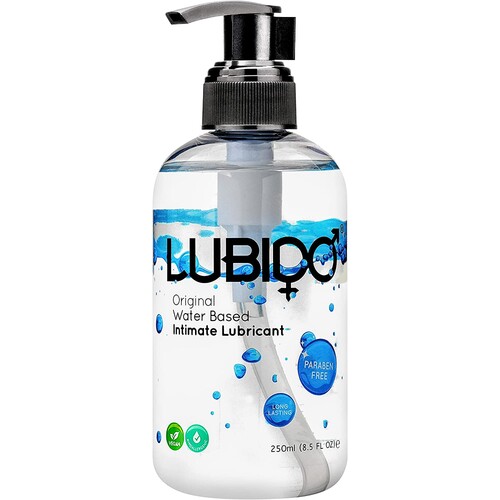
Lubido 250ml Paraben Free Water Based Lubricant
Body-safe water-based lubricant, paraben-free, glycerin-free, compatible with every toy material below.
£5.99 →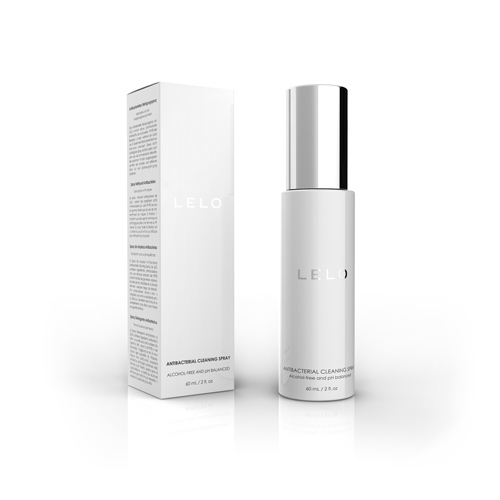
Lelo Premium Toy Cleaning Spray
LELO's alcohol-free cleaning spray, works on silicone, glass, ABS, and steel.
£14.99 →Further reading on this site
Once you know what to look for in a toy, the related questions are how to clean what you do own (silicone-specific guide), what "body-safe" actually means as a marketing term (explained here), and when to retire something you've had a long time (our retire-it guide). For lubricant compatibility, which is the other half of this question, see the full lube guide.
- What sex toy materials should I avoid?
- Avoid jelly rubber (almost always phthalate-plasticised PVC), unbranded "TPR" or "TPE" without a phthalate-free guarantee, "skin-feel" or "cyberskin" materials in shared use, and any toy from a manufacturer that does not publish a material safety statement on its own website.
- Are sex toys regulated in the UK?
- No. Adult-novelty products are explicitly excluded from the Toys (Safety) Regulations 2011 and from REACH phthalate restrictions for children's items. Material safety in the UK adult market is voluntary and brand-by-brand. The label is the only protection a buyer has.
- What does "body-safe" actually mean?
- "Body-safe" is a marketing term, not a regulated one. In practice it should mean: non-porous (cannot harbour bacteria), free of phthalates, BPA, and latex (or with allergens declared), and made of one of four materials, platinum-cure silicone, borosilicate glass, 316L surgical stainless steel, or ABS plastic. Our full breakdown.
- Is silicone the safest sex toy material?
- Platinum-cure silicone is the most versatile body-safe material, non-porous, sterilisable, hypoallergenic, and compatible with all water-based lubricants. The one caveat is that silicone bonds with silicone-based lubricant and degrades, so use water-based lube only.
- Can I share a porous sex toy with a partner?
- Only with a fresh condom over the toy for each user. Porous toys cannot be sterilised, and shared use without a barrier has been documented in peer-reviewed research to transfer bacterial vaginosis, yeast infections, HSV-2 and HPV (Marrazzo et al., 2014).
- How long do porous sex toys last?
- Most porous toys (TPE, TPR, jelly, "skin-feel") should be replaced every 12–18 months even with perfect care, because the surface absorbs body fluids and lubricant residue that cannot be fully removed. Non-porous toys (silicone, glass, steel) last decades when looked after.
- What does "phthalate-free" mean on a sex toy label?
- Phthalates are plasticisers used to make hard PVC flexible. They are restricted to ≤0.1% in children's items under EU REACH but unregulated in adult novelties. "Phthalate-free" should mean the manufacturer has tested for and excluded the six restricted phthalates (DEHP, DBP, BBP, DINP, DIDP, DNOP); reputable brands publish their material safety sheet to back this up.
Sources & further reading
UK and EU regulatory guidance on materials that should not appear in body-contact products.
- ECHA, Restricted substances list (phthalates, DEHP, DINP), European Chemicals Agency
- gov.uk, UK REACH regulations, gov.uk
- HSE, UK chemical classification regulations, Health and Safety Executive
- BfR, Federal Institute for Risk Assessment (Germany), BfR (international reference)
Filed under Materials & Care
← Back to the Guides